Vivek Sinha 1 Crore Rumor: The Truth Behind Dhurandhar Actor’s Viral Salary Claims and His Honest Response
Vivek Sinha 1 Crore Rumor
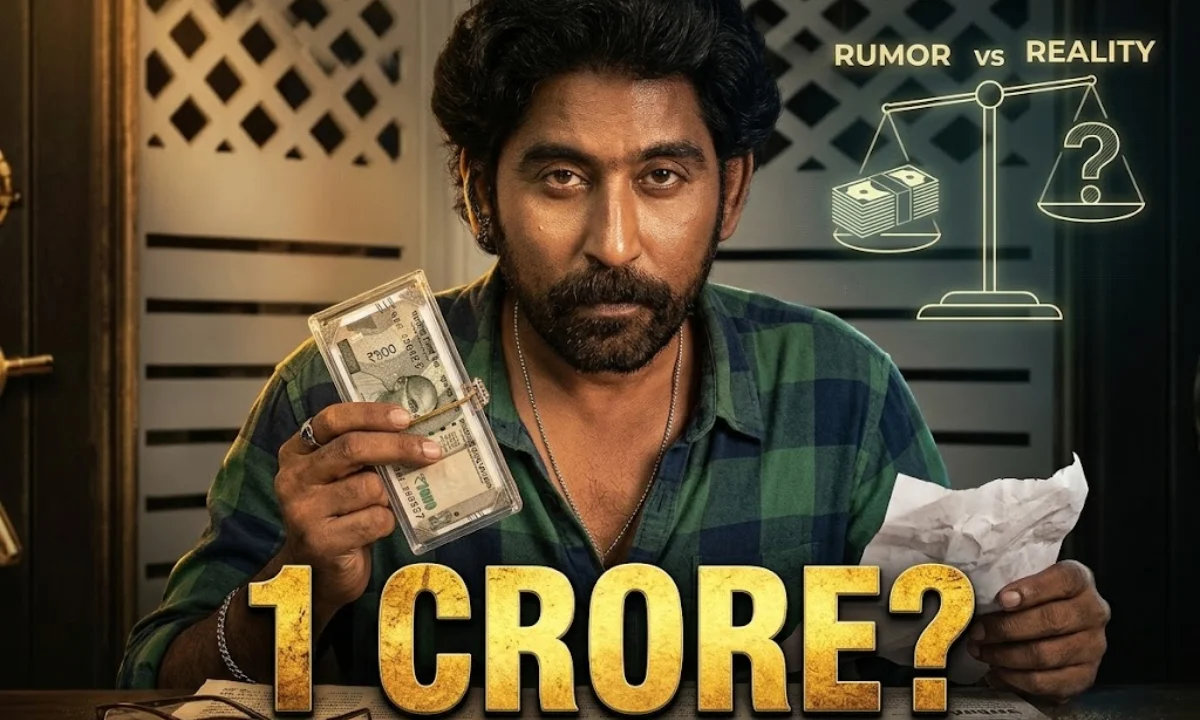
Vivek Sinha 1 crore rumor has become one of the most talked about topics in Bollywood over the past 48 hours. The actor, who played the terrorist Zahoor Mistry in Aditya Dhar’s blockbuster spy thriller Dhurandhar and its sequel Dhurandhar 2: The Revenge, found himself at the center of viral speculation about his remuneration. Social media posts claimed he received anywhere from ₹60 lakh to ₹80 lakh, with some even suggesting he was paid ₹1 crore for his supporting role.
The reality, as Vivek Sinha himself clarified in a now viral Instagram video, is far different from these exaggerated claims. His honest and humorous response has not only debunked the rumors but also made him more relatable to audiences.
Table of Contents
Vivek Sinha 1 Crore Rumor: Key Facts at a Glance
The following table presents the essential details about the viral rumor and the reality:
| Aspect | Rumor Claim | Actual Reality |
|---|---|---|
| Alleged Payment | ₹60 lakh to ₹1 crore | Significantly less than rumored figures |
| Source of Claim | Social media speculation | No official source |
| Actor’s Response | Direct denial via Instagram video | “Bhai, itna paisa nahi mila hai” |
| Actual Payment | Not disclosed specifically | “Expected and decent amount” |
| Current Status | Money already spent | “Jo mila, khatam ho chuka hai” |
| Public Reaction | Mixed curiosity and skepticism | Positive appreciation for honesty |
| Timing of Clarification | April 10, 2026 | Within 24-48 hours of rumor peak |
This overview confirms that the Vivek Sinha 1 crore rumor was largely unfounded internet speculation that the actor promptly and humorously addressed.
The Origin of Vivek Sinha 1 Crore Rumor: How It All Started
The Vivek Sinha 1 crore rumor did not emerge from any official source. It began as typical social media speculation that spiraled out of control. Understanding how such rumors start helps explain why they spread so quickly.
The speculation began after Dhurandhar 2: The Revenge became a massive box office success. The film crossed ₹1,000 crore net domestically and over ₹1,600 crore worldwide, making it one of the highest grossing Indian films of all time. When a film achieves such extraordinary numbers, audiences naturally assume that everyone involved must have made substantial money.
Social media pages and entertainment portals began posting estimated salary figures for various cast members. These posts cited no sources, provided no verification, and seemed to pull numbers out of thin air. For Vivek Sinha, the figures ranged from ₹60 lakh to ₹80 lakh, with some posts rounding up to ₹1 crore.
The rumor gained traction because of several factors. Vivek Sinha’s performance as Zahoor Mistry had become iconic. His dialogue “Hindu waqai darpok qaum hai” went viral and generated significant controversy. The intensity of his portrayal made people believe that such a memorable performance must command a high price.
Additionally, the mystery around Bollywood salaries creates a vacuum that speculation fills. Unlike Hollywood where contract details often become public, Indian film industry payments remain largely private. This lack of transparency allows rumors to flourish unchecked.
The timing also played a role. The film was in its third week of release and still dominating box office conversations. Any news related to Dhurandhar 2 generated clicks and engagement, making the salary rumor attractive content for social media accounts seeking traffic.
Also Read

The Hidden Meaning Behind Amin, The Virus And The Final Storm: Alpha 2025 Ending Explained
Vivek Sinha’s Viral Response: Setting the Record Straight
Rather than allowing the Vivek Sinha 1 crore rumor to persist, the actor chose to address it directly. On April 10, 2026, he posted a video on Instagram that quickly went viral across platforms.
His response was characterized by three key elements: direct denial, relatable humor, and honest transparency about his financial situation.
Direct Denial of Exaggerated Figures
Vivek Sinha opened his video with a clear and emphatic denial. He stated: “Bhai, itna paisa nahi mila hai kasamse. Yeh sab mat dalo.” This translates to “Brother, I swear I didn’t get that much money. Don’t put all this out there.”
He specifically referenced the various figures circulating online. He mentioned seeing posts claiming ₹60 lakh, ₹80 lakh, and even ₹1 crore. Each time, he reiterated that these numbers were far from reality.
His tone was not angry or defensive. Instead, he appeared amused by the exaggeration while remaining firm about the facts. This approach disarmed potential critics and made his denial more credible.
Confirmation of Fair Payment
While denying the inflated figures, Vivek Sinha did confirm that he received appropriate compensation for his work. He stated: “Mujhe Dhurandhar se paisa mila hai, achcha paisa mila. Jo expected amount tha woh mila.”
This translates to “I got money from Dhurandhar, good money. I got the amount I was expecting.” This balanced approach acknowledged that he was fairly paid without feeding into the exaggeration.
He emphasized that the payment matched his expectations for the role. This suggests that he entered the project with realistic financial expectations and was satisfied with the outcome.
The “Mumbai Expenses” Explanation
The most viral moment of his response came when he addressed what happened to the money he earned. He explained: “Lekin utna paisa nahi mila, aur joh paisa mila tha khatam ho chuka hai. Mumbai mein rehta hoon bhai, aur bahot kharche hai Mumbai mein. Toh Dhurandhar wala saara paisa khatam ho chuka hai.”
This translates to: “But I didn’t get that much, and whatever money I did get is already gone. I live in Mumbai, brother, and expenses are very high in Mumbai. So all the money from Dhurandhar has been spent.”
This candid admission resonated deeply with audiences. The acknowledgment that even a successful actor finds his earnings depleted by Mumbai’s high cost of living made him highly relatable. Many social media users commented that this statement reflected their own experiences with income and expenses.
Request for Future Work
Vivek Sinha concluded his video with a humble appeal. He asked his fans to pray that he gets more work and roles so that he can earn more money and help people in need. This shifted the conversation from past earnings to future opportunities, demonstrating his focus on career growth rather than resting on current success.
The Context: Dhurandhar 2’s Massive Success
To understand why the Vivek Sinha 1 crore rumor gained such traction, one must examine the phenomenal success of Dhurandhar 2: The Revenge. The film’s box office performance created an environment where large salary figures seemed plausible.
Box Office Milestones
| Milestone | Achievement | Date |
|---|---|---|
| India Net Collection Crosses ₹1,000 Crore | First Hindi film to achieve this | April 2026 |
| Worldwide Gross Crosses ₹1,600 Crore | Among highest grossing Indian films | April 2026 |
| Surpasses Baahubali 2 | Becomes second highest grossing Indian film | April 9, 2026 |
| Week 1 Collection | ₹674.17 crore | March 2026 |
| Week 2 Collection | ₹263.65 crore | March-April 2026 |
| Day 22 Collection | ₹5.12 crore (early estimates) | April 9, 2026 |
As of April 10, 2026, Dhurandhar 2 had collected approximately ₹1,046.39 crore net in India and over ₹1,645 crore worldwide. These figures placed it among the most successful Indian films in history.
Cast and Crew Context
The film features an ensemble cast led by Ranveer Singh, with supporting roles from Sanjay Dutt, R. Madhavan, Arjun Rampal, and others. In such high-profile projects, lead actors typically command fees ranging from ₹10 crore to over ₹100 crore depending on their stardom.
This context made the ₹1 crore figure for a supporting actor seem believable to many observers. If the lead actor was earning tens of crores, surely a scene-stealing supporting performance could command one crore.
However, this logic ignores the vast disparity between lead and supporting actor payments in Bollywood. As Vivek Sinha’s clarification revealed, the gap remains substantial even in blockbuster projects.
Public Reaction: How Audiences Responded to the Clarification
The response to Vivek Sinha’s video has been overwhelmingly positive. Social media platforms including Twitter, Instagram, and Facebook show widespread appreciation for his honesty.
Common Sentiment Themes
| Theme | Description | Example Comments |
|---|---|---|
| Amusement at Hype vs Reality | Users finding humor in the gap between rumor and truth | “Hype zyada, reality kam” |
| Relatability of Mumbai Expenses | Connection with his comment about high living costs | “Mumbai expenses hit hard bro” |
| Respect for Honesty | Appreciation for not maintaining false image | “Respect for being honest” |
| Criticism of Rumor Culture | Recognition of how misinformation spreads | “Social media creates fake news daily” |
| Support for Future Work | Encouragement for more roles | “Hope you get more big projects” |
The public reaction stands in contrast to typical celebrity controversies. Rather than backlash or criticism, Vivek Sinha received empathy and support. His willingness to be vulnerable about his financial situation humanized him in ways that polished PR statements never could.
Media coverage also shifted quickly. Outlets that had reported the rumor as fact now highlighted his denial. Headlines across major publications including Times of India, Economic Times, NDTV, and others focused on his humorous and honest response.
The speed of this shift demonstrates how direct communication from celebrities can control narratives. Within 24 hours, the story changed from “Did he earn 1 crore?” to “Actor humbly reveals reality,” showcasing effective reputation management through authenticity.
The Bigger Picture: Bollywood Payment Realities
The Vivek Sinha 1 crore rumor highlights important truths about payment structures in the Indian film industry. Understanding these realities helps explain why the rumor was implausible from the start.
Typical Bollywood Salary Ranges
| Actor Category | Typical Earnings Range | Examples |
|---|---|---|
| Superstar Leads | ₹50 crore to ₹100+ crore | Established actors with box office draw |
| Mid-Tier Leads | ₹10 crore to ₹30 crore | Successful actors building stardom |
| Character Actors | ₹1 crore to ₹5 crore | Known faces in supporting roles |
| Newcomers/Small Roles | ₹5 lakh to ₹50 lakh | Fresh talent or brief appearances |
Vivek Sinha falls into the newcomer/small role category despite his impactful performance. His role as Zahoor Mistry, while memorable, was not a lead character. The screen time was limited compared to the main cast. In industry terms, this translates to significantly lower payment tiers.
Factors Determining Actor Payments
Several factors influence how much an actor earns for a particular project:
Star power and box office draw matter most. Actors who can guarantee opening weekend numbers command premium fees. Vivek Sinha, despite his talent, does not yet have established star power that translates to ticket sales.
Role size and screen time directly impact payment. Even in successful films, actors with brief appearances receive proportionally less compensation. The intensity of a performance does not necessarily correlate with payment if the screen time is limited.
Project budget and scale create constraints. While Dhurandhar 2 was a high-budget film, resources were distributed across extensive production costs, star fees, and technical requirements. Supporting actors operate within these budgetary limitations.
Industry relationships and negotiation skills also play roles. Established actors with strong representation secure better deals. Newer actors often accept standard rates to build their portfolios and gain exposure.
The Reality of Supporting Actors
The Vivek Sinha 1 crore rumor ignored fundamental realities about supporting actors in Bollywood. While a few character actors with decades of work command fees in the crore range, most supporting performers earn substantially less.
For actors in early career stages, even successful films may not translate to immediate financial windfalls. The payment covers their work but does not necessarily change their economic status dramatically.
Vivek Sinha’s comment about his earnings being spent on Mumbai living expenses reflects this reality. Without consistent high-paying work, actors must carefully manage their finances regardless of individual project success.
Social Media & Celebrity Rumors: A Pattern Analysis
The Vivek Sinha 1 crore rumor follows a familiar pattern in digital entertainment culture. Understanding this pattern helps explain why such misinformation spreads and how it can be effectively countered.
The Rumor Lifecycle
| Stage | Description | Timeline for Vivek Sinha Case |
|---|---|---|
| Trigger | Event creates interest in celebrity | Dhurandhar 2 box office success |
| Speculation | Unverified claims emerge | Social media posts estimate salaries |
| Amplification | Claims spread across platforms | 48-72 hours of viral sharing |
| Peak | Rumor reaches maximum attention | April 9-10, 2026 |
| Response | Celebrity addresses claims | April 10, 2026 Instagram video |
| Correction | Media reports denial | April 10-11, 2026 |
| Resolution | Public accepts corrected narrative | Ongoing positive reception |
This lifecycle demonstrates how quickly rumors can form and spread in the current media environment. The Vivek Sinha case also shows how rapid response can effectively manage reputation damage.
Why Celebrity Salary Rumors Spread
Several psychological and cultural factors drive interest in celebrity earnings:
Success association creates assumptions. When a project succeeds spectacularly, audiences assume all participants benefited financially. The logic suggests that massive box office must mean massive payments for everyone involved.
Curiosity about wealth satisfies general interest in celebrity lifestyles. Salary figures provide concrete numbers that fans use to imagine the reality of film industry life.
Comparison motivation leads people to share such information. Knowing what others earn allows for social comparison, even if the information is inaccurate.
Vicarious success enables audiences to share in achievement narratives. Celebrating an actor’s high earnings feels like celebrating the film’s success itself.
The Role of Direct Response
Vivek Sinha’s approach to addressing the rumor represents an emerging trend in celebrity communication. Rather than relying on publicists or legal teams, actors increasingly use personal social media to speak directly to audiences.
This approach offers several advantages. It allows immediate response without media filtering. It creates authentic connection through personal voice and presence. It controls narrative by providing firsthand account rather than secondhand reporting.
The success of Vivek Sinha’s video response suggests that audiences prefer this direct communication style. The positive reception indicates that honesty and humor are more effective than formal denials or silence.
Vivek Sinha’s Career Context: Before and After Dhurandhar
Understanding Vivek Sinha’s career trajectory provides additional context for the salary rumor and his response. His journey reflects the experiences of many working actors in the Indian film industry.
Pre-Dhurandhar Career
Before Dhurandhar, Vivek Sinha was not a widely recognized name. He had worked in various projects but had not achieved breakthrough recognition. Like many actors, he spent years building his craft through smaller roles and limited opportunities.
This background explains both the significance of his Dhurandhar role and his realistic expectations about payment. For an actor seeking establishment in the industry, a major project like Dhurandhar represents opportunity more than immediate financial transformation.
The Dhurandhar Breakthrough
His portrayal of Zahoor Mistry changed his career trajectory. The role, though brief, was impactful enough to generate significant audience reaction. This type of breakthrough performance often leads to increased opportunities and gradually improving compensation.
However, as Vivek Sinha’s response indicates, a single role does not instantly transform financial circumstances. The payment was appropriate for his status at the time of filming, not reflective of the eventual success of the project.
Post-Dhurandhar Opportunities
The success of Dhurandhar and its sequel has likely improved Vivek Sinha’s market value for future projects. His direct appeal for more work at the end of his video suggests awareness that sustained career building requires consistent opportunities.
The rumor and its response have also increased his visibility. The positive handling of the situation has enhanced his public image, potentially making him more attractive to casting directors seeking reliable talent with audience connection.
The Controversy Connection: Role Backlash and Salary Discussion
The Vivek Sinha 1 crore rumor emerged alongside separate controversy about his role as a terrorist. Understanding this connection provides fuller context for the public discussion around him.
The Character and Controversy
Vivek Sinha played Zahoor Mistry, one of the hijackers in the 1999 Indian Airlines IC-814 Kandahar hijacking. His character delivered dialogue including “Hindu waqai darpok qaum hai” which translates to “Hindus are truly a cowardly community.”
This dialogue generated significant backlash from some audience members who found it offensive. The intensity of reaction to his performance likely contributed to assumptions about high payment, as people assumed such controversial work must be highly compensated.
Response to Role Criticism
Separate from the salary clarification, Vivek Sinha had previously addressed criticism of his role. He posted a video clarifying that he is not Pakistani and is not a terrorist, stating “Mera naam Vivek Sinha hai aur main aatankwadi nahi hoon.”
He also responded to specific criticism from a woman who suggested he should be ashamed as a Hindu for playing a terrorist. His witty response that they could not cast an actual Pakistani terrorist demonstrated his approach to handling controversy with direct engagement rather than avoidance.
Intersection of Controversies
The salary rumor and role controversy became somewhat intertwined in public discussion. Some social media commentary suggested that the high rumored payment made his participation in a controversial role more problematic.
His clarification that payment was modest helped separate the two issues. By revealing that he was not exceptionally compensated, he undermined arguments that financial greed motivated his acceptance of the role.
Frequently Asked Questions About Vivek Sinha 1 Crore Rumor
Did Vivek Sinha actually receive ₹1 crore for Dhurandhar?
No. Vivek Sinha explicitly denied receiving ₹1 crore, ₹80 lakh, or even ₹60 lakh. He stated that he received a decent amount that matched his expectations, but it was nowhere near the rumored figures.
Why did the ₹1 crore rumor start?
The rumor began as social media speculation following Dhurandhar 2’s massive box office success. Unverified posts estimated salaries for various cast members, and Vivek Sinha’s impactful performance made high payment seem plausible to audiences.
How did Vivek Sinha respond to the rumor?
He posted a video on Instagram on April 10, 2026, directly denying the exaggerated claims. He used humor and honesty to explain that while he was fairly paid, the money was already spent on Mumbai living expenses.
What was the public reaction to his clarification?
The reaction was overwhelmingly positive. Audiences appreciated his honesty and found his “Mumbai expenses” comment highly relatable. Media coverage shifted from reporting the rumor to highlighting his humble response.
What does this incident reveal about Bollywood payments?
It highlights the significant gap between lead actor and supporting actor payments. Even in blockbuster films, actors with brief but impactful roles may earn modest amounts compared to star performers.
How does this compare to actual Bollywood salary structures?
The rumor ignored standard industry payment tiers. Supporting actors typically earn between ₹5 lakh and ₹50 lakh depending on role size and actor experience. ₹1 crore would be exceptional for a newcomer in a brief role.
What impact will this have on Vivek Sinha’s career?
The incident has likely enhanced his visibility and public image positively. His handling of the rumor demonstrated authenticity and humor, traits that appeal to audiences and industry professionals alike.
Related Posts :



Share This Post