Raghav Chadha Cryptocurrency Speech: Why His “Regulate Don’t Prohibit” Stand Is Dominating The Crypto Debate
Raghav Chadha Cryptocurrency Speech Why His “Regulate Don’t Prohibit” Stand Is Dominating The Crypto Debate (2)
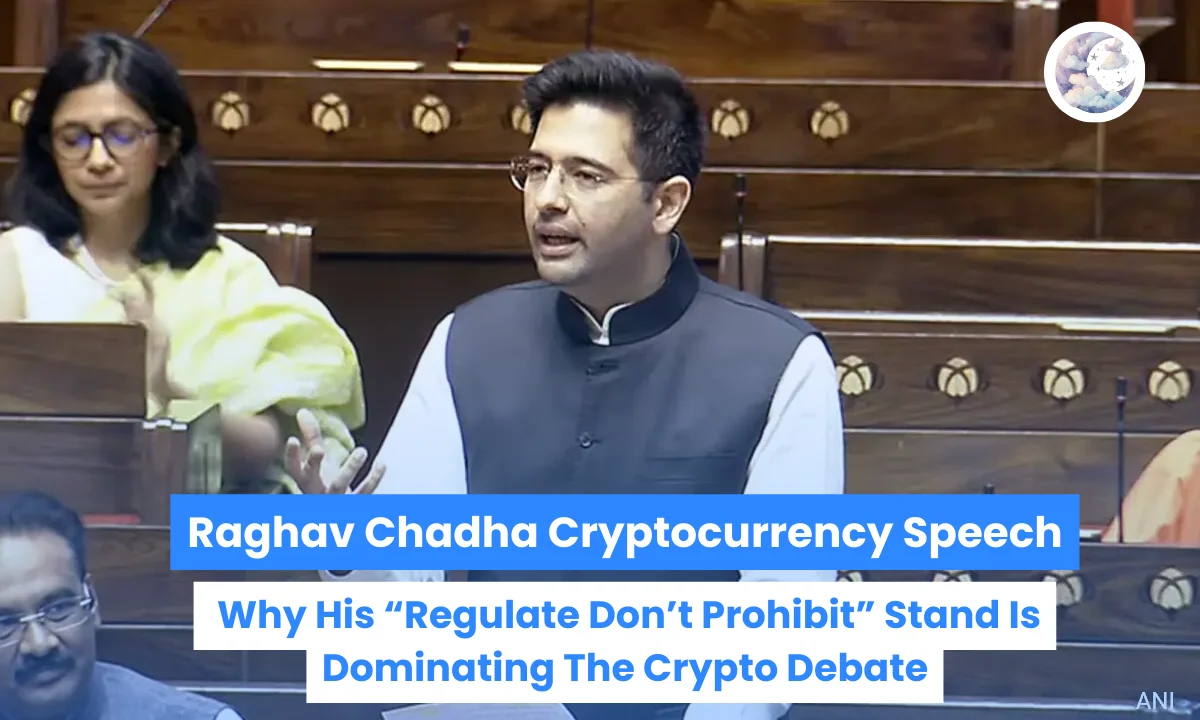
Raghav Chadha cryptocurrency speech in the Rajya Sabha during the Union Budget 2026–27 debate has triggered a nationwide discussion on crypto regulation in India. He questioned why Virtual Digital Assets are taxed at 30 percent capital gains with 1 percent TDS, yet are not legally recognized as an asset class. His line “Prohibition is not protection, regulation is protection” has now gone viral across social media platforms.
The speech comes at a time when India remains one of the highest crypto adoption markets globally despite regulatory ambiguity. With searches rising for “legalise cryptocurrency India,” “Raghav Chadha VDA speech,” and “crypto regulation India 2026,” the conversation has clearly shifted toward policy clarity and investor protection.
Key Takeaways
• Called for legal recognition of Virtual Digital Assets as an asset class
• Highlighted 30 percent tax and 1 percent TDS without full regulatory clarity
• Claimed ₹4.8 lakh crore trading volume moved offshore
• Around 12 crore Indians investing via foreign platforms
• Proposed strong AML framework and regulatory sandbox
• Estimated ₹15,000–20,000 crore potential annual tax revenue
• Emphasized regulation over prohibition
Also Read

India Lockdown 2026 Truth Revealed: Why Rumours Spread and What Actually Matters Right Now
What Raghav Chadha Said In Parliament?
During the Budget debate, he argued that India treats crypto inconsistently. It collects taxes as if VDAs are fully legal, but does not provide structured regulation, licensing, or dedicated investor safeguards.
He pointed out the absence of:
• Clear asset class recognition
• Dedicated licensing regime
• Structured investor protection framework
• Tailored anti money laundering compliance model
His core argument was simple. If crypto activity already exists at scale, it should be regulated within India rather than pushed offshore.
Key Data Points Cited In The Speech
The speech gained attention because of specific figures presented in Parliament.
Crypto Impact Snapshot
| Metric | Estimated Figure |
|---|---|
| Indian Investors Using Overseas Platforms | 12 Crore |
| VDA Trading Volume Shifted Offshore | ₹4.8 Lakh Crore |
| India Linked Crypto Volume On Foreign Exchanges | 73 Percent |
| Indian Crypto Startups Relocated Abroad | Around 180 |
| Potential Annual Tax Revenue With Regulation | ₹15,000–20,000 Crore |
These numbers were widely shared by crypto influencers and news outlets, fueling debate on capital migration and startup relocation.
Regulation Over Prohibition
Contrary to some criticism, he did not advocate unregulated crypto markets. He specifically called for heavy regulation, strong compliance and AML guardrails.
He suggested creating a domestic regulatory sandbox where crypto companies can operate under supervision. According to him, this would:
- Bring offshore activity back to India
- Improve investor protection
- Strengthen compliance
- Prevent capital flight
- Increase tax revenue
His message focused on structured oversight rather than deregulation.
Public Opinion On X And Social Media
The response on X has been largely positive among crypto investors and Web3 communities. Many users praised the clarity and economic logic behind the speech.
Supporters highlighted:
• Data driven arguments instead of emotional rhetoric
• Focus on middle class retail investors
• Concern about startup migration
• Emphasis on compliance rather than chaos
Some posts called it one of the strongest pro crypto speeches ever delivered in Indian Parliament.
However, critics remain vocal. Concerns raised include:
• Crypto being compared to gambling
• National security and terrorism financing risks
• Fear of destabilizing monetary control
Despite criticism, engagement metrics show strong positive momentum in crypto circles.
Broader Policy Context
India began taxing Virtual Digital Assets in 2022 with a flat 30 percent tax and 1 percent TDS on transactions. While AML monitoring exists under the Financial Intelligence Unit, there is no full licensing or asset class recognition framework yet.
Globally, several economies are moving toward clearer digital asset regulations. The global shift has intensified domestic discussions on whether India should formalize crypto policy rather than maintain ambiguity.
Chadha’s intervention aligns with this global trend of structured regulation instead of outright restriction.
Why This Speech Matters?
India has one of the largest retail crypto user bases globally. Youth investors, developers and Web3 startups remain active despite high taxation.
The speech reframes crypto from a speculative debate into an economic policy discussion. Instead of asking whether crypto is good or bad, it asks whether India should regulate innovation and retain capital within its borders.
The phrase “Regulate Don’t Prohibit” now summarizes this stance.
Final Thoughts
Raghav Chadha cryptocurrency speech has amplified calls for regulatory clarity in India. By presenting concrete numbers on offshore capital movement and startup migration, he shifted the debate toward economic impact and investor protection.
Whether policy reforms follow remains uncertain. But the conversation has clearly moved into mainstream political discussion. For investors and blockchain entrepreneurs, that shift alone feels significant.
Tags: Raghav Chadha Cryptocurrency, Crypto Regulation India 2026, Virtual Digital Assets India, VDA Legalization Debate, 30 Percent Crypto Tax India, Stablecoin Policy India, Blockchain Regulation India
Related Posts :



Share This Post