Yoga has become one of the most trusted natural methods for stress relief in 2025 and 2026. With rising screen time, work pressure, and emotional overload, many people now turn to yoga as a daily reset for both mind and body. Its appeal comes from simplicity, accessibility, and the visible calm it brings even after short sessions.
Modern wellness trends show a strong shift toward gentle yoga styles such as restorative yoga and yin yoga. These forms focus on slow movement, breathing, and nervous system balance. People value yoga because it does not require machines or complex routines. It only needs time, attention, and consistency.
Table of Contents
Key Takeaways
- Yoga reduces stress by calming the nervous system and lowering cortisol levels.
- Restorative and yin yoga are trending for deep relaxation and emotional balance.
- Short daily sessions can improve sleep, mood, and focus.
- Yoga combines breath, movement, and awareness for full mind body relief.
- Consistency matters more than intensity for long term stress control.
How Yoga Helps the Body Handle Stress?
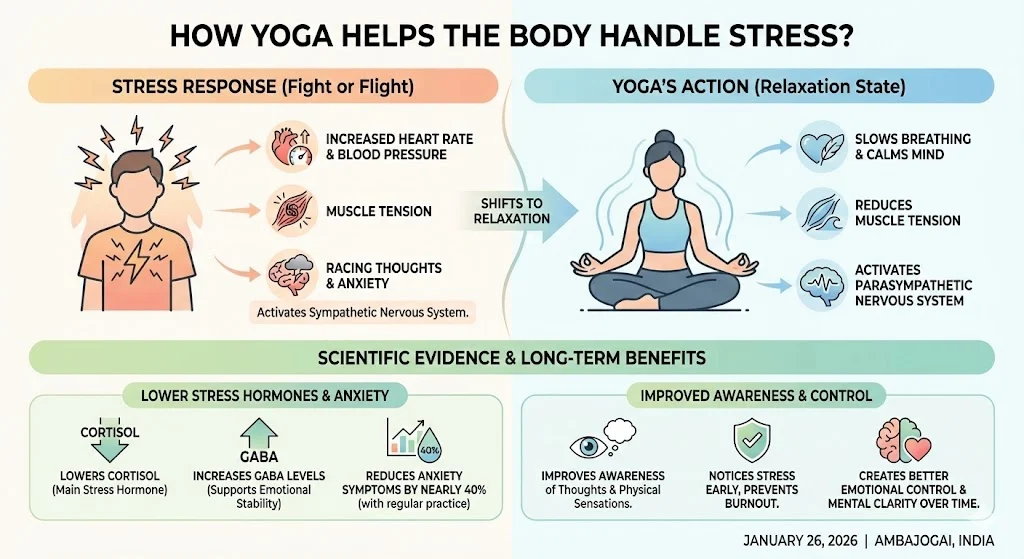
Stress activates the fight or flight response. This increases heart rate, blood pressure, and muscle tension. Yoga works by shifting the body into a relaxation state. It activates the parasympathetic nervous system which slows breathing and calms the mind.
Scientific studies from recent years confirm that yoga lowers cortisol which is the main stress hormone. It also increases GABA levels in the brain which supports emotional stability and reduces anxiety. Research shows anxiety symptoms can drop by nearly forty percent with regular yoga practice.
Yoga also improves awareness of thoughts and physical sensations. This awareness helps people notice stress before it builds into burnout. Over time, this creates better emotional control and mental clarity.
Why Yoga Is Trending for Stress Relief In 2026?
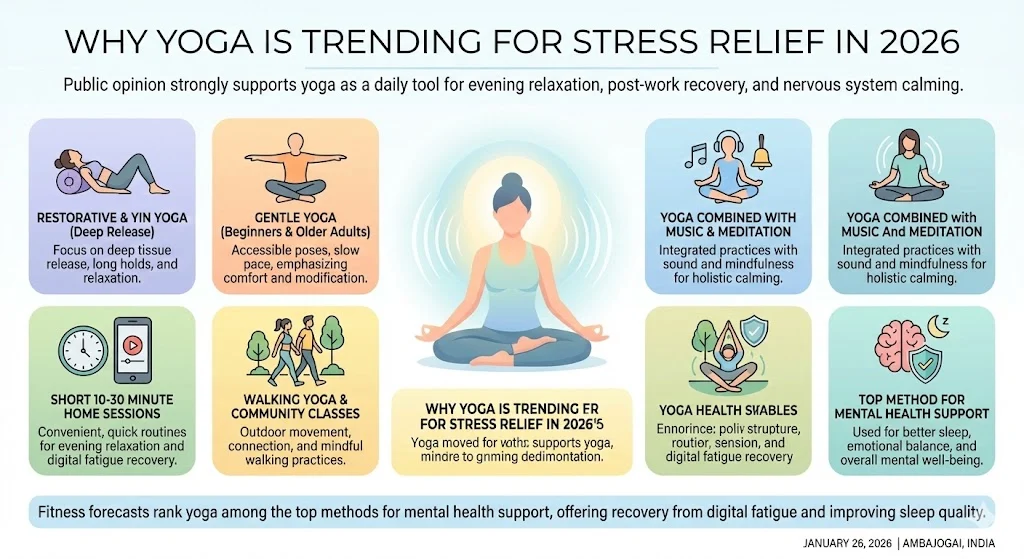
Public opinion strongly supports yoga as a daily stress management tool. Social media posts show people sharing short yoga routines for evening relaxation and post work recovery. Many teachers now host live sessions focused on calming the nervous system.
Recent trends highlight:
- Restorative and yin yoga for deep release
- Gentle yoga for beginners and older adults
- Yoga combined with music and meditation
- Short ten to thirty minute home sessions
- Walking yoga and community classes
Fitness forecasts rank yoga among the top methods for mental health support. It is used for better sleep, emotional balance, and recovery from digital fatigue.
The Mind and Body Connection in Yoga
Yoga works because it connects three elements which are movement, breathing, and attention. Physical poses release tension from muscles. Breathing slows the heart rate. Mental focus reduces racing thoughts.
Stress often shows up in the neck, shoulders, chest, and lower back. Yoga stretches these areas gently and improves blood flow. This releases stored tension and brings comfort.
Yoga also teaches non judgmental awareness. This helps people observe their thoughts without reacting emotionally. Over time, this reduces negative thinking patterns that increase stress.
Scientific Support for Yoga and Stress Relief
Recent studies show strong results from short yoga programs. University students practicing yoga for ten weeks reported improved mood and reduced anxiety. Medical students showed lower stress levels after only a few hours of guided yoga sessions.
Yoga Nidra practices showed improvement in sleep quality and emotional health when practiced daily for thirty days. These results remained stable even weeks later.
Brain health benefits are also noted. Yoga helps protect memory and reduces risk of cognitive decline by improving circulation and oxygen flow.
Best Yoga Styles for Stress Relief
Not all yoga styles are equal for stress control. Slow and grounding styles work best for calming the nervous system.
Restorative Yoga focuses on long held poses using cushions and pillows. It allows the body to relax without effort.
Yin Yoga targets deep connective tissues and releases stored tension. It is useful for chronic stress and emotional fatigue.
Hatha Yoga uses slow movements and breathing. It is suitable for beginners.
Yoga Nidra is guided relaxation that feels like deep rest. Thirty minutes can feel like several hours of sleep.
Yoga Poses for Stress Relief
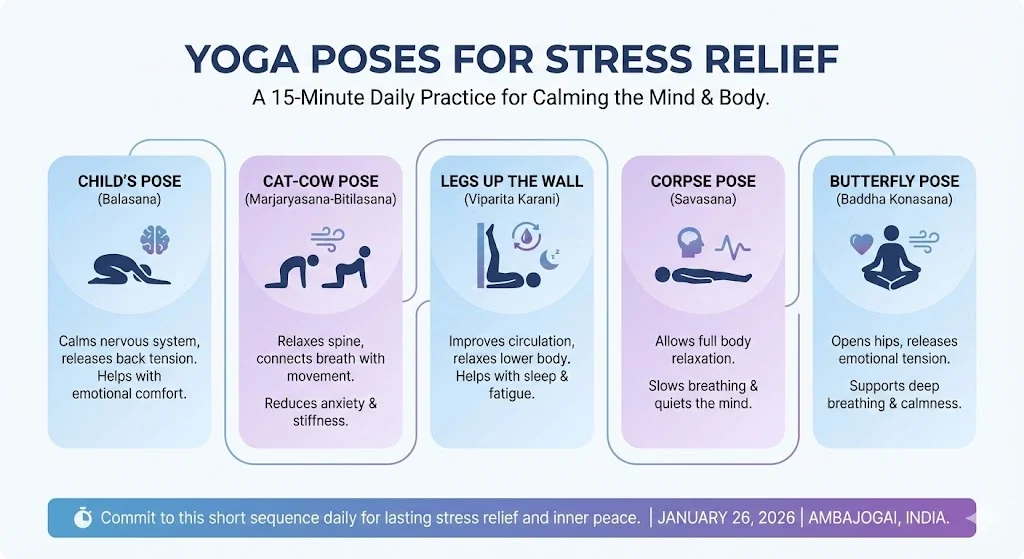
These poses are commonly shared by users and teachers for calming the mind and body.
Child’s Pose (Balasana)
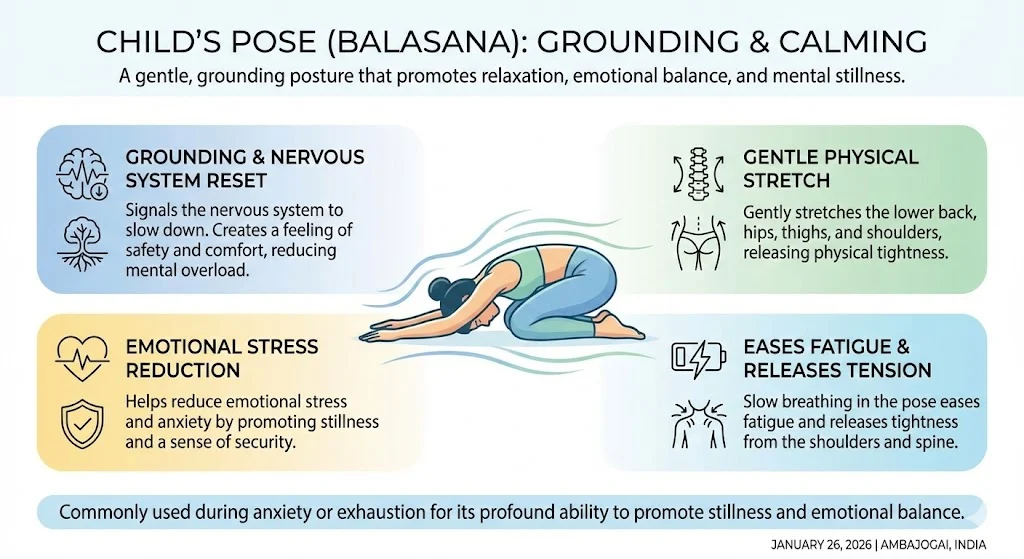
Child’s Pose is one of the most grounding and calming yoga postures. It gently stretches the lower back, hips, and thighs while allowing the chest and head to rest in a supported position. This posture signals the nervous system to slow down and shift into a relaxation state.
By bringing the body close to the floor, it creates a feeling of safety and comfort, which helps reduce emotional stress and mental overload. The slow breathing in this pose releases tightness from the shoulders and spine and helps ease fatigue. Many people use Child’s Pose during moments of anxiety or exhaustion because it promotes stillness and emotional balance.
Cat Cow Pose (Marjaryasana and Bitilasana)
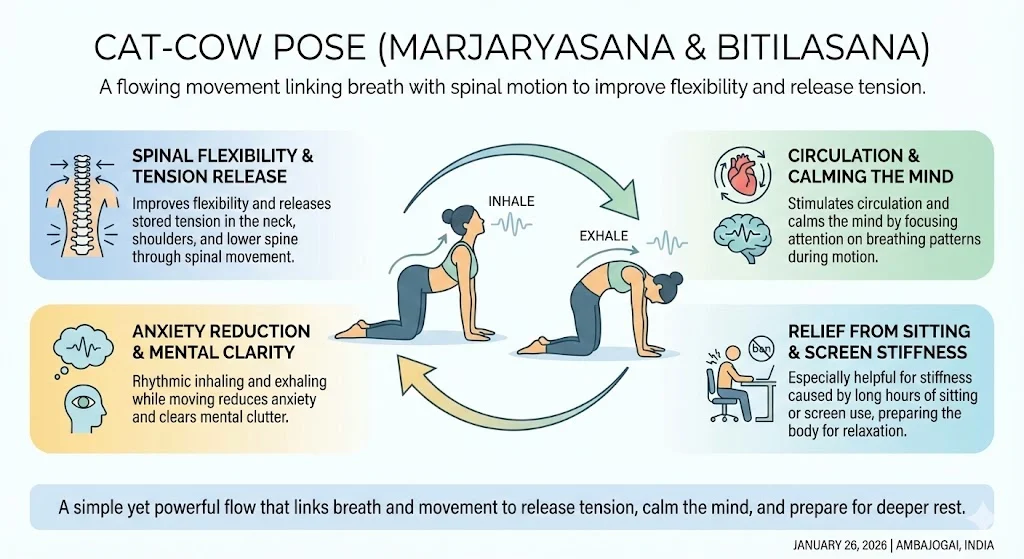
Cat Cow Pose is a flowing movement that links breath with spinal motion. As the body moves between arching and rounding the back, it improves flexibility and releases tension stored in the neck, shoulders, and lower spine.
This movement stimulates circulation and helps calm the mind by focusing attention on breathing patterns. The rhythm of inhaling and exhaling while moving reduces anxiety and clears mental clutter. Cat Cow is especially helpful for stiffness caused by long hours of sitting or screen use and prepares the body for deeper relaxation.
Legs Up the Wall (Viparita Karani)
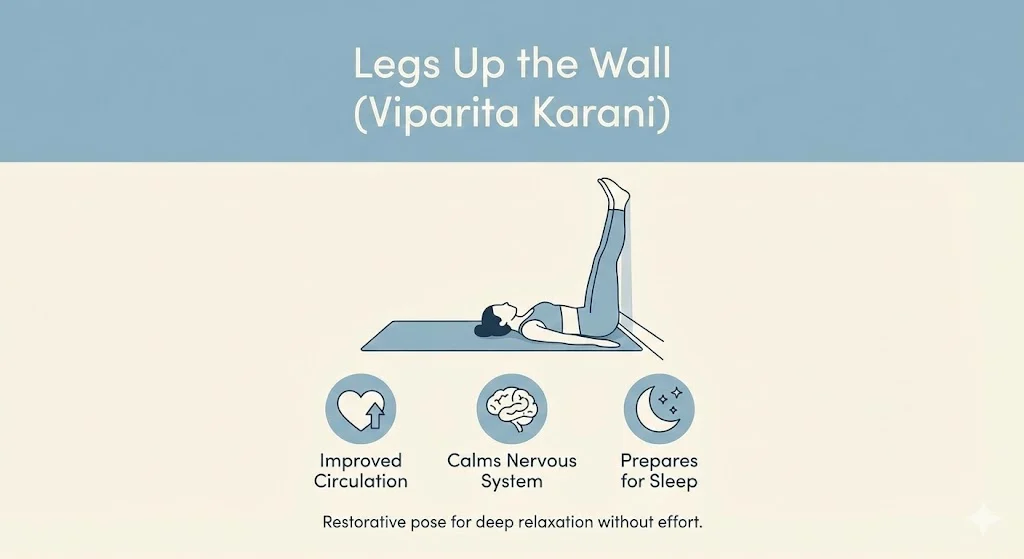
Legs Up the Wall is a restorative pose that allows the body to fully relax while improving blood circulation. By raising the legs above heart level, this posture reduces swelling in the feet and legs and relieves tired muscles. It also helps slow the heart rate and calm the nervous system.
This pose is often used in the evening to prepare the body for sleep because it reduces fatigue and mental restlessness. The gentle inversion brings a sense of lightness to the body and supports deep relaxation without effort.
Corpse Pose (Savasana)
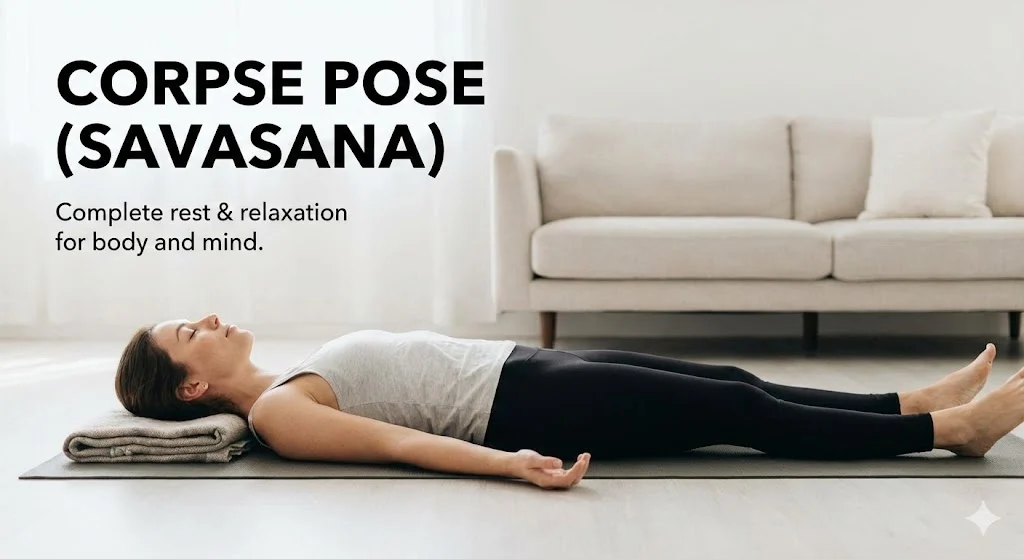
Corpse Pose is the final relaxation posture in most yoga practices and is designed for complete rest. The body lies flat while attention is placed on slow, natural breathing. This position allows muscles to release fully and the mind to become quiet.
Savasana reduces physical tension and mental stress by giving the nervous system time to reset. It improves awareness of the body and promotes inner calm. Regular practice of this pose helps reduce anxiety, lowers heart rate, and supports better sleep quality.
Butterfly Pose (Baddha Konasana)
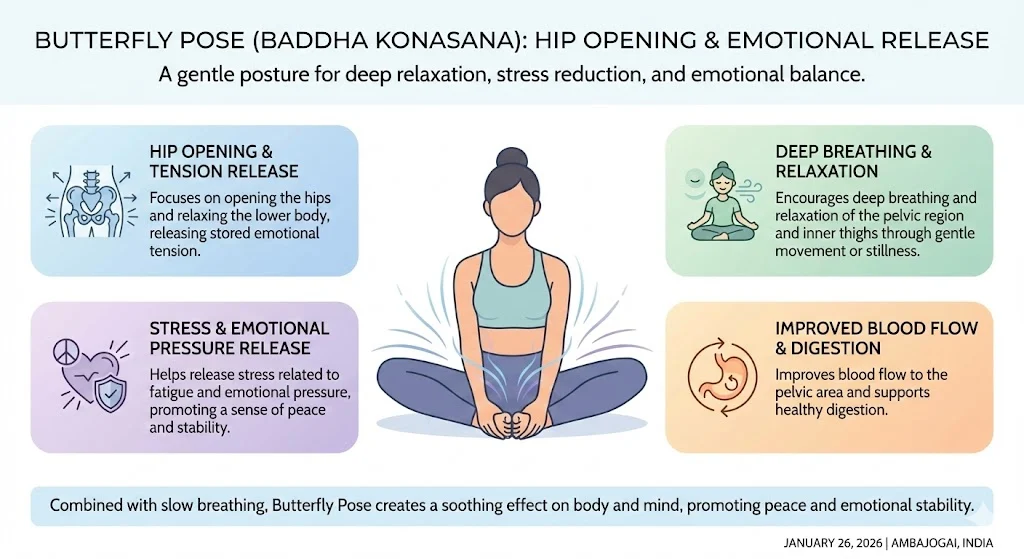
Butterfly Pose focuses on opening the hips and relaxing the lower body, which is an area where emotional tension is often stored. The gentle movement or stillness in this pose encourages deep breathing and relaxation of the pelvic region and inner thighs.
It helps release stress related to fatigue and emotional pressure. This posture also improves blood flow and supports digestion. When combined with slow breathing, Butterfly Pose creates a soothing effect on both body and mind and promotes a sense of peace and emotional stability.
Together, these poses work as a simple and effective routine for stress relief. They calm the nervous system, reduce muscle tension, improve breathing, and help restore emotional balance when practiced regularly.
The Role of Breathing in Stress Relief
Breathing is the foundation of yoga. Controlled breathing sends signals to the brain that the body is safe.
Slow breathing reduces heart rate and lowers blood pressure. It also improves oxygen flow and mental focus.
Common breathing practices include:
- Alternate nostril breathing for balance
- Deep belly breathing for relaxation
- Gentle humming breath for nervous system calm
These can be done anywhere without movement. Even five minutes can reduce stress levels.
Yoga and Sleep Improvement
Stress and poor sleep are closely connected. Yoga helps break this cycle. Evening yoga sessions relax muscles and quiet the mind.
Gentle poses before bed help reduce restlessness. Yoga Nidra is widely used for insomnia and mental fatigue.
Many users report falling asleep faster and waking up more refreshed after regular yoga practice.
Why Consistency Matters More Than Duration
People often believe they need long yoga sessions. This is not true. Short daily practice is more effective than long sessions done rarely.
Ten minutes of slow yoga can reset the nervous system. Over weeks, this builds emotional strength and better stress tolerance.
Consistency also builds habit. This prevents stress from reaching extreme levels.
Addressing Common Doubts About Yoga
Some people think yoga is only stretching. Others think it requires flexibility. These beliefs limit participation.
Yoga can be done seated or lying down. It can be slow or still. It works for all ages and fitness levels.
Others believe yoga only helps temporarily. Research shows long term improvement when practiced regularly.
Yoga as a Long Term Stress Management Tool
Yoga does not remove life problems. It improves the way the body and mind respond to them.
Benefits include:
- Lower cortisol levels
- Better sleep quality
- Improved emotional balance
- Reduced muscle tension
- Increased mental clarity
These changes help prevent burnout and chronic anxiety.
Final Thoughts
Yoga for stress relief is not a passing trend. It is a stable wellness habit supported by science and real life experience. Its strength lies in simplicity and consistency.
People admire yoga because it works without equipment or medication. It supports the nervous system and restores balance in daily life.
As stress continues to rise in modern routines, yoga remains one of the most reliable tools for mental calm and physical comfort.
Tags: yoga for stress relief, mental wellness, restorative yoga, anxiety management, relaxation techniques, holistic health