What Happened To Farrier In Dunkirk: The Silent Ending That Says Everything
What Happened To Farrier In Dunkirk: The Silent Ending That Says Everything
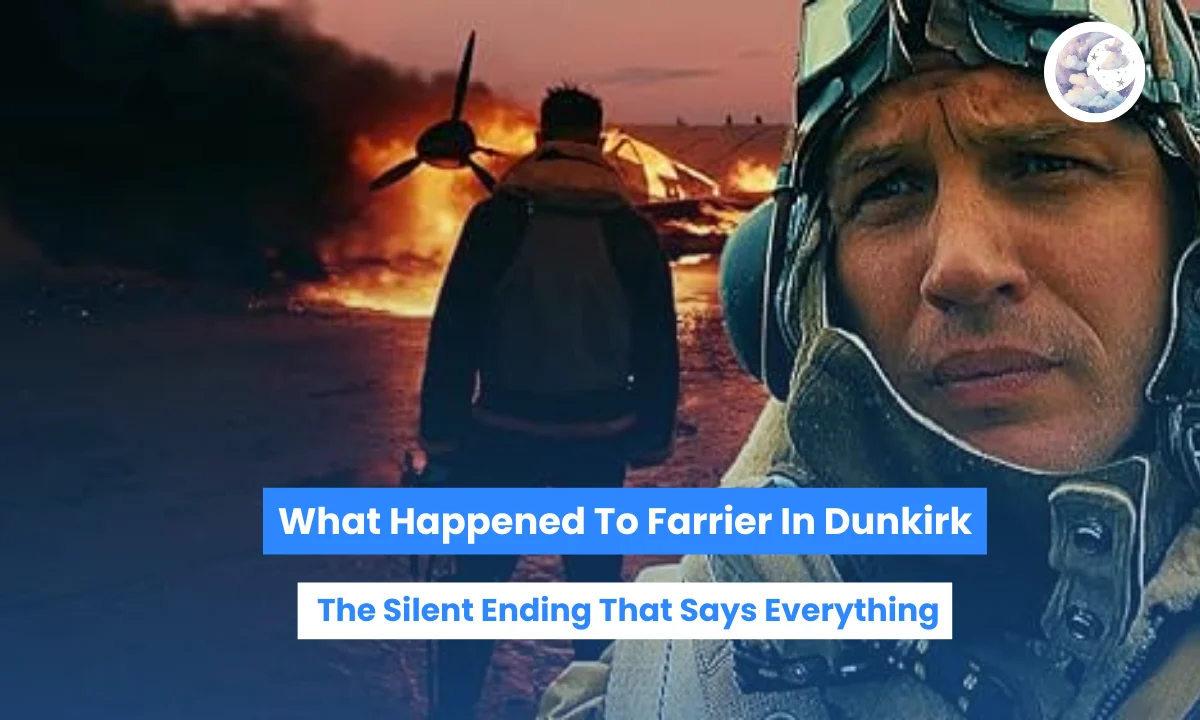
If you have watched Dunkirk carefully, you already know that Farrier’s ending hits different. No loud speech. No dramatic background story. Just a pilot gliding across the sky with almost zero fuel and then calmly walking into captivity. That last scene leaves many people searching for one thing. What happened to Farrier in Dunkirk?
In Christopher Nolan’s 2017 war film, Squadron Leader Farrier played by Tom Hardy becomes one of the most memorable characters despite limited dialogue. His final moments are powerful and subtle. And honestly, many competitor articles only tell you he was captured. But there is more to understand here. Let us break it down properly.
Key Takeaways
- Farrier runs out of fuel after defending the Dunkirk evacuation.
- He shoots down a final German dive bomber before landing.
- He safely lands his Spitfire on the beach in German-controlled territory.
- He burns the aircraft to prevent enemy capture.
- He is taken as a prisoner of war.
- Farrier is fictional but inspired by real RAF pilot Alan Deere.
- His ending reflects sacrifice, duty and quiet heroism.
- The film leaves his long-term fate unknown on purpose.

The Context Of The Dunkirk Evacuation
Before jumping into Farrier’s fate, we need quick context. Dunkirk is based on the real World War II evacuation of Allied soldiers from France in 1940. Around 330000 British and French troops were rescued from the beaches of Dunkirk.
Dunkirk directed by Christopher Nolan tells this story through three timelines. One week on land. One day at sea. One hour in the air.
Farrier belongs to the air timeline. Just one hour. But that one hour changes everything.
Who Is Farrier In Dunkirk?
Farrier is a Royal Air Force Squadron Leader. His callsign is Fortis 1. He flies a Supermarine Spitfire to provide air cover during the evacuation. He is calm. Focused. Almost emotionless. That is what makes him stand out.
Early in the film, his fuel gauge gets damaged by enemy fire. This is important. From that moment, he does not know how much fuel he has left. Still he continues the mission. No panic. No overreaction. Pure professionalism.
He engages German aircraft including a Heinkel bomber and multiple dive bombers. Every dogfight matters because ships full of soldiers are below.
The Final Aerial Sequence Explained
This is the moment everyone talks about. Farrier’s fuel is critically low. His plane is practically gliding. Instead of turning back to England, he stays to protect the last evacuation ships.
He spots a German Stuka dive bomber heading toward the mole where soldiers are boarding boats. If that bomber hits, hundreds could die.
Despite almost no fuel left, Farrier positions himself perfectly and shoots it down. That final shot saves countless lives.
There is no dramatic celebration. Just silence. The sky goes quiet. And then his engine dies.
Why Does Farrier Land Instead Of Bail Out
Many people ask this. Why did Farrier not parachute into the sea and try to escape? Simple reason. Control.
During that time, ejector seats did not exist. Bailing out at low altitude was risky. Landing on the beach gave him more control over survival.
He lowers the landing gear and performs a smooth touchdown on the sand. This happens in German-controlled territory. The evacuation zone has already been abandoned.
Here is a quick comparison:
| Option | Risk Level | Outcome |
|---|---|---|
| Bail Into Sea | High drowning risk | Possible rescue but uncertain |
| Crash Landing On Beach | Controlled landing | Certain capture but survival likely |
Farrier chooses survival with dignity.
Why Does He Burn The Spitfire
After landing, he steps out of the aircraft calmly. Then he sets it on fire.
This was standard military protocol. You do not let advanced aircraft technology fall into enemy hands. The Supermarine Spitfire was one of Britain’s most valuable fighter planes.
Burning it prevents intelligence leaks and technical exploitation. That moment is symbolic. He sacrifices not just his freedom but also his aircraft.
What Happens To Farrier After Capture
The film ends with German soldiers approaching him. He raises his hands and is taken prisoner. That is all we see.
Christopher Nolan deliberately leaves his future open. We do not know if he survived the war. We do not know if he escaped. We do not know if he endured harsh POW camps.
And that uncertainty makes it more powerful. War does not always give closure.
Was Farrier Based On A Real Person
Farrier is fictional. But he draws inspiration from real RAF pilots who fought during the evacuation. The strongest parallel is with Alan Christopher Deere.
Alan Deere was a New Zealand fighter pilot who flew Spitfires during World War II. During the Dunkirk evacuation, his aircraft was damaged and he crash-landed near a beach.
But unlike Farrier, Deere was not captured. He eventually returned to Britain and survived the war. He even wrote about his experiences in his autobiography Nine Lives.
Here is the difference clearly:
| Aspect | Farrier | Alan Deere |
|---|---|---|
| Character Type | Fictional | Real RAF Pilot |
| Aircraft Damage | Fuel gauge destroyed | Cooling system hit |
| Landing | German-controlled beach | Belgian beach |
| Capture | Yes | No |
| Survived War | Unknown | Yes |
Farrier represents collective RAF heroism rather than one single individual.
Public Opinion On Farrier’s Ending (Data Taken From X)
Looking at discussions and reactions, most viewers agree on one thing. Farrier’s ending is the emotional high point of the film.
Many viewers praise:
- His calm expression under pressure.
- The silent glide sequence.
- The symbolism of burning the Spitfire.
- The acceptance of capture without fear.
Some viewers feel his capture was tragic. Others believe it was realistic. A lot of fans say his final scene gave them goosebumps because it showed sacrifice without speeches.
And honestly, that is peak Nolan storytelling.
Thematic Meaning Behind Farrier’s Fate
Farrier’s ending supports the central themes of Dunkirk:
Quiet Heroism
He does not need applause. He just does his duty.
Sacrifice Over Glory
He saves others knowing he may lose everything.
Survival Is Victory
In the film, a blind old man tells soldiers, surviving is enough. Farrier survives. That itself is meaningful.
Why Competitor Articles Miss The Bigger Picture?
Most articles just answer one question. Was he real. Was he captured. Did he survive. But they miss the emotional and thematic layer.
Farrier is not just about historical accuracy. He represents the unseen air support that made the Dunkirk evacuation possible.
While soldiers on the beach complained about lack of air cover, RAF pilots were risking everything above the clouds. His capture is not defeat. It is completion of duty.
Final Thoughts On What Happened To Farrier
So what happened to Farrier in Dunkirk?
He ran out of fuel after defending thousands of soldiers. He shot down a final enemy bomber. He landed deliberately on the beach. He burned his plane. He surrendered and became a prisoner of war.
And then the story ends. No dramatic speech. No guarantee of survival. Just a man who did his job till the very last drop of fuel.
That quiet walk into captivity is one of the most powerful endings in modern war cinema. Sometimes heroism is not about coming home. Sometimes it is about making sure others do.
Related Posts :




Share This Post