Meditation is now seen as one of the simplest ways to bring calm and clarity into daily life. Many people search for structured methods because sitting in silence without guidance often feels confusing at the beginning.
Different traditions describe meditation in different ways. Some focus on breath. Some focus on awareness. Some include spiritual elements. A seven step approach is popular because it gives beginners a clear path without making the practice feel heavy or complex.
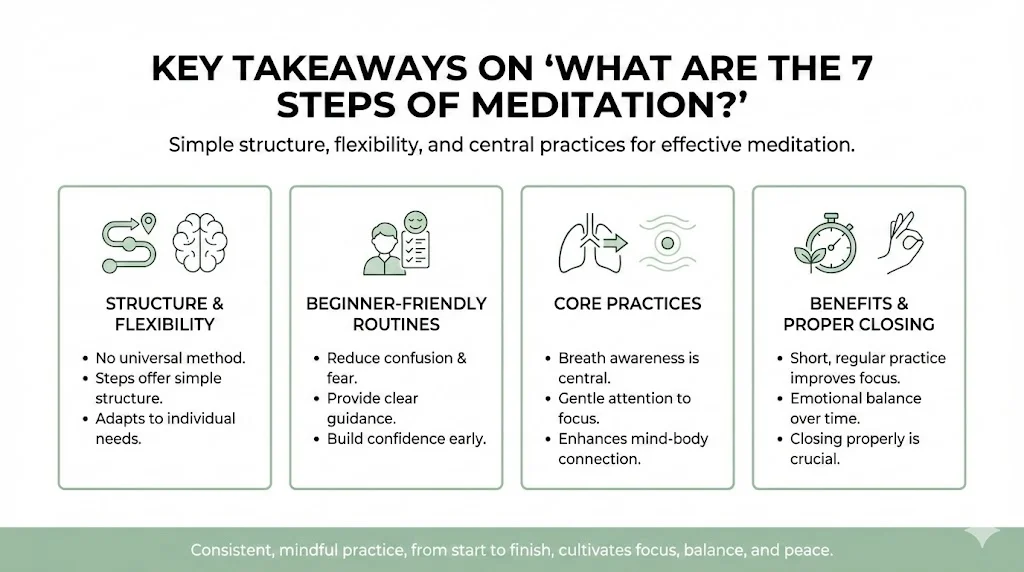
Key Takeaways
- Meditation does not follow one universal method but seven steps give a simple structure.
- Beginners prefer step based routines because they reduce confusion and fear of doing it wrong.
- Regular short practice can improve focus and emotional balance over time.
- Breath awareness and gentle attention are central to most meditation systems.
- Closing the session properly is as important as starting it.

Understanding the Seven Steps of Meditation
The seven steps of meditation are designed as a gradual process. Each step prepares the mind and body for the next one. This approach is common in modern wellness guides and also matches older traditions like Buddhist breath meditation and mindfulness practice.
These steps are not meant to be forced. They work best when practiced slowly and with patience. Many people report that structured steps help them stay consistent and avoid frustration.
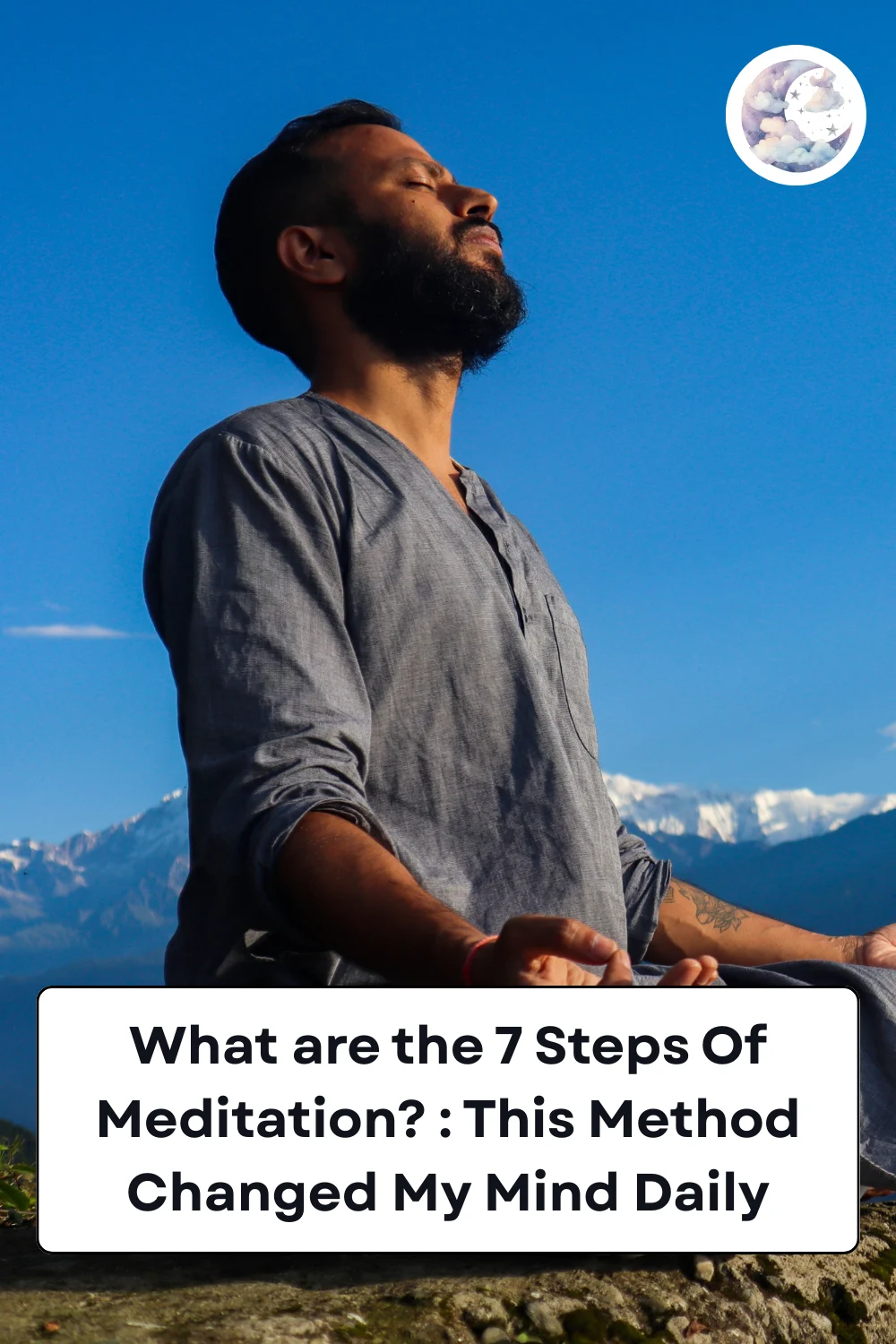
Below is a beginner friendly version of the seven steps of meditation that blends practical and traditional ideas.
Step 1 Preparing the Body and the Space
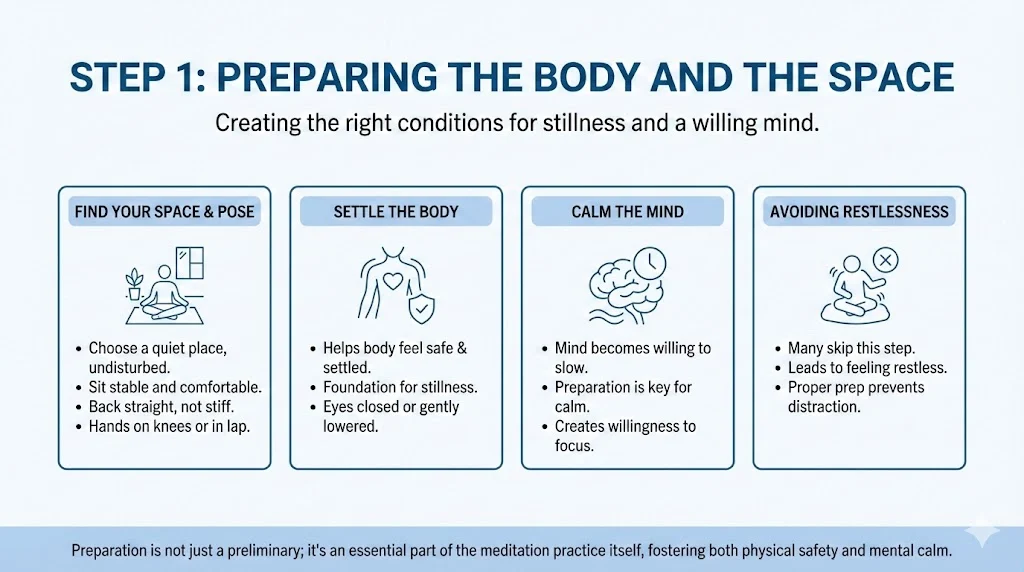
Meditation begins before closing the eyes. Preparation creates the right condition for stillness.
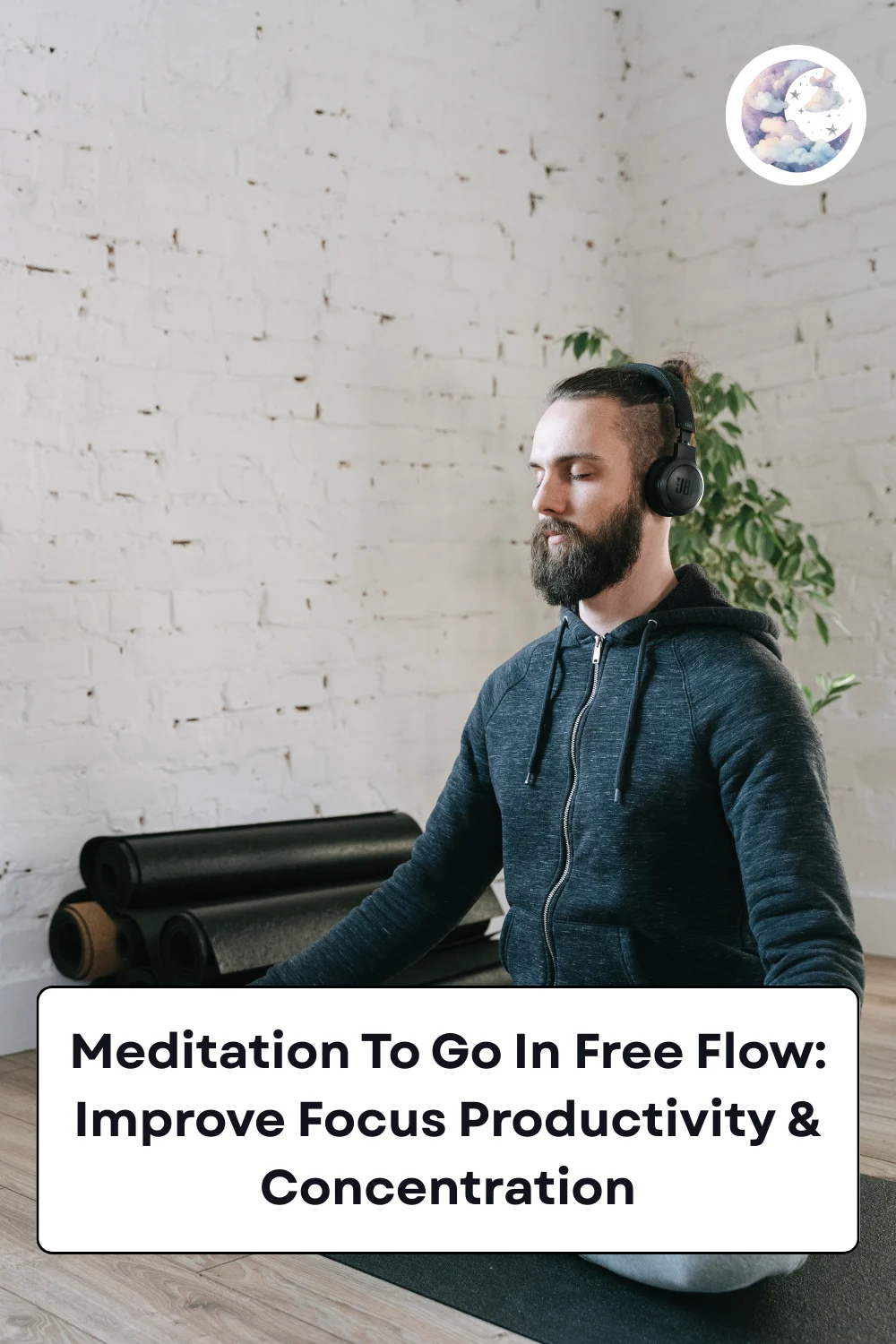
Choose a quiet place where you will not be disturbed. Sit in a position that feels stable and comfortable. The back should be straight but not stiff. Hands can rest on the knees or in the lap. Eyes may be closed or kept gently lowered.
This step helps the body feel safe and settled. When the body is relaxed, the mind becomes more willing to slow down. Many people skip this step and then feel restless during meditation.

Step 2 Bringing Attention to the Present Moment
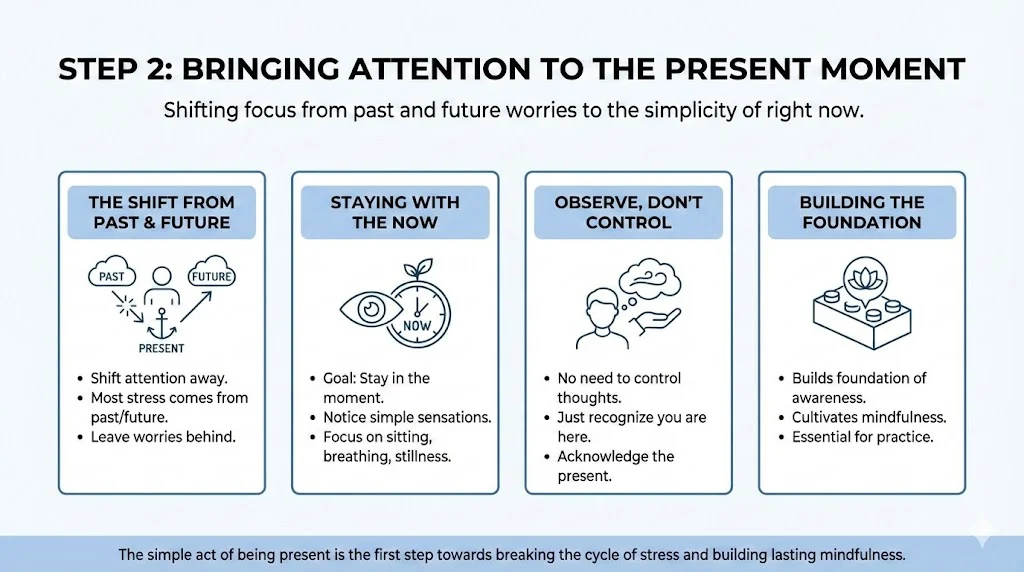
The second step is shifting attention away from the past and future.
Most stress comes from thinking about what already happened or what may happen next. In meditation, the goal is to stay with what is happening now. This means noticing simple things like sitting, breathing, and being still.
There is no need to control thoughts at this stage. The aim is only to recognize that you are here in this moment. This step builds the foundation of mindfulness and awareness.
Step 3 Focusing On The Breath
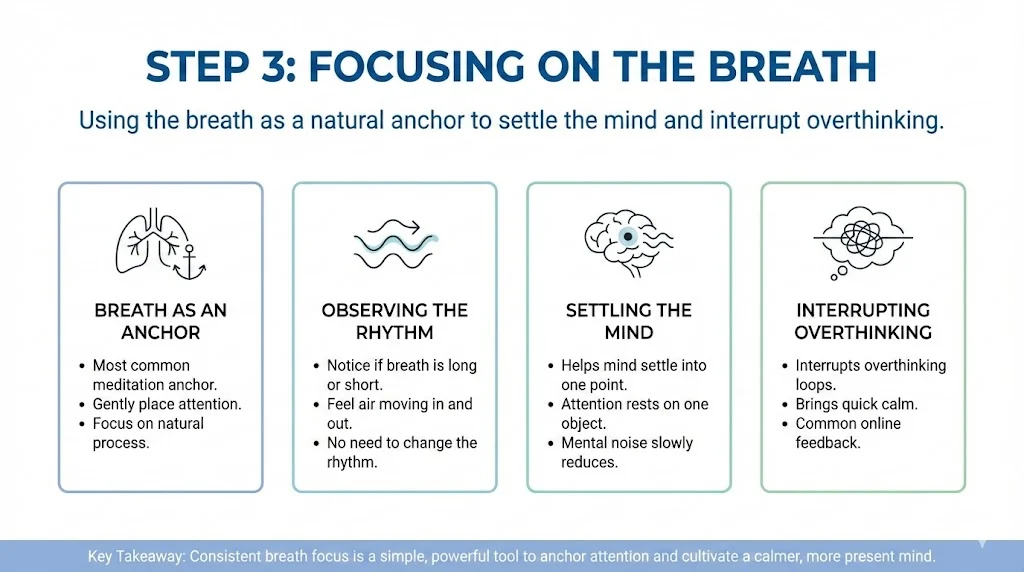
Breath is the most common anchor in meditation.
Gently place attention on the natural breathing process. Notice whether the breath is long or short. Notice the feeling of air moving in and out. There is no need to change the rhythm of breathing.
Breath focus helps the mind settle into one point. Many traditions teach that when attention rests on one object, mental noise slowly reduces. People online often say this step helps interrupt overthinking loops and brings quick calm.
Step 4 Noticing Distractions Without Reaction
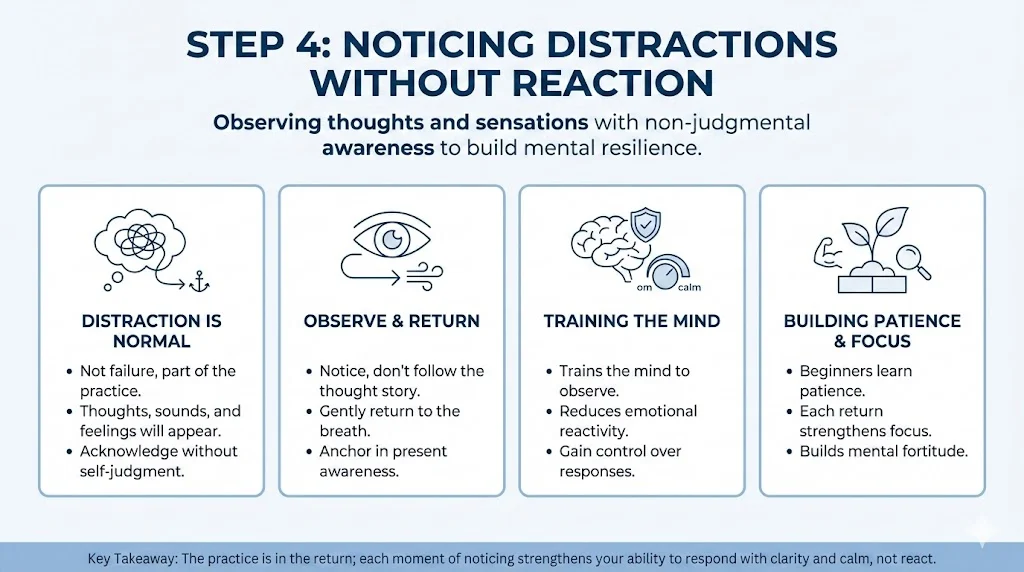
Distraction is not failure. It is part of meditation.
Thoughts, sounds, and feelings will appear. The practice is to notice them and return to the breath or present awareness. Do not judge yourself. Do not follow the thought story.
This step trains the mind to observe instead of react. Over time, people report feeling less emotional reactivity and more control over their responses in daily life.
This is also where beginners learn patience. Each return to awareness strengthens mental focus.
Step 5 Deepening Concentration and Calm
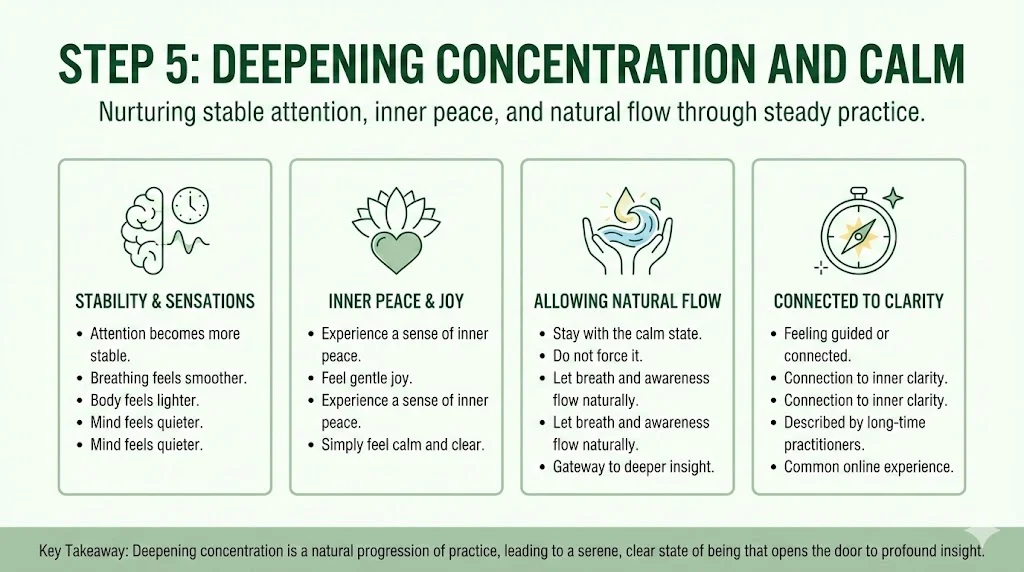
With steady practice, attention becomes more stable.
Breathing feels smoother. The body feels lighter. The mind feels quieter. Some people experience a sense of inner peace or gentle joy. Others feel simply calm and clear.
This step is about staying with that calm state without forcing it. Let the breath and awareness flow naturally. This stage is often described by long time practitioners as the doorway to deeper insight.
Many people online describe this phase as feeling guided or connected to inner clarity.
Step 6 Observing Thoughts & Sensations Clearly
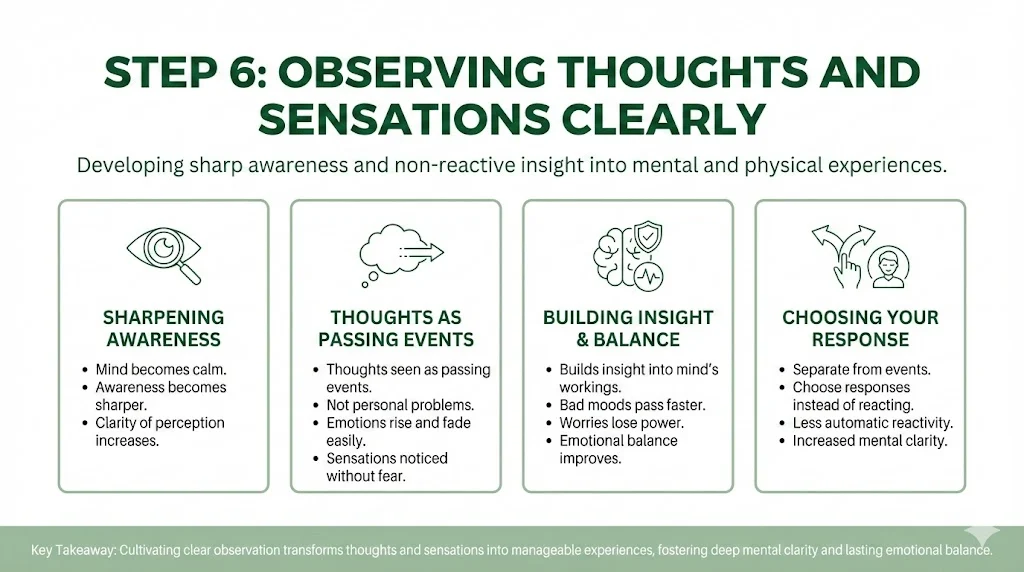
When the mind becomes calm, awareness becomes sharper.
Thoughts can be seen as passing events instead of personal problems. Sensations in the body are noticed without fear. Emotions rise and fade more easily.
This step builds insight into how the mind works. Practitioners often report that bad moods pass faster and worries lose power. Some describe this as separating from events and choosing responses instead of reacting automatically.
This stage is important for mental clarity and emotional balance.
Step 7 Ending the Session with Reflection
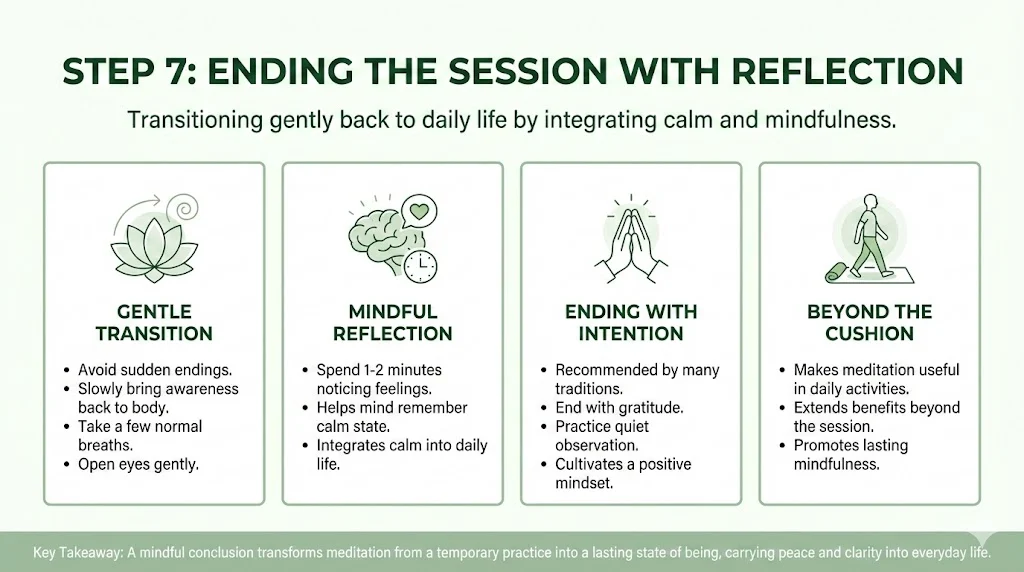
Meditation does not end suddenly.
Slowly bring awareness back to the body and surroundings. Take a few normal breaths. Open the eyes gently.
Spend one or two minutes noticing how you feel. This reflection helps the mind remember the calm state and carry it into daily activities. Many traditions recommend ending meditation with gratitude or quiet observation.
This step makes meditation useful beyond the sitting session.
Why Structured Steps Help Beginners
Many beginners feel lost when told to just sit and breathe. A step based method gives direction and confidence.
Public discussions from 2024 to 2026 show that people admire structured meditation for its simplicity and impact. Starting with five to ten minutes daily helps build consistency. Over time, people notice less overthinking, better mood, and clearer decisions.
Some experienced practitioners say vague methods do not lead to deep results. They prefer defined techniques like breath awareness or focused observation. This is why seven step systems remain popular in both spiritual and modern wellness communities.
Variations Across Traditions
There is no single official version of the seven steps.
Some systems include posture and breathing exercises before sitting. Others include compassion or mantra practice. Buddhist methods focus more on breath and awareness. Yoga based systems combine body and mind preparation. Spiritual traditions add elements of intuition and inner guidance.
Despite differences, most versions share these core ideas:
- Preparation
- Present moment awareness
- Breath focus
- Handling distraction
- Deepening calm
- Observing mind
- Closing with reflection
This shows that the structure is universal even when names change.
Common Experiences Shared by Practitioners
People who practice meditation regularly report similar changes.
They say their moods pass more easily. Fear and worry feel lighter. Decisions feel clearer. Many describe meditation as both relaxation and empowerment.
Some link meditation with daily health habits like walking, sunlight, and balanced food. They believe these combined routines solve many lifestyle problems.
Long term practitioners say that observing thoughts as impersonal helps release mental stress. They describe meditation as emptying mental clutter and connecting with a deeper sense of peace.
Important Notes for Safe Practice
Meditation should not be treated as a medical treatment or guaranteed cure.
It supports mental wellbeing and emotional balance. Results differ from person to person. Some days will feel calm. Some days will feel restless. Both are normal.
The key is regular practice without pressure. Ten minutes daily is more useful than long sessions once a week. Consistency builds long term benefit.
Meditation should feel safe and gentle. If discomfort arises, posture and breathing can be adjusted.
Final Thoughts
The seven steps of meditation provide a clear and practical way to begin and deepen practice. They remove confusion and replace it with structure. This makes meditation easier for modern life.
By preparing the body, focusing on breath, handling distractions, and ending with reflection, people create a complete cycle of awareness. Over time, this practice builds calm, clarity, and emotional strength.
Meditation remains popular because it requires no equipment and very little time. Just a few minutes each day can lead to noticeable inner change when practiced with patience and care.
Tags: meditation steps, mindfulness practice, beginner meditation guide, mental clarity, daily meditation routine, stress awareness