Trump Threatens to Bomb Iran’s Bridges and Power Plants: The Full Story Behind the US-Iran War of 2026
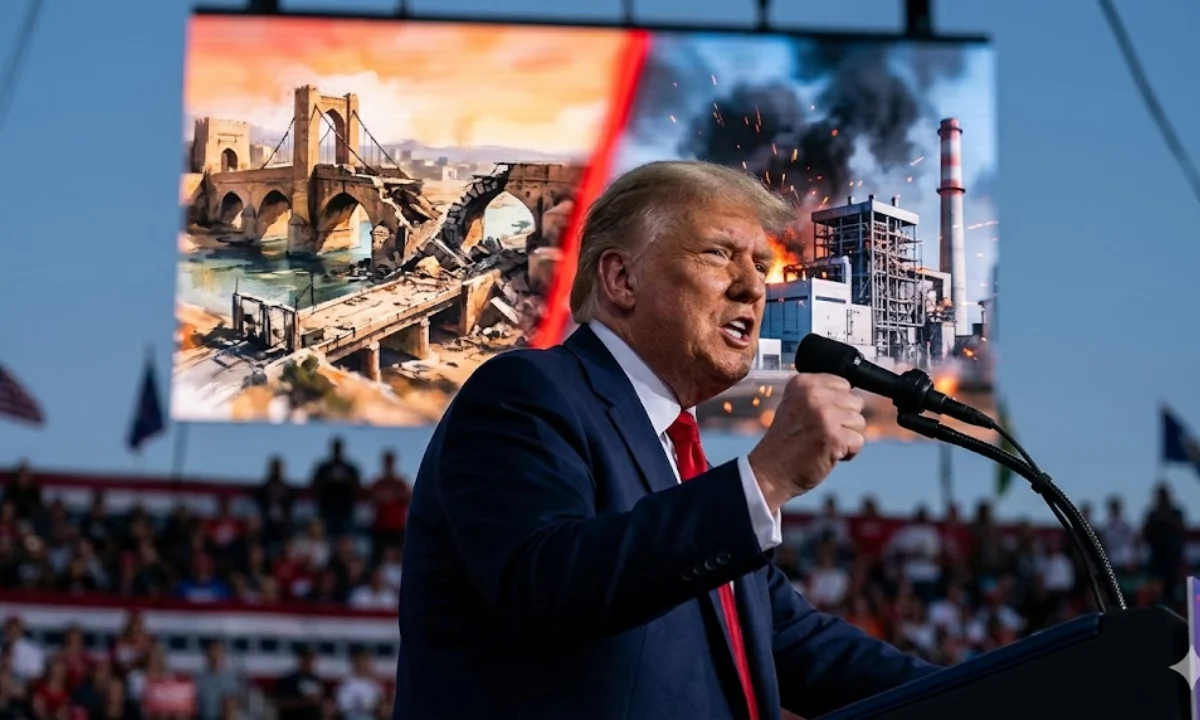
Trump Threatens to Bomb Iran's Bridges and Power Plants
The headline “Trump threatens to bomb Iran’s bridges and electric power plants” has been shocking people around the world since early April 2026. But this is not an isolated statement. It is part of a conflict that started on February 28, 2026, and has already changed oil markets, global trade, and the political balance in the Middle East.
If you are trying to understand what is really happening, why it started, what Trump actually said, what has already been destroyed, and what could happen next, this article gives you the full picture in simple and clear language.
Key Facts at a Glance
Before we go into detail, here is a quick summary of where things stand right now:
| Event | Detail |
|---|---|
| War start date | February 28, 2026 |
| Operation name | Operation Epic Fury |
| Countries attacking Iran | United States and Israel |
| Iran’s key counter-move | Closing the Strait of Hormuz |
| Bridge struck | B1 bridge near Karaj (Tehran suburb), April 2, 2026 |
| Bridge casualties | 8 killed, 95 injured (per Iranian state media) |
| US military strikes so far | Over 8,000 military targets hit |
| Brent crude oil peak | Over $126 per barrel |
| US gas prices | Above $4 per gallon for first time since 2022 |
| Deadline to strike power plants | Extended to April 6, 2026 |
| Iran’s response | Denied negotiations, threatened to strike Gulf infrastructure |
This table tells you that the conflict is already well beyond threats and statements. Real military action is happening and real economic damage is spreading across the globe.
How This War Started: February 28, 2026
To understand Trump’s threats about bridges and power plants, you need to know how this war began.
On February 28, 2026, the United States and Israel started a war with surprise airstrikes on sites and cities across Iran, assassinating Supreme Leader Ali Khamenei and several other Iranian officials. The operation was called “Operation Epic Fury.”
This was not a small symbolic action. The operation targeted Iranian command and control centers, IRGC headquarters, ballistic missile sites, navy ships and submarines, anti-ship missile sites, air defense capabilities, and military airfields.
Iran reacted immediately and aggressively. Iran launched retaliatory missile and drone strikes targeting US embassies, military installations, and oil infrastructure including vessels in the Strait of Hormuz throughout the Middle East.
The Strait of Hormuz became the central weapon in Iran’s counter-strategy. Starting on March 4, 2026, Iranian forces declared the Strait closed, threatening and carrying out attacks on ships attempting to transit.
This single decision by Iran changed the entire global energy picture. The Strait, which borders Iran and Oman, is a key waterway. Roughly 27% of the world’s maritime trade in crude oil and petroleum products goes through the Strait. When the Strait closed, the world immediately felt it.
The Strait of Hormuz: Why the Whole World Is Watching
Most people outside the energy sector do not know the Strait of Hormuz by name. But the moment it was blocked, people in India, Europe, and Asia started feeling it through fuel prices and inflation.
The closure of the strait has been described as the largest disruption to the energy supply since the 1970s energy crisis, as well as the largest in the history of the global oil market. Here is what passes through this narrow waterway every single day:
The Strait is only 21 miles wide at its narrowest point. Yet it handles an enormous share of the world’s most critical commodities. Its two unidirectional sea lanes facilitate the transit of around 20 million barrels of oil per day, representing roughly 20% of global seaborne oil trade. In 2024, an estimated 84% of crude oil and condensate shipments through the strait were destined for Asian markets, with China receiving a third of its oil via the strait.
It is not just oil. Up to 30% of internationally traded fertilizers normally transit the Strait of Hormuz. Europe gets 12% to 14% of its LNG from Qatar through the strait.
The impact on food and agriculture has been severe as well. In early March, Middle East granular urea prices rose by nearly 20% compared to late February levels. Global fertilizer prices could average 15% to 20% higher during the first half of 2026 if the crisis continues.
Countries that import food through Gulf ports are facing emergency situations. The maritime blockade triggered a grocery supply emergency across Gulf Cooperation Council states, which rely on the Strait for over 80% of their caloric intake. By mid-March, 70% of the region’s food imports were disrupted, forcing retailers to airlift staples, resulting in a 40% to 120% spike in consumer prices.
The human cost of blocking this one waterway is enormous. And this is exactly the pressure Trump is trying to use against Iran.
Oil Prices: The Economic Weapon
The oil price story tells you more about the stakes of this conflict than any single military event. The conflict caused immediate volatility in energy markets, with Brent crude oil prices surging 10 to 13% to around $80 to $82 per barrel by March 2, 2026.
Things got much worse after the Strait was officially declared closed. Brent crude oil prices surpassed $100 per barrel on March 8, 2026, for the first time in four years, rising to $126 per barrel at its peak.
US gas prices rose above $4 per gallon. Since the war began, Iran has effectively shuttered the Strait of Hormuz, which handles roughly 20% of the world’s oil supply, triggering a global energy crisis.
Analysts are warning that things could get even worse. US government officials and Wall Street analysts are starting to consider the prospect that oil prices might surge to an unprecedented $200 a barrel.
Bloomberg Economics projected that for oil around $110 a barrel, there is a marked but manageable boost to prices and blow to growth. In the euro area, that means about 1 percentage point on annual inflation and 0.6% off GDP. But if the Strait of Hormuz stays closed, at $170 a barrel, the impact roughly doubles, creating a stagflationary shock.
The US and other countries are trying to reduce the pressure. The US and others are releasing 400 million barrels of oil from strategic reserves, the biggest release on record, and the US has temporarily lifted sanctions on some Russian and Iranian oil to give the market breathing room.
India has also been directly affected. The US Treasury granted India a temporary 30-day emergency waiver on March 6, 2026, authorizing the purchase of stranded Russian oil cargoes to stabilize domestic fuel prices. Over 220,000 Indian nationals have also been repatriated from Gulf countries due to the conflict.
What Trump Has Said and Done: The Timeline of Threats
Trump’s statements about destroying Iranian infrastructure have followed a clear pattern of escalating threats over several weeks.
March 21, 2026: Trump wrote on Truth Social: “If Iran doesn’t FULLY OPEN, WITHOUT THREAT, the Strait of Hormuz, within 48 HOURS from this exact point in time, the United States of America will hit and obliterate their various POWER PLANTS, STARTING WITH THE BIGGEST ONE FIRST!”
This was Trump’s first direct threat to specifically target Iran’s power infrastructure. Iran did not comply.
March 22-24, 2026: Trump postponed the deadline after claiming “productive conversations.” Iran responded by saying that there had been no direct talks and that Trump’s move was designed to lower energy prices and “buy time” for his military plans. Brent crude dropped briefly when the postponement was announced. When the postponement expired with no deal, prices went back up.
March 30, 2026: Trump said on Truth Social: “If the Hormuz Strait is not immediately ‘Open for Business,’ we will conclude our lovely ‘stay’ in Iran by blowing up and completely obliterating all of their Electric Generating Plants, Oil Wells and the oil distribution hub Kharg Island, and possibly all desalination plants.”
The addition of desalination plants was a new and alarming escalation. Desalination plants are the primary source of drinking water for millions of people in the region.
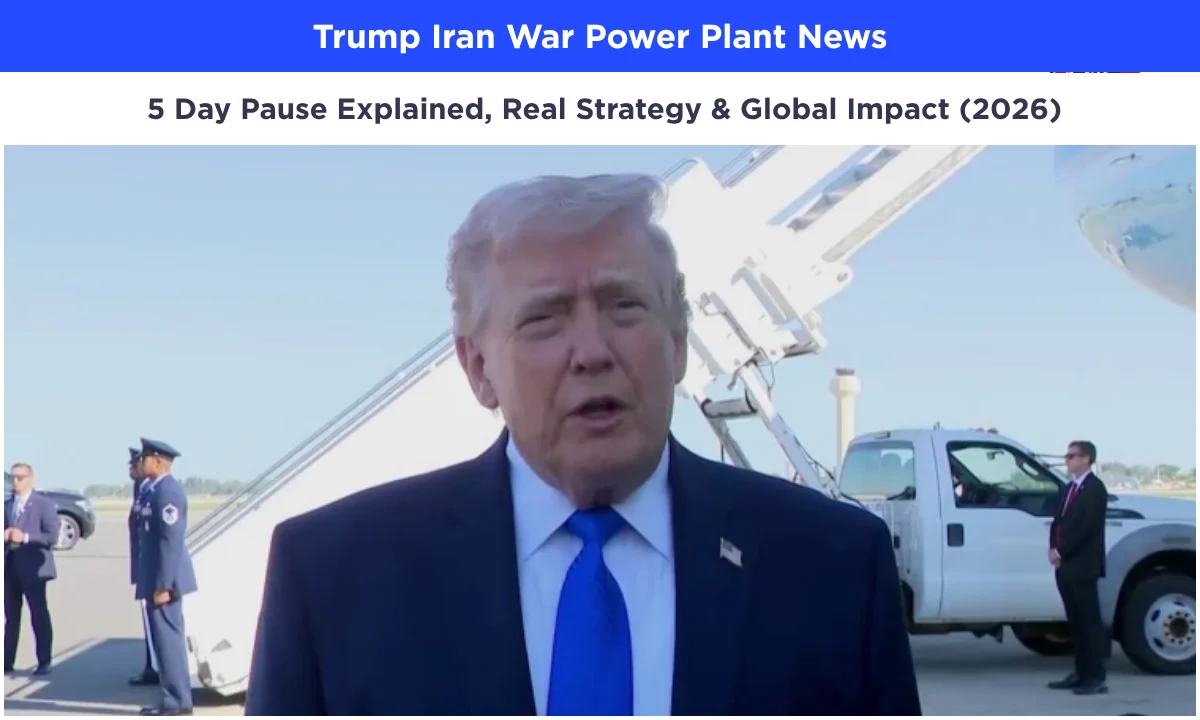
April 1, 2026: In a primetime televised address to the nation, Trump made his most comprehensive statement on the war. He vowed to continue the conflict for another few weeks and renewed his threat to bomb Iran’s power plants if it fails to agree to his demands. He said he planned to bomb Iran “back to the stone age” over the next two to three weeks.
April 2, 2026: The US struck a major bridge in Iran. This moved the conflict from threatening to targeting civilian infrastructure.
April 2, 2026 (night): Trump wrote: “I am pausing the period of Energy Plant destruction by 10 days to Monday, April 6, 2026, at 8 PM, Eastern Time. Talks are ongoing and, despite erroneous statements to the contrary by the Fake News Media, they are going very well.” Iran denied that any talks were taking place.
The pattern is clear. Trump issues a deadline. Iran does not comply. Trump extends the deadline but carries out a smaller escalatory action. The next deadline then arrives with higher stakes.
The Bridge Strike: What Happened on April 2, 2026
The bridge strike represents the first time the US directly hit civilian infrastructure in Iran during this conflict. This is a significant escalation.
The US military attacked major civilian infrastructure in Iran for the first time on Thursday, hours after President Trump threatened to bomb the country “back to the Stone Ages.” Trump celebrated the strike on Truth Social: “The biggest bridge in Iran comes tumbling down, never to be used again — Much more to follow!”
The target was the B1 bridge near Karaj, a city that is part of the Tehran metropolitan area. The bridge connects the capital Tehran to Karaj, a major western suburb.
Iran’s state media said eight people were killed and 95 wounded. A US defense official told Axios more bridges are likely to be targeted.
The US defense department offered a military justification for the strike. A US defense official said the bridge was attacked because it was used by the Iranian armed forces to try to secretly move missiles and missile parts from Tehran to launch sites in Western Iran.
Iran rejected this explanation entirely. The Iranian mission to the UN wrote that the attack on the bridge was part of a series of US and Israeli strikes against civilian targets in Iran.
The strike matters because it signals a new phase of the conflict. Earlier strikes were focused on military targets including missile sites, naval vessels, and command centers. A bridge serving a major metropolitan area is a qualitatively different kind of target. It affects daily life for millions of ordinary people. It sets a precedent for what comes next.
The Power Plant Threat: What Would Actually Happen
The threat to destroy Iran’s power plants is the one that international lawyers and humanitarian organizations are most alarmed about. To understand why, you need to know what electricity does for a modern society.
Amnesty International stated: “By threatening such strikes, the USA is effectively indicating its willingness to plunge an entire country into darkness, and to potentially deprive its people of their human rights to life, water, food, healthcare and adequate standard of living. When power plants collapse, horrific consequences cascade instantly. Water pumping stations would stop functioning, clean water would become scarce, and preventable diseases would spread. Hospitals would lose electricity and fuel, forcing surgeries to be cancelled and life-support machines to shut down. Food production and distribution networks would collapse, deepening hunger and causing widespread food scarcity.”
Iran has a population of around 87 million people. The majority of them have no role in the government’s military decisions. If power plants are destroyed, it is these ordinary people who suffer the immediate consequences.
The legal side of this question is also being debated. The 1949 Geneva Conventions on humanitarian conduct in war prohibit attacks on sites considered essential for civilians. The Geneva Conventions and additional protocols say that parties involved in military conflict must distinguish between civilian objects and military objectives, and that attacks on civilian objects are forbidden.
However, US officials are unlikely to be prosecuted for any alleged war crimes because neither the US nor Iran is a member of the International Criminal Court.
International civilian protests have already started. Iranian civilians in two cities formed human chains around Iranian power plants, in videos uploaded to state-run media, signaling that ordinary Iranians see the threat as directed at them personally.
Iran’s Military Response So Far
Iran has not simply accepted the US-Israeli strikes. It has hit back across the entire region. The scale of Iran’s retaliation has been significant. US Central Command Admiral Brad Cooper said the US had struck over 8,000 military targets so far in the war, including 130 Iranian vessels, in what he called “the largest elimination of a navy over a three-week period since World War II.”
But Iran has simultaneously launched strikes across the Gulf. Iranian strikes targeted US embassies and military installations in the UAE, Saudi Arabia, Qatar, Kuwait, Bahrain, Iraq, Oman, and Jordan.
Iran struck a key water and electrical plant in Kuwait, and an oil refinery in Israel came under attack. Iran has also threatened to escalate further. Iran has threatened to launch its own ground invasion of Gulf Arab countries and mine the Persian Gulf if US troops set foot on its territory.
In a direct warning to American companies, Iran threatened to strike major US companies in the region, including Microsoft, Apple, Google, Meta, IBM, Cisco, Oracle, Tesla, Nvidia, Intel, Palantir, JP Morgan, and Boeing.
This threat to American corporate assets in the region adds an economic dimension to the conflict that goes beyond just oil prices.
The Scale of Military Action: By the Numbers
Here is a factual summary of the military scale of this conflict so far. These numbers help you understand how large this operation actually is:
| Military Metric | Number |
|---|---|
| US-Israel strikes on Iran since Feb 28 | Over 8,000 military targets |
| Iranian naval vessels destroyed | 130+ (per CENTCOM) |
| Iranian missiles and drones used | Thousands across the region |
| US troops being sent to the region | Thousands additional |
| Countries receiving Iranian strikes | UAE, Saudi Arabia, Qatar, Kuwait, Bahrain, Iraq, Oman, Jordan |
| Civilian buildings damaged in Iran by March 6 | Over 4,000 |
| Oil tankers stalled near Strait of Hormuz | 150 freight ships as of early March |
The Carnegie Endowment noted that India’s Operation Sindoor earlier in 2025 showed “the largest aerial engagement in recent times with fourth generation fighter jets.” The Iran conflict dwarfs that scale entirely.
The US has also faced losses. A critical American radar was damaged in an Iranian attack on Saudi Arabia’s Prince Sultan Air Base. Since then, the base has suffered multiple Iranian attacks, including on March 27, when an E-3 radar aircraft and a refueling tanker were struck. That attack wounded at least 10 US service members.
Global Diplomatic Reactions
The rest of the world has not been silent about this conflict.
Germany’s Chancellor Friedrich Merz took a public stand. Merz said he had spoken to President Trump and expressed concerns about threatened attacks on Iran’s power plants. He said: “I am grateful that he said he is postponing them for another five days and is now also opening the possibility for immediate and direct contact with the Iranian leadership.”
More than 40 countries came together in a meeting hosted by the UK to discuss how to reopen the Strait of Hormuz. The meeting produced no formal conclusions. The US and its European allies are not aligned on how to approach this conflict.
Trump has repeatedly asked NATO allies to take responsibility for reopening the Strait using force, but he has encountered skepticism from NATO countries and other partners.
The Gulf Cooperation Council has taken its own steps. The GCC urged the United Nations Security Council to authorize the use of force to protect the Strait of Hormuz from Iranian attacks.
Pakistan and other countries in the region have been trying to mediate. Iran said it had received US ceasefire proposals via intermediaries, following talks between the foreign ministers of Pakistan, Egypt, Saudi Arabia, and Turkey. The Iranian Foreign Ministry said the proposals were “unrealistic, illogical, and excessive.”
The IMF has also weighed in. The International Monetary Fund warned that the US-Israeli war on Iran is driving higher prices and slower growth worldwide.
Iran’s Position & Why Negotiations Are Difficult
Understanding Iran’s stance helps explain why the conflict has not ended quickly. Iran has publicly denied that any direct negotiations with the US are happening. When Trump announced a pause in strikes citing “productive conversations,” Iran responded by saying there had been no direct talks and called Trump “deceitful.”
Iranian Foreign Ministry spokesman Esmail Baghaei said Tehran had received a 15-point proposal from the Trump administration containing “excessive, unrealistic and irrational” demands, while denying there had been any direct talks.
Iran has also made demands that go beyond just the current conflict. Iran asserted that Lebanon must be included as part of a ceasefire deal, thereby making a ceasefire conditional on an end to the Lebanon war against Hezbollah. This condition makes a simple ceasefire very difficult to achieve.
The Iranian government has also been publicly defiant. Officials have described US threats as “Hollywood illusions” and referenced Iran’s ancient history as a sign of resilience.
At the same time, analysts expect that Iran’s economy will shrink by 10% due to the war. Iran was already under severe economic pressure before this conflict started, with inflation exceeding 40% in 2025 and protests in January 2026 that were suppressed by the government.
The combination of military pressure, economic strain, and internal political instability makes Iran’s decision-making unpredictable.
What the “Stone Ages” Statement Actually Means
Trump’s phrase about bringing Iran “back to the stone ages” went viral because of its shocking directness. But what does it mean in practical terms?
In his April 1 primetime address, Trump said: “We are going to bring them back to the Stone Ages, where they belong.” He said this in the context of warning that he would strike Iran’s energy and oil infrastructure.
Trump said the US will strike civilian infrastructure if a deal is not reached.
The phrase tells you that Trump is not thinking about a limited military operation. He is talking about destroying Iran’s ability to function as a modern society. Electricity, water, transportation networks, hospitals, factories, and communications all depend on the infrastructure he is threatening.
This is why international legal experts have responded so strongly. Amnesty International is among the rights groups that have denounced Trump’s plans to bomb Iranian power stations as “a threat to commit war crimes.”
Dozens of international law experts in the US signed an open letter saying that US strikes on Iran may amount to war crimes.
The White House has pushed back on this characterization. US officials claim military justifications for each strike, as they did with the bridge. But the pattern of targeting and the language used by Trump publicly leave very little ambiguity about the intended effect on Iranian society.
How This Affects India & Indian Citizens Directly
For Indian readers, this conflict is not a distant geopolitical event. It has direct consequences. The most immediate impact is through oil prices. India imports around 85% of its oil needs. When Brent crude rises from $73 to $126 per barrel in a matter of weeks, India’s import bill rises sharply. Fuel prices at petrol pumps go up. Transport costs rise. Food inflation follows.
Over 220,000 Indian nationals have been repatriated from Gulf Cooperation Council region and Iran due to the escalating conflict and the blockade of the Strait of Hormuz. Unlike the temporary labor migrations of the past, this reverse migration involves a high percentage of skilled professionals and business owners.
Remittances from Indians in the Gulf are a major source of income for families in Kerala, Andhra Pradesh, Telangana, and other states. Disruption to this flow of income affects millions of households.
India has been managing the situation at a government level. The US granted India an emergency oil waiver in early March. India is sourcing oil from more countries to reduce dependence on any single route.
The Reserve Bank of India and the government are watching energy prices carefully. The EY economics firm estimated that the West Asia conflict could shave around one percentage point off India’s GDP growth projections if it continues.
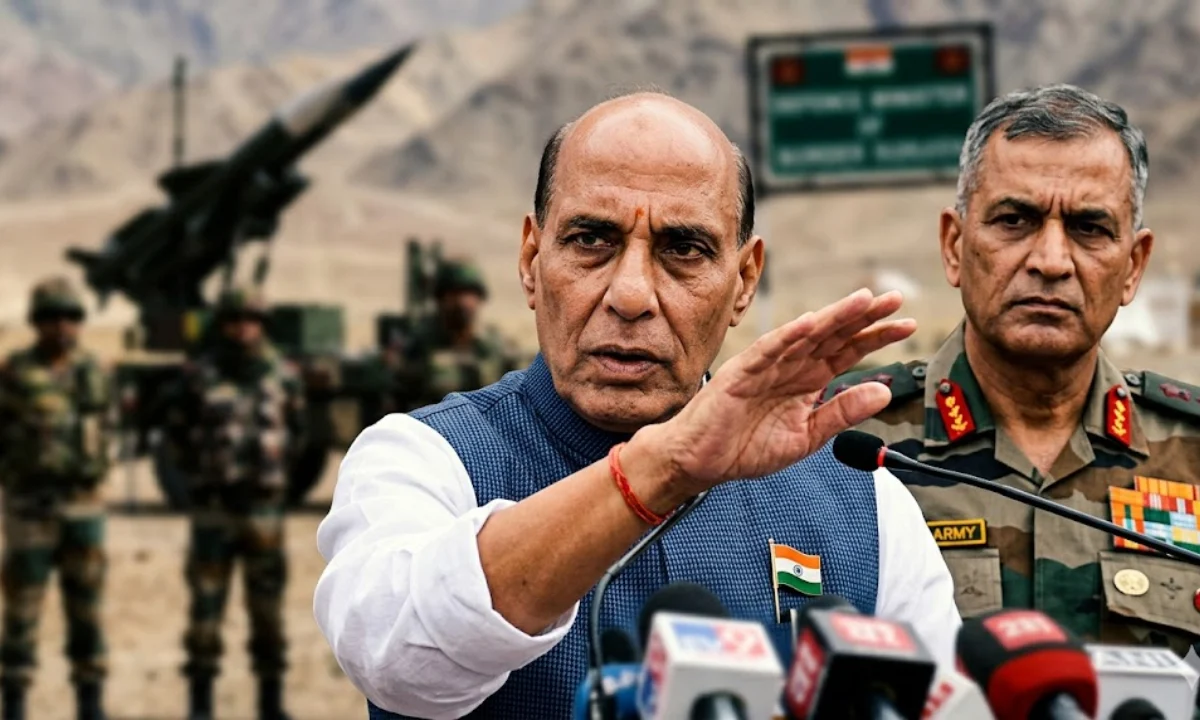
India’s Navy is also actively escorting oil tankers through the Strait of Hormuz, as mentioned by Defence Minister Rajnath Singh in his April 2 speech. This shows that India is directly engaged in managing the fallout of the conflict even as it is not a participant.
What Could Happen in the Coming Weeks
The next few weeks are critical. Here is what to watch:
The April 6 deadline: Trump extended the power plant strike deadline to April 6, 2026. If no agreement is reached by then, the US may carry out actual strikes on Iran’s electricity infrastructure. This would be a massive escalation with enormous humanitarian consequences.
Strait of Hormuz reopening: Oil executives and analysts warn that the Strait of Hormuz needs to be reopened by mid-April or oil supply disruptions will get significantly worse. Every additional week of closure pushes the world closer to a serious economic shock.
Potential US ground action: Trump has hinted at the possibility of US troops seizing Kharg Island, Iran’s main oil export hub. Iran has threatened to “set fire” to any American troops that set foot on Iranian territory.
Iran’s nuclear sites: The conflict has involved strikes near Iran’s nuclear research facilities. This raises concerns about long-term nuclear proliferation risks if the regime feels existentially threatened.
Global economy: Bloomberg Economics’ data tracker put US CPI for March at 3.4% year on year, a marked increase from 2.4% in February, with rising fuel prices as the main culprit. Continued conflict will push this number higher and force central banks to make difficult choices.
Public Opinion: Why People Disagree About This War (Data From X)
Public opinion on this conflict is sharply divided, and that division reflects genuine moral and strategic disagreements.
Those who support Trump’s approach argue that Iran has been a destabilizing force in the Middle East for decades. They believe the only way to force Iran to change its behavior is through overwhelming military and economic pressure. They support the strikes on military targets and see the bridge strike as a legitimate military action because it was being used to move weapons.
Those who oppose the approach focus on the humanitarian impact on Iranian civilians. They argue that threatening to destroy power plants and water infrastructure punishes millions of people who have no control over their government’s decisions. They are concerned about the precedent being set and the risk of the conflict expanding to include other countries.
Those in the middle acknowledge the genuine threat that Iran’s nuclear program and support for regional militias pose, but believe that destroying civilian infrastructure is both morally wrong and strategically counterproductive because it builds resentment rather than compliance.
All three of these perspectives have legitimate points. What is clear is that this conflict has no easy resolution, and the actions being taken now will have consequences for years
Related Posts :


Share This Post