The Sopranos Ending Explained: What That Cut To Black Really Meant For Tony Soprano
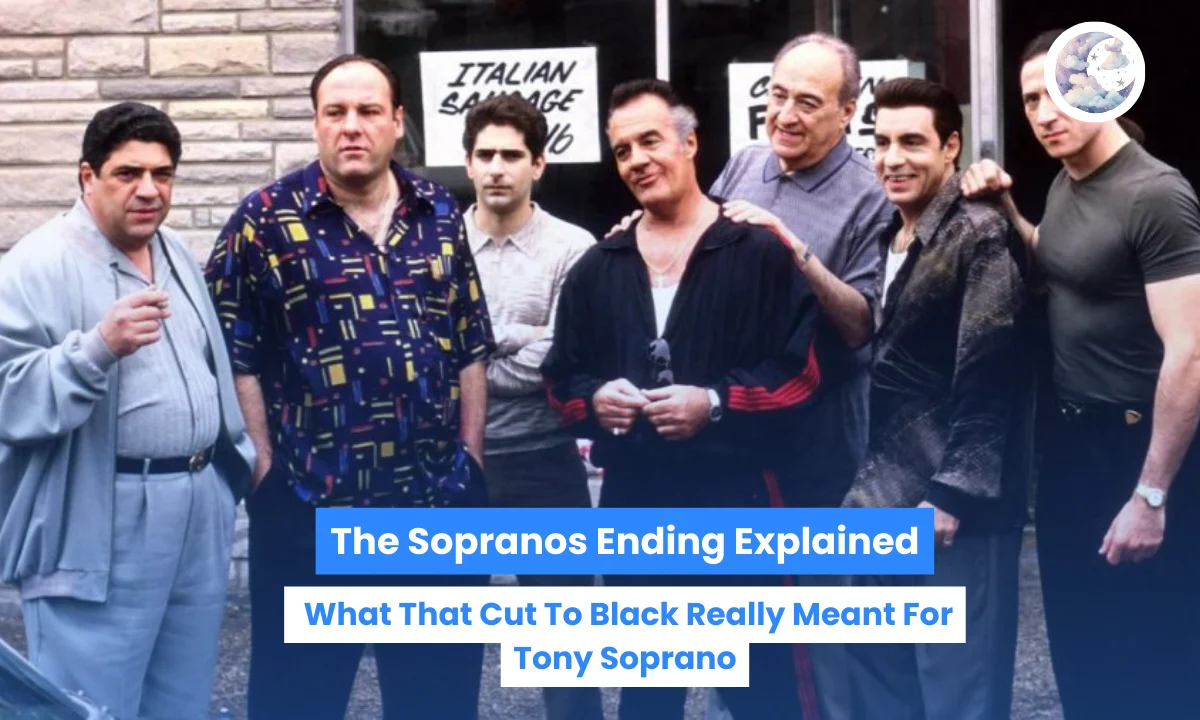
The Sopranos Ending Explained: What That Cut To Black Really Meant For Tony Soprano | Image Via © observer.case.edu
So Many people are searching for ending explained of Sopranos, Not only they are asking whether Tony Soprano lived or died but also They want to know what that final cut to black really meant? Was it a cheap trick, Was it genius. Or was it the only way the story could ever end.
Even after almost two decades, the finale of The Sopranos still trends whenever someone finishes the show for the first time. And with the release of The Many Saints of Newark, the conversation came back stronger. Because now the ending is not just about Tony. It is about destiny, family, and how small grudges shape big tragedies.
Key Takeaways
- The cut to black strongly suggests Tony was killed in Holsten’s diner
- The final scene uses point of view editing to place us inside Tony’s perspective
- The “Members Only” jacket man is likely the hitman
- Bobby’s earlier line about death foreshadows the ending
- The prequel film confirms how petty decisions in the mob world shape Tony’s fate
- Public opinion remains divided, but most fans believe Tony died
- The ending was never about shock value. It was about inevitability

Why The Cut To Black Was Not Random
The final episode “Made in America” builds tension in a very simple way. Tony sits in a diner. Journey’s “Don’t Stop Believin’” plays. The door opens. The bell rings. Tony looks up. The show repeats this pattern again and again. Bell. Look up. Tony’s point of view. We see what he sees.
This editing choice is not casual. It trains the viewer. So when the bell rings one last time and Tony looks up, the screen cuts to black. That black screen is his point of view.
Earlier in the season, Bobby Baccalieri tells Tony something important. You probably don’t even hear it when it happens. That line hits differently after the finale. No gunshot. No scream. Just nothing.
Many fans on Reddit and X say the same thing. If you follow the visual language of the scene, the answer is right there. Lights out.
The Members Only Jacket Theory
One detail that refuses to die is the man in the Members Only jacket. He enters the diner. He looks at Tony. He goes to the bathroom. The camera follows him. That is important. The camera never randomly follows extras in this show.
This moment mirrors a famous scene in The Godfather where a gun is retrieved from a bathroom before a killing. The parallel is hard to ignore.
The seat next to Tony is empty. Meadow is late. When she finally runs toward the door, the bell rings. Tony looks up.
Cut to black.
The theory suggests that Meadow’s late arrival unintentionally leaves Tony exposed. If she had been sitting beside him, the shooter might not have had a clear shot. That tiny delay changes everything.
It feels cruel. But this show has always been cruel.

Was Tony Already Doomed?
Throughout the series, Tony repeats a simple truth. Guys like me end up dead or in jail.
By the finale, both outcomes feel possible. Carlo is flipping. The FBI is closing in. The New York war just ended with Phil Leotardo’s death. Peace in the mob world is never permanent.
Even if you ignore the visual clues, Tony’s survival odds are terrible. He is isolated. His crew is shrinking. Trust is gone. So the ending does not feel random. It feels inevitable.
How The Many Saints Of Newark Changes The Meaning
The prequel film The Many Saints of Newark adds another layer to the discussion. The film focuses on Dickie Moltisanti, played by Alessandro Nivola, and young Tony, played by Michael Gandolfini.
At the end of the film, Dickie is killed. Not because of a grand strategy. Not because of a big betrayal. But because Junior Soprano felt insulted after being laughed at.
A petty grudge leads to a murder. That murder removes Tony’s mentor. That absence pushes Tony closer to the mob life. Fans on X often call this a creation myth. Junior’s insecurity seals Tony’s fate years before the diner scene. The cycle starts there.
The film also answers a long standing question. Junior ordered Dickie’s death. Not the cop mentioned in the series. That reveal reframes Junior’s relationship with Tony in the original show. It adds bitterness. It adds tragedy.
Public Opinion From Fans On X And Forums
Public reaction has evolved over time. Back in 2007, many viewers thought their cable cut out. Some were angry. Some felt cheated. Today, the tone is different.
Recent posts from fans rewatching the show in 2025 and 2026 show more appreciation. Many call the ending genius. They say it respects the intelligence of the audience. They say it mirrors real life. Death does not always come with dramatic music.
There are still critics. Some believe the Harold storyline in the prequel built up tension only to pivot away. Others think the diner scene leaves too much unsaid.
But one trend is clear. The majority opinion leans toward Tony being killed. Not because the creator confirmed it. But because the structure of the scene makes any other reading weaker.
Breaking Down The Final Scene Clues
Here is a simple table of the biggest clues and what they suggest:
| Clue | What It Suggests |
|---|---|
| Repeated bell and POV shots | We are seeing through Tony’s eyes |
| Bobby’s line about death | Foreshadowing sudden blackout |
| Members Only jacket man | Possible hired hitman |
| Meadow’s late arrival | Tony left exposed |
| Cut to black with no sound | Instant death perspective |
When you stack them together, the pattern becomes hard to ignore.
Why Showing The Death Would Have Been Wrong
Let’s be honest. Watching Tony get shot in slow motion would have been dramatic. But it would have been basic. This show was never basic.
For six seasons, viewers lived inside Tony’s head. Therapy sessions. Panic attacks. Family dinners. Violence. Regret.
Ending the show by placing us directly inside his final second is more powerful than any bullet effect. We do not see his body fall. We experience the void.
That choice forces the audience to sit in silence. To think. To feel uncomfortable. And that discomfort is very on brand for this series.
The Legacy Of The Ending
The ending of The Sopranos changed television. It proved that a series finale does not need to wrap everything neatly. It can challenge viewers.
It also influenced how later prestige dramas handled ambiguity. Open endings became more accepted. More respected. The conversation has not stopped. That alone proves the power of the choice.
If the show had ended with Tony in jail, people would not still be debating it. If he had died in a loud shootout, the moment would have faded. Instead, we got silence. And somehow that silence is louder than any gunshot.
Final Verdict – Did Tony Die?
If you look at editing logic, narrative buildup, and thematic consistency, the answer points strongly toward yes. But the real answer is slightly bigger.
The show was never only about whether Tony lives. It was about consequences. About how violence echoes across generations. About how one small decision can ripple for decades.
The prequel shows a petty laugh leading to Dickie’s death. The finale shows a quiet dinner leading to darkness. In this world, fate does not arrive with fireworks. It arrives with a bell on a diner door. Cut to black.
Related Posts :

Share This Post