Iran US War 2026 Explained: Timeline, Causes & Global Impact You Need To Know
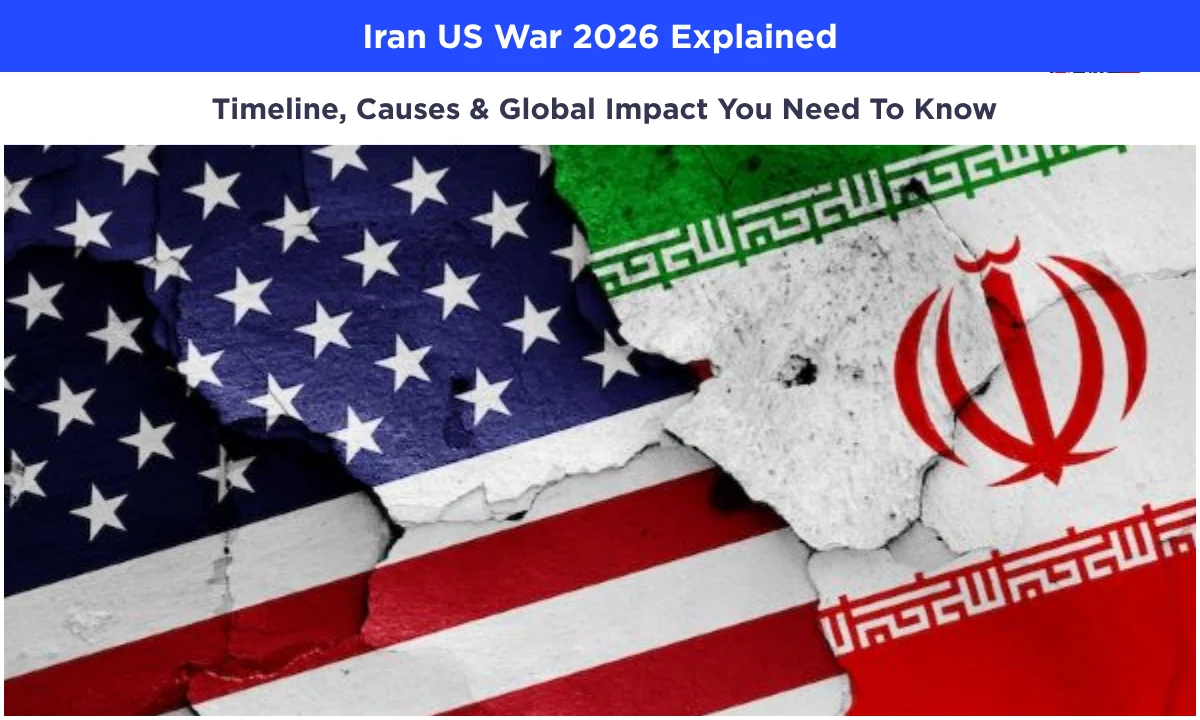
Iran US War 2026 Explained | Image Via © www.amu.apus.edu/
The Iran US War 2026 is one of the biggest geopolitical events right now, and honestly, many people are still confused about what exactly is happening. If you search online, most articles either give too much history or just focus on breaking news. But what people actually want is a clear timeline, real reasons behind the conflict, and what it means for the world.
This article breaks down the Iran US conflict in a simple and practical way. From the root causes to the latest updates, you will understand everything without getting lost in complicated terms. The goal here is to explain the situation like a normal person trying to understand global news.
Table of Contents
Also Read
Reliance Investment In US Oil Refinery: Trump’s $300 Billion Announcement Explained Simply
Key Takeaways
- The Iran US war officially began on February 28, 2026 with major airstrikes
- The conflict is rooted in decades of tension including nuclear issues and sanctions
- Operation Epic Fury involved hundreds of strikes in the first few hours
- Iran responded with missiles, drones, and closing the Strait of Hormuz
- Global oil prices and travel systems were heavily impacted
- Public opinion is divided, with strong anti-war and geopolitical debates online
- Talks for ceasefire are happening but no clear resolution yet
Now let’s break everything step by step so you actually understand what’s going on.
Background Of Iran US Conflict
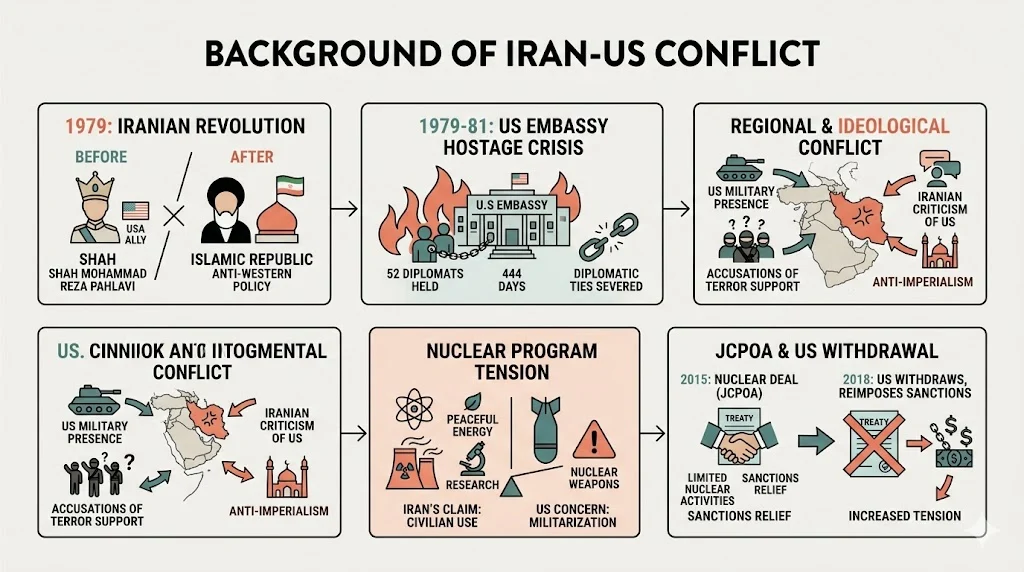
The tension between Iran and the United States is not new. It goes back to 1979 when the Iranian Revolution happened, which completely reshaped Iran’s political system. Before that, Iran and the US were close allies, especially during the rule of Shah Mohammad Reza Pahlavi, who was supported by the United States. However, after the revolution, Iran became an Islamic Republic under Ayatollah Khomeini, and its foreign policy shifted strongly against Western influence, particularly the US.
One major turning point was the Iran hostage crisis in 1979, when Iranian students seized the US Embassy in Tehran and held 52 American diplomats hostage for 444 days. This event deeply damaged diplomatic relations and created long-term distrust between both countries. Since then, there have been no formal diplomatic ties, and communication has mostly happened through indirect channels.
Over the years, tensions continued to grow due to regional conflicts and ideological differences. The United States has often accused Iran of supporting militant groups in the Middle East, while Iran has criticized US military presence in the region. These opposing views have kept both nations in constant conflict, even without direct war.
Later, the nuclear issue became the main point of concern. The US and its allies believed that Iran was trying to develop nuclear weapons, which could destabilize the region. On the other hand, Iran consistently maintained that its nuclear program was for peaceful purposes like energy production and scientific research.
In 2015, a major breakthrough came with the Joint Comprehensive Plan of Action (JCPOA), where Iran agreed to limit its nuclear activities in exchange for relief from economic sanctions. However, in 2018, the US withdrew from the deal and reimposed sanctions, which led to increased tensions and set the stage for future conflicts.
What Triggered The 2026 War?
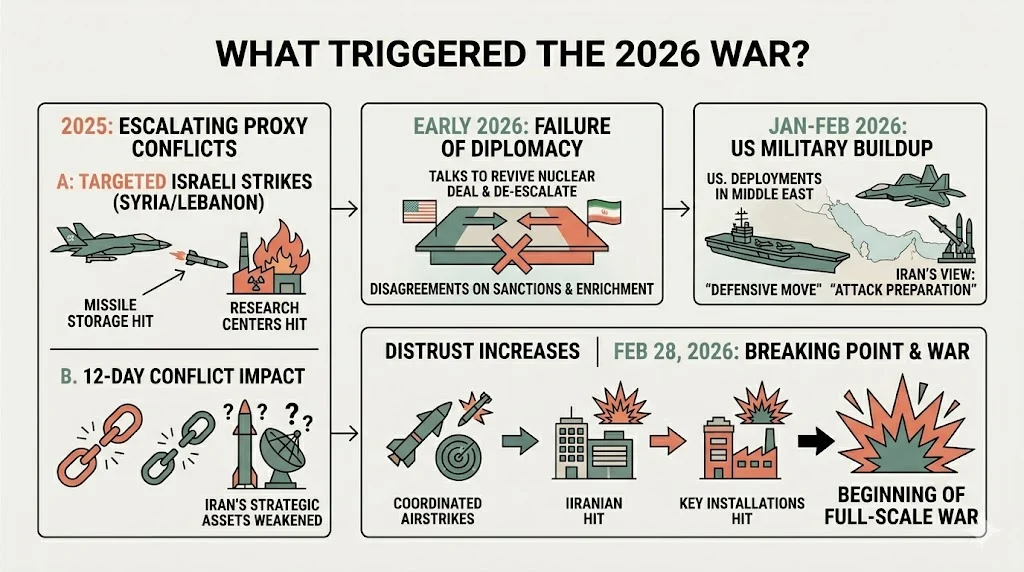
Fast forward to 2025 and early 2026, the situation between Iran, the United States, and its allies began to escalate rapidly, moving from indirect tensions to direct confrontation. Several warning signs were already visible months before the war officially began.
There were ongoing proxy conflicts between Iran and Israel across regions like Syria and Lebanon. These tensions intensified when Israel carried out targeted strikes on Iranian-linked military installations and suspected nuclear facilities. The situation reached a critical point during the 12-day conflict in 2025, where multiple high-value targets were hit, including missile storage sites and research centers. This significantly weakened Iran’s strategic assets and increased pressure on its leadership.
At the same time, diplomatic efforts were still ongoing. In early 2026, backchannel negotiations and international talks were being held to revive nuclear agreements and reduce military tensions. However, these talks failed due to disagreements over sanctions, uranium enrichment limits, and regional influence. Both sides accused each other of acting in bad faith, which further damaged trust.
Meanwhile, the United States began increasing its military presence in the Middle East. Additional aircraft carriers, fighter jets, and missile defense systems were deployed to key locations such as the Persian Gulf. This buildup was officially described as a defensive move, but Iran viewed it as preparation for a possible attack.
Tensions reached a breaking point on February 28, 2026, when coordinated airstrikes were launched, marking the beginning of a full-scale war.
Timeline Of Major Events (2026 War)
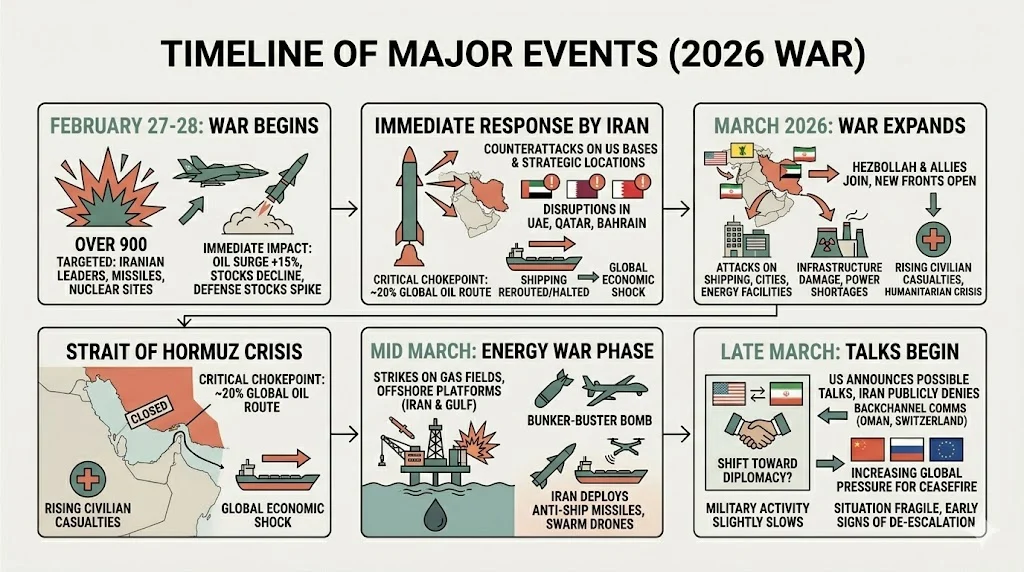
February 27-28: War Begins
The US and Israel launched around 900 coordinated strikes within 12 hours, making it one of the most intense opening phases of any modern conflict. The attacks were carried out using a mix of advanced fighter jets like F-35 stealth aircraft, long-range cruise missiles, and precision-guided munitions launched from naval carriers positioned in the Persian Gulf and Arabian Sea.
Many of the strikes were reportedly launched from US bases in Qatar, Bahrain, and Kuwait, along with Israeli air operations targeting key locations deep inside Iran. The primary targets included missile bases, air defense systems, nuclear-related facilities, and critical military infrastructure.
Top Iranian military leaders and key commanders were killed in these strikes, which significantly disrupted Iran’s initial response capability. This marked the official start of the war and immediately triggered global reactions.
Financial markets reacted sharply within hours. Oil prices surged by more than 15 percent due to fears of supply disruption, especially with the Strait of Hormuz at risk. Stock markets across Asia and Europe saw heavy declines, while defense and energy stocks spiked. Investors quickly moved toward safe-haven assets like gold, which also saw a noticeable price jump.
Immediate Response By Iran
Iran quickly launched a large-scale counterattack using missiles and drones, targeting US military bases and strategic locations across the region.
The impact was not limited to direct conflict zones, as nearby countries such as the UAE, Qatar, and Bahrain also experienced disruptions and security threats due to the escalating situation.
Strait Of Hormuz Crisis
Iran closed the Strait of Hormuz, which is one of the most important oil routes in the world.
Around 20 percent of global oil passes through this route, making it a critical chokepoint for global energy supply. When Iran restricted movement in this area, oil tankers were forced to reroute or halt operations, creating immediate supply disruptions.
This led to a sharp spike in crude oil prices within hours, affecting fuel costs worldwide. Countries heavily dependent on oil imports, especially in Asia and Europe, started facing pressure on their economies. Stock markets reacted negatively, and energy companies saw extreme volatility.
Beyond economics, the closure also increased military tension in the region. Naval forces from multiple countries were deployed to secure shipping lanes, raising fears of direct confrontation. This situation turned a regional conflict into a global concern, as even a short disruption in the Strait of Hormuz can impact inflation, transportation costs, and overall economic stability worldwide.
March 2026: War Expands
The conflict spread across the Middle East, drawing in multiple regional actors and increasing the scale of violence. Hezbollah and other allied groups became actively involved, opening new fronts and intensifying pressure on opposing forces.
There were coordinated attacks on key shipping routes, major energy facilities, and densely populated cities, disrupting trade and creating widespread instability. Critical infrastructure damage led to power shortages and economic losses across several countries.
As the situation escalated, civilian casualties increased rapidly, with thousands affected by airstrikes, missile attacks, and displacement. Humanitarian organizations warned of a growing crisis, with limited access to medical aid, food, and safe shelter for affected populations.
Mid March: Energy War Phase
Strikes started targeting gas fields and energy infrastructure, including major facilities in southern Iran and offshore platforms in the Persian Gulf. Reports suggest that precision-guided missiles, long-range drones, and bunker-buster bombs were used to hit critical energy assets. Many of these attacks were launched from US naval carriers positioned in the Arabian Sea, as well as from allied airbases in Qatar and Bahrain.
Iran responded by deploying anti-ship missiles and swarm drones targeting oil tankers and energy routes near the Strait of Hormuz. This created a high-risk zone for global shipping and forced several companies to halt operations temporarily.
The impact on global markets was immediate. Oil prices surged sharply within hours, with Brent crude crossing key resistance levels. Stock markets across Asia and Europe saw heavy selling pressure, especially in airline, logistics, and manufacturing sectors. At the same time, energy stocks and defense companies saw a sudden rise as investors shifted towards safer and war-benefiting sectors.
Late March: Talks Begin
The US announced possible talks with Iran, indicating a shift from pure military action toward diplomatic engagement. Reports suggested that backchannel communications were already taking place through neutral countries like Oman and Switzerland, which have historically acted as mediators between the two nations. Some US officials hinted at preliminary understandings around de-escalation, but Iran publicly denied any formal negotiations, stating that no official agreement had been reached.
Despite these conflicting statements, there are clear signals that both sides might be looking for a way to reduce tensions. Military activity has slightly slowed in certain regions, and there have been fewer large-scale strikes compared to the initial phase of the war. Analysts believe this could be a strategic pause to assess damage, regroup forces, and explore diplomatic options.
Additionally, global pressure is increasing. Countries like China, Russia, and members of the European Union are pushing for immediate ceasefire talks to prevent further escalation. International organizations are also urging both sides to prioritize humanitarian concerns, especially as civilian casualties continue to rise.
While nothing is confirmed yet, these developments suggest that behind the scenes, efforts are being made to avoid a prolonged conflict. However, the situation remains fragile, and any sudden military action could quickly reverse these early signs of de-escalation.
Current Situation (As Of March 2026)
Right now, the war is still ongoing, but the intensity has shifted from large-scale initial strikes to a more controlled and strategic phase.
The US and Israel continue to maintain strong air superiority, using advanced surveillance systems, drones, and precision strikes to monitor and target key locations. Iran’s military capabilities have been weakened in terms of infrastructure, but it still retains the ability to launch missile and drone attacks, especially through proxy groups in the region.
Missile attacks are still happening, but at a lower and more calculated scale. Instead of massive barrages, the focus has shifted to targeted strikes aimed at military bases, energy facilities, and strategic routes. This indicates that both sides are trying to avoid full escalation while still maintaining pressure.
Another important development is the growing cyber warfare and intelligence operations. Both sides are reportedly engaging in cyber attacks targeting communication systems, financial networks, and defense infrastructure. This silent layer of conflict is becoming just as important as physical warfare.
There is still no clear end to the conflict. However, diplomatic activity is increasing behind the scenes. Countries like Qatar, Turkey, and some European nations are trying to mediate talks. While no official ceasefire has been announced, the rise in backchannel negotiations suggests that both sides may be looking for a way to de-escalate without losing strategic advantage.
Overall, the situation remains highly unpredictable, and even a small trigger could either push the conflict toward peace talks or escalate it again.
Global Impact Of The War
This war is not just about Iran and the US. It is affecting the whole world.
Economic Impact
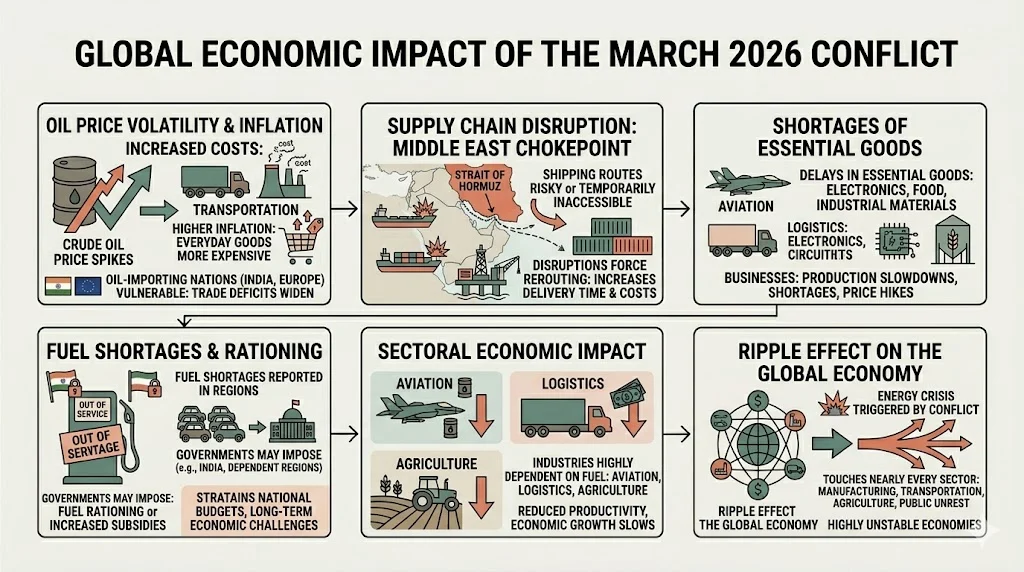
- Oil prices are highly unstable, and this volatility is directly impacting both developed and developing economies. When crude oil prices rise sharply, it increases the cost of transportation, manufacturing, and electricity generation. This leads to higher inflation, making everyday goods and services more expensive for consumers. Countries that rely heavily on oil imports, such as India and many European nations, are especially vulnerable because their trade deficits can widen quickly.
- Global supply chains are affected as shipping routes in the Middle East become risky or temporarily inaccessible. The Strait of Hormuz, which handles a significant portion of the world’s oil and gas shipments, is a critical chokepoint. Any disruption here forces companies to reroute shipments, increasing delivery times and transportation costs. This not only affects energy supplies but also delays the movement of essential goods like electronics, food products, and industrial materials. Businesses may face production slowdowns, and consumers could experience shortages or price hikes.
- Fuel shortages are reported in some regions, particularly in countries that depend on consistent imports from the Middle East. When supply is disrupted, governments may impose fuel rationing or increase subsidies to control public unrest. This can strain national budgets and create long-term economic challenges. In addition, industries such as aviation, logistics, and agriculture are heavily dependent on fuel, so shortages can reduce productivity and slow down economic growth. Overall, the energy crisis triggered by the conflict has a ripple effect that touches nearly every sector of the global economy.
Travel And Trade
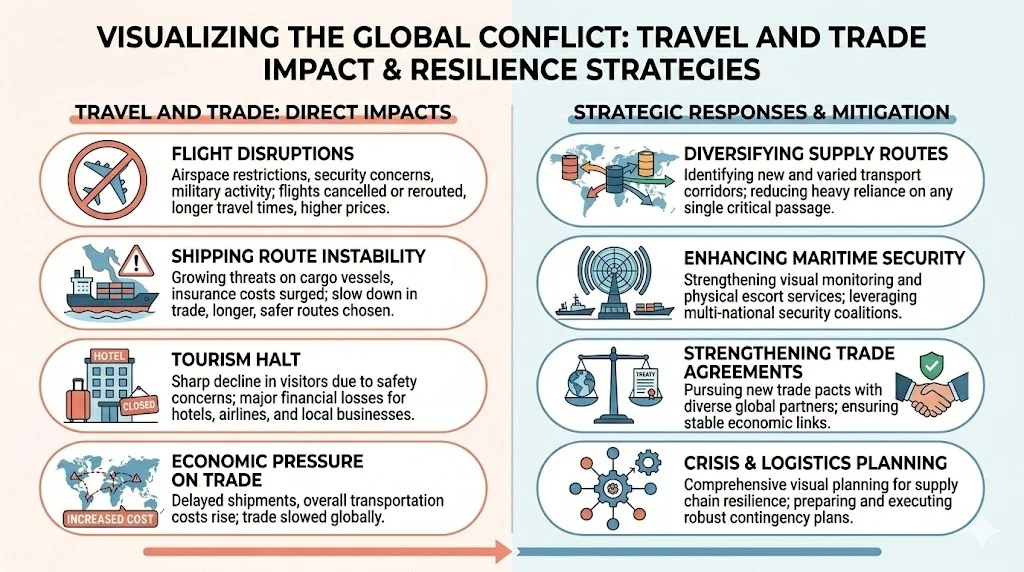
- Flights in the Middle East are heavily disrupted due to airspace restrictions, security concerns, and ongoing military activity. Many international airlines have either canceled or rerouted flights to avoid conflict zones, leading to longer travel times and higher ticket prices. Passengers are also facing uncertainty with sudden cancellations and delays, making travel planning extremely difficult.
- Shipping routes have become increasingly unsafe, especially around critical areas like the Strait of Hormuz. With rising threats of attacks on cargo vessels and oil tankers, insurance costs for shipping companies have surged. This has slowed down global trade, as many companies are either delaying shipments or choosing longer, safer routes, which increases overall transportation costs.
- Tourism in the region has almost come to a complete halt. Popular destinations in the Middle East are seeing a sharp decline in visitors due to safety concerns. Hotels, airlines, and local businesses that depend on tourism are facing major financial losses, impacting the regional economy significantly.
Humanitarian Impact
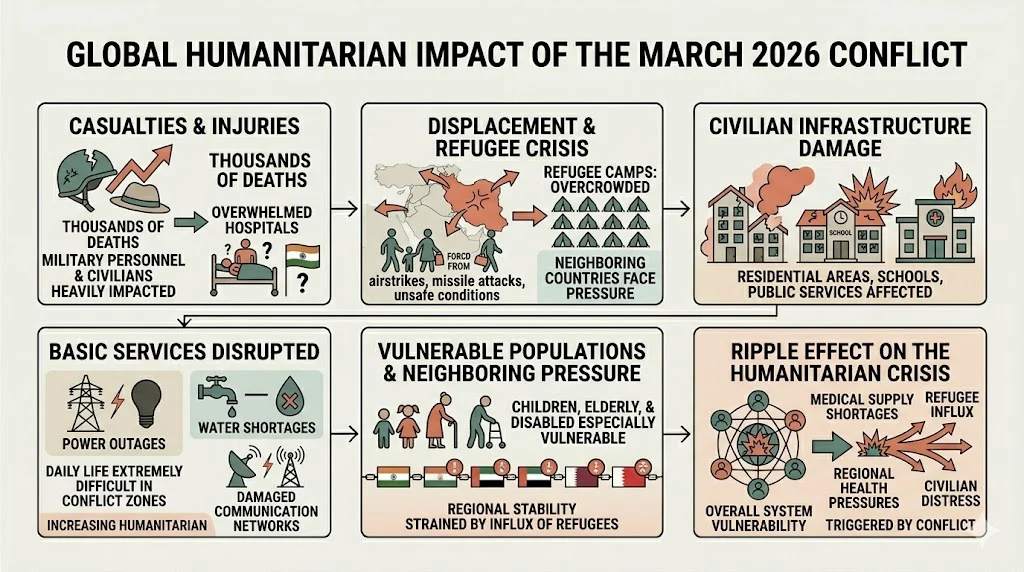
- Thousands of people have died, with reports indicating that both military personnel and civilians have been heavily impacted across multiple regions. Hospitals in affected areas are overwhelmed, struggling with shortages of medical supplies, staff, and basic infrastructure.
- Many families are displaced, forced to leave their homes due to ongoing airstrikes, missile attacks, and unsafe living conditions. Refugee camps are becoming overcrowded, and neighboring countries are facing pressure as more people seek safety across borders.
- Civilian areas have been affected, including residential neighborhoods, schools, and essential public services. Power outages, water shortages, and damaged communication networks have made daily life extremely difficult for those still living in conflict zones, increasing the overall humanitarian crisis.
Public Opinion (What People Are Saying Online)
Based on recent X (Twitter) discussions, public opinion is highly divided and emotionally charged, reflecting the global uncertainty around the conflict. A large section of users strongly supports Iran’s sovereignty, arguing that foreign intervention has historically destabilized the region and that Iran has the right to defend itself against external pressure.
On the other hand, many users back the United States, stating that its actions are aimed at preventing nuclear escalation and maintaining global security. These users often highlight concerns about Iran’s military capabilities and regional influence.
At the same time, a significant portion of the public is simply exhausted by ongoing conflicts. These users are less focused on political sides and more concerned about real-world impacts like rising oil prices, inflation, disrupted travel, and economic instability.
Additionally, there is growing fear that this conflict could escalate into a larger global war, especially if more countries get involved.
Why This War Matters?
This is not just another regional conflict. It represents a critical flashpoint where long-standing geopolitical rivalries, energy security concerns, and global economic stability all intersect at once. The involvement of major global powers like the United States, along with the strategic importance of Iran in the Middle East, makes this situation far more complex than a typical regional dispute.
Iran sits near the Strait of Hormuz, one of the most vital oil transit chokepoints in the world. Nearly one-fifth of global oil supply passes through this narrow route, which means any disruption here can instantly impact fuel prices, inflation, and economic growth across multiple countries.
Because of this, even small military actions or political decisions in the region can trigger large-scale reactions in global markets. For example, a single missile strike or naval blockade can cause oil prices to spike within hours, affecting everything from transportation costs to food prices worldwide. Investors, governments, and businesses are all closely monitoring the situation because uncertainty in this region directly translates into financial volatility.
Additionally, this conflict has the potential to pull in other nations, either directly or indirectly. Regional allies, global superpowers, and international organizations are all involved in some capacity, whether through military support, diplomatic pressure, or economic sanctions. This increases the risk of escalation beyond the Middle East, making it a matter of global concern rather than a localized issue.
In simple terms, what happens in this conflict does not stay limited to one region. Its ripple effects are felt across economies, political systems, and everyday life around the world, which is why it continues to receive intense global attention.
Impact On India & How India Is Handling The Situation
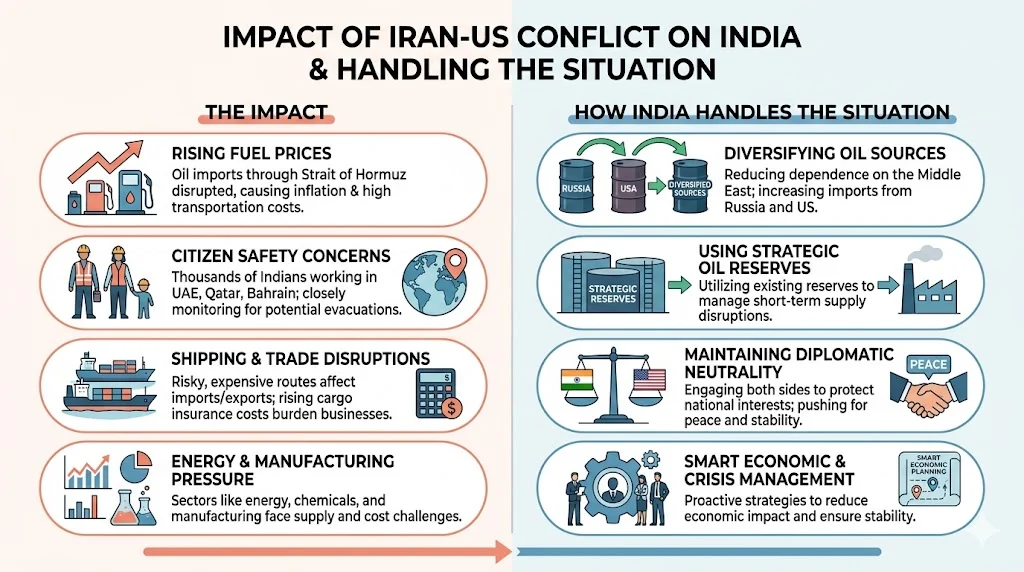
India is one of the countries that is directly affected by the Iran US war, mainly because of its heavy dependence on oil imports. A large portion of India’s crude oil comes through the Strait of Hormuz, which has been disrupted due to the conflict. This has led to rising fuel prices in India, increasing transportation costs and putting pressure on inflation.
Another major concern is the safety of Indian citizens living in the Middle East. Thousands of Indians work in countries like UAE, Qatar, and Bahrain. The Indian government has already started monitoring the situation closely and has prepared evacuation plans if the situation worsens.
From a trade perspective, shipping routes have become risky and expensive. This is affecting imports and exports, especially in sectors like energy, chemicals, and manufacturing. Insurance costs for cargo have also increased, adding more pressure on businesses.
To handle these challenges, India is taking multiple steps. The government is diversifying its oil sources by increasing imports from countries like Russia and the United States. Strategic oil reserves are also being used to manage short-term supply disruptions.
On the diplomatic front, India is maintaining a neutral stance. It is engaging with both Iran and the US to ensure its national interests are protected. India is also pushing for peace and stability through international platforms.
Overall, while the war has created serious challenges, India is actively working to reduce its impact through smart economic planning, strong diplomacy, and crisis management strategies.
What Could Happen Next?
There are a few possible outcomes, and each scenario depends on how both sides balance military pressure with diplomatic efforts in the coming weeks.
The first possibility is continued conflict with further escalation. In this case, both Iran and the US could intensify their attacks, targeting more strategic locations such as energy infrastructure, military bases, and shipping routes. This would likely increase civilian casualties and push global oil prices even higher. If regional groups like Hezbollah or other allied forces become more actively involved, the conflict could expand beyond the Middle East and create a much larger geopolitical crisis.
The second outcome is a limited ceasefire with strict conditions. This usually happens when both sides realize that prolonged conflict is causing more damage than benefit. A temporary ceasefire could include agreements like reducing airstrikes, reopening key trade routes such as the Strait of Hormuz, and allowing humanitarian aid into affected areas. However, such ceasefires are often fragile and can break down quickly if either side violates the terms.
The third and most stable outcome is a full diplomatic agreement. This would involve negotiations around Iran’s nuclear program, sanctions relief, and security guarantees. While this is the most peaceful solution, it is also the hardest to achieve because it requires trust, compromise, and long-term commitments from both sides. Right now, the situation remains highly unpredictable, and even small developments can quickly change the direction of the conflict.
Final Thoughts
The Iran US War 2026 might feel overwhelming at first, but once you start looking at it step by step, it becomes a bit easier to make sense of what’s really happening. At its core, this isn’t just about one event or one decision. It’s the result of years of tension, missed chances for peace, and sudden actions that pushed things too far. And honestly, that’s what makes it so unpredictable.
If I can give you one simple piece of advice, it’s this do not just follow headlines. Try to understand the bigger picture, even if it takes a little time. Because situations like this don’t just stay in one region, they slowly affect the entire world, including things we experience in our daily lives.
And more importantly, stay aware but don’t let it overwhelm you. Keep learning, stay informed, and form your own understanding instead of relying on noise. Permalink: /iran-us-war-2026-explained-timeline-causes-impact
Related Posts :
Share This Post