Modi Speech Today On Iran War: Full Breakdown, India’s Plan & Real Impact On You (March 2026)
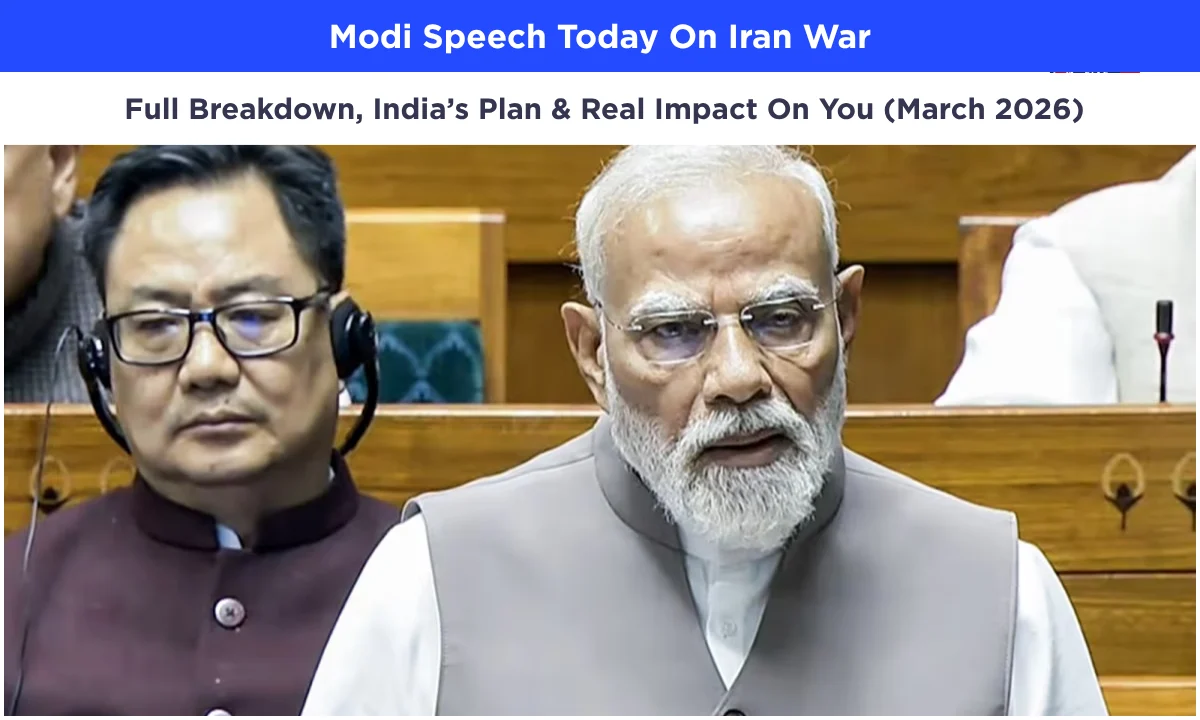
Modi Speech Today On Iran War | Image Via © indianexpress.com
If you searched for “Modi speech today” you likely came across quick headlines or short updates. But most of those articles only cover surface-level points. The speech delivered by Prime Minister Narendra Modi in Lok Sabha on March 23, 2026 was not just a routine political discussion. It was a detailed message about how a global crisis can directly affect India and its citizens.
This speech focused on the ongoing Iran-US conflict and rising tensions in West Asia. It highlighted risks related to fuel supply, economy, and safety of Indians abroad. It also explained how the government is preparing for possible disruptions in a structured way.
In this article you will understand the full picture. We will break down what PM Modi said, why it matters, what actions the government is taking, and how it can impact your daily life. This guide also includes public reactions, future possibilities, and practical insights that most other articles are missing.
Table of Contents
Also Read
Reliance Investment In US Oil Refinery: Trump’s $300 Billion Announcement Explained Simply
What Was Modi Speech Today About
PM Modi’s speech mainly addressed the current West Asia crisis and its implications for India. This includes rising tensions involving Iran, the United States, and the broader Middle East region. He clearly stated that this is not just a foreign issue. It has direct consequences for India’s economy, energy security, and citizens working abroad.
A key message from the speech was India’s stance on peace. PM Modi emphasized that war is not beneficial for humanity and dialogue is the only solution. At the same time, he warned that the situation could have long-term effects. This shows that the government is not taking the crisis lightly.
Timeline And Latest Update (March 23–24, 2026)
To understand the full context, it is important to look at the timeline of events. On March 23, PM Modi delivered a detailed speech in Lok Sabha. He discussed energy risks, citizen safety, and global tensions.
On March 24, he is expected to address the same issue in Rajya Sabha. This indicates that the government is treating the situation as a high priority and wants to communicate clearly across both houses.
The conflict itself has been ongoing for several weeks. Global shipping routes, especially near the Strait of Hormuz, are under pressure. This continuous update approach shows that the situation is evolving and requires constant monitoring.
Why Strait Of Hormuz Is So Important?
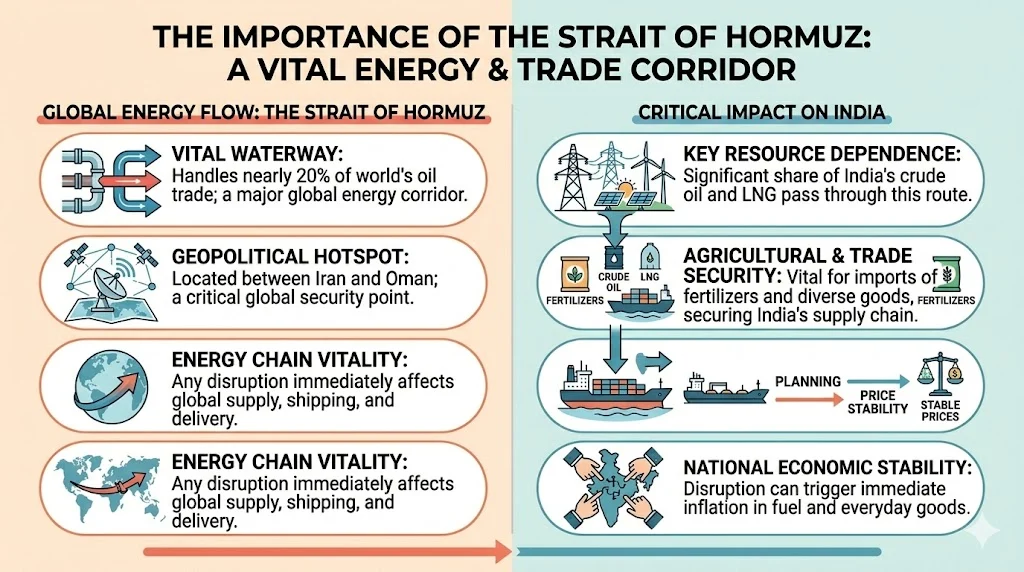
One of the most critical points in the speech was the Strait of Hormuz, a narrow but extremely strategic waterway located between Iran and Oman. Despite its small size, it handles nearly 20% of the world’s total oil trade, making it one of the most important energy corridors globally.
For India, this route is even more crucial. A significant share of the country’s crude oil imports, liquefied natural gas (LNG), and fertilizers pass through this region. Any disruption here can immediately affect supply chains, shipping costs, and delivery timelines.
PM Modi clearly stated that disruption in this area is “not acceptable” because it can trigger a chain reaction across multiple sectors. If tensions escalate and shipping is restricted, oil prices in the global market can rise sharply.
This would directly impact petrol, diesel, and LPG prices in India. Higher fuel costs can also increase transportation expenses, leading to inflation in everyday goods. In simple terms, instability in this single route can affect everything from your fuel bill to grocery prices.
Key Announcements And Government Actions
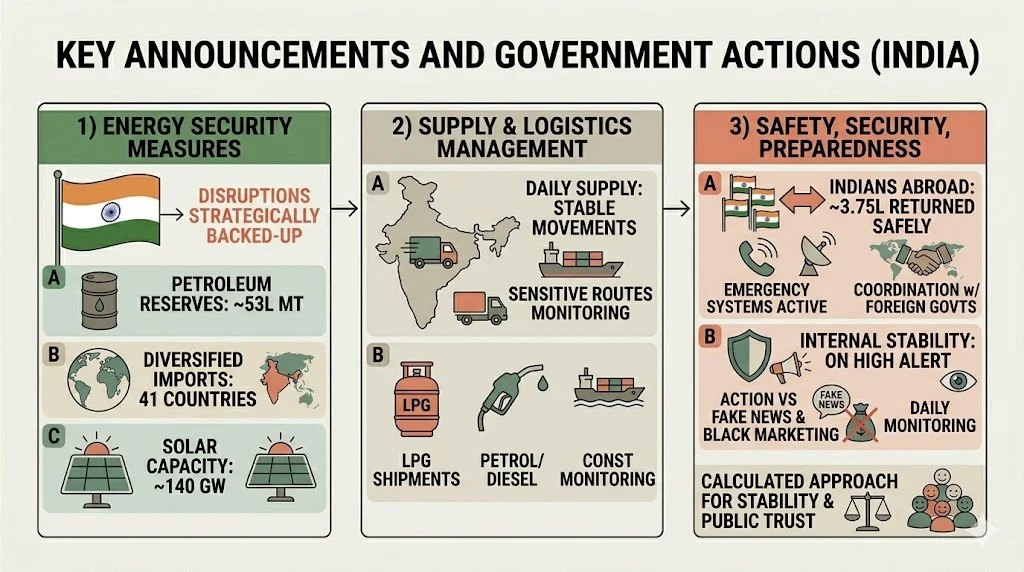
PM Modi shared several measures that the government has already taken to handle the situation effectively.
1) Energy Security Measures
India has built strong backup systems to handle disruptions.
- Strategic petroleum reserves are around 53 lakh metric tonnes
- Oil imports are now diversified across 41 countries
- Solar energy capacity has reached around 140 GW
These steps reduce dependency on a single region and improve long-term stability.
2) Supply And Logistics Management
The government is ensuring that daily supply remains stable.
- LPG shipments are successfully moving through sensitive routes
- Petrol and diesel supply is currently stable
- Shipping routes are under constant monitoring
The goal is to prevent shortages and avoid panic.
3) Safety Of Indians Abroad
A major focus of the speech was the safety of Indian citizens outside the country.
- Around 3.75 lakh Indians have been brought back safely
- Emergency systems are active in affected regions
- Continuous coordination with foreign governments is ongoing
This shows a strong focus on protecting people during global crises.
4) Security And Preparedness
The government is also working on internal stability.
- Security agencies are on high alert
- Strict action against fake news and black marketing
- Daily monitoring by dedicated committees
This ensures that misinformation does not create panic among citizens.
Why Modi Compared This Situation To COVID
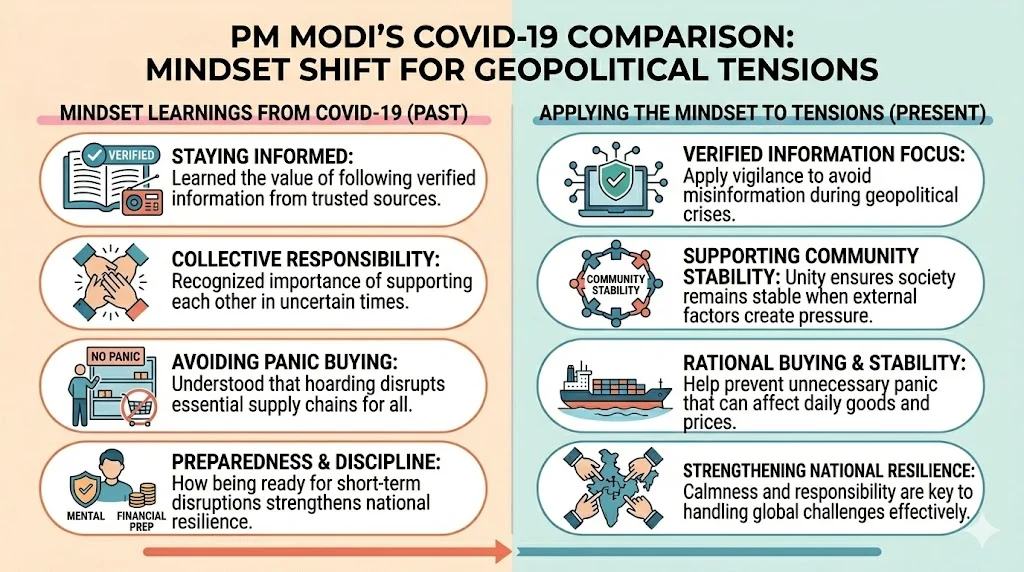
One of the most discussed and widely debated parts of the speech was PM Modi’s comparison of the current global situation with the COVID-19 pandemic. This comparison was not made to create fear, but to remind citizens of how preparedness, discipline, and collective responsibility helped India navigate one of the most challenging periods in recent history.
PM Modi clarified that this does not mean lockdowns or strict restrictions are expected. Instead, the comparison serves as a mindset shift. During COVID, people learned the importance of staying informed, avoiding misinformation, and supporting each other during uncertain times. The same approach is now being encouraged in the context of global geopolitical tensions.
He emphasized that crises are not always predictable, but the way people respond can make a significant difference. By staying alert, citizens can avoid unnecessary panic and make better decisions in their daily lives. Staying united ensures that society remains stable, especially when external factors create pressure on the economy or supply chains.
The key message can be understood through these simple but powerful points:
- Stay alert and follow verified information from trusted sources
- Stay united and support community stability
- Avoid panic buying or reacting to rumors
- Be mentally and financially prepared for short-term disruptions
The broader idea behind this message is to promote calmness and responsibility. Instead of reacting emotionally, people are encouraged to think rationally and act wisely. This approach not only helps individuals but also strengthens the country’s ability to handle global challenges effectively.
What It Means For Common People
1) Fuel Prices
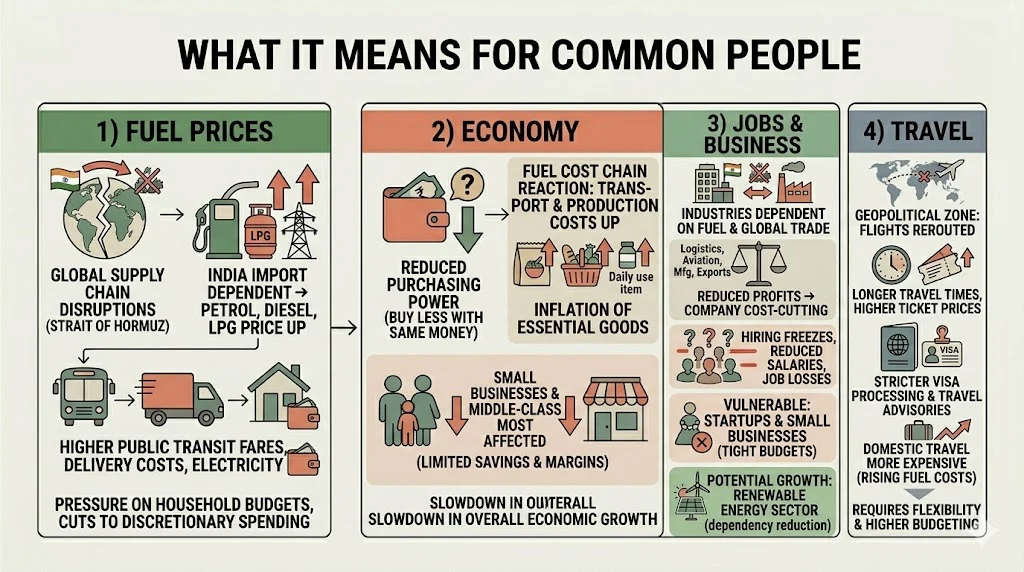
If the conflict continues, fuel prices may increase significantly due to disruptions in global oil supply chains, especially through critical routes like the Strait of Hormuz. India imports a large portion of its crude oil, so any instability in supply can directly push petrol, diesel, and LPG prices upward. This increase does not just affect vehicle owners. It impacts public transport fares, delivery costs, and even electricity generation in some regions. Over time, rising fuel costs can put pressure on household budgets, forcing people to cut down on discretionary spending.
2) Economy
Higher fuel costs often trigger a chain reaction across the economy. When transportation and production costs rise, businesses pass these expenses on to consumers. This leads to inflation, where the prices of essential goods like food, groceries, and daily-use items increase. Small businesses and middle-class families are usually the most affected, as their margins and savings are limited. Additionally, inflation can reduce purchasing power, meaning people can buy less with the same amount of money, slowing down overall economic growth.
3) Jobs And Business
Industries that depend heavily on fuel and global trade, such as logistics, aviation, manufacturing, and exports, may face serious challenges. Increased operational costs can reduce profits, forcing companies to cut expenses. In some cases, this may lead to hiring freezes, reduced salaries, or even job losses. Startups and small businesses are particularly vulnerable because they often operate on tight budgets. On the other hand, sectors like renewable energy may see growth as the country looks for alternatives to reduce dependency on imported fuel.
4) Travel
International travel may face disruptions due to changing geopolitical conditions. Airlines may reroute flights to avoid conflict zones, leading to longer travel times and higher ticket prices. Visa processing and travel advisories may also become stricter, affecting both tourists and business travelers. Even domestic travel can become more expensive due to rising fuel costs. Overall, travel planning may require more flexibility and budgeting during such uncertain times.
Even though the war is happening outside India, its effects can be felt locally in multiple ways, influencing daily life, financial planning, and long-term economic stability.
Public Opinion And Social Media Buzz
Public reactions to the speech are mixed. Some people appreciated the speech. They said it was calm, informative, and data-driven. Many believe the government is prepared.
Others criticized the timing. Some users said the response came late and lacked detailed solutions. There are also concerns about future fuel restrictions and economic impact.
Some people feel the situation may become more serious in coming weeks. Overall, people agree that the situation is important and needs attention.
Why This Speech Matters More Than Headlines
Most news articles focus only on highlights. But this speech goes deeper. It connects global events with everyday life in India. It explains how international conflicts can affect fuel, economy, and safety.
It also shows that the government is preparing in advance instead of reacting later. This makes the speech more important than a regular political address.
Opposition Vs Government View
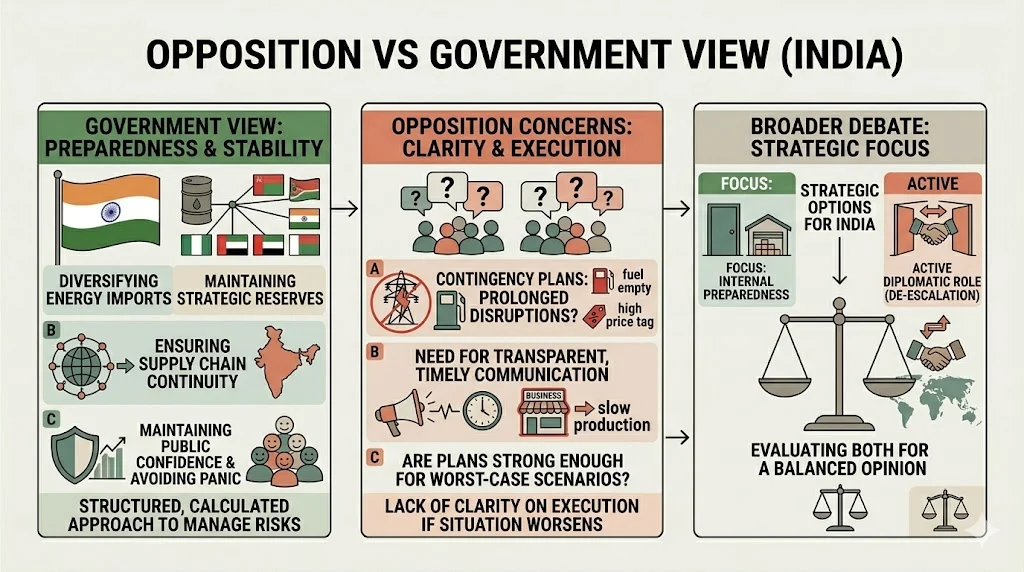
To understand the full picture, it is important to look at both sides of the discussion in detail rather than relying on a single narrative. From the government’s perspective, the focus is clearly on preparedness, stability, and long-term planning. Officials have highlighted steps such as diversifying energy imports, maintaining strategic reserves, and ensuring supply chain continuity.
The emphasis is also on maintaining public confidence and avoiding panic, especially during a time when global uncertainty can easily trigger economic instability. The government’s messaging suggests that India is not reacting impulsively but is instead following a structured and calculated approach to manage potential risks.
On the other hand, the opposition has raised several important concerns that cannot be ignored. Critics argue that while the government has presented data and assurances, there is still a lack of clarity on how these plans will be executed if the situation worsens.
Questions have been raised about whether contingency plans are strong enough to handle prolonged disruptions, especially in fuel supply and inflation control. Some opposition leaders have also pointed out that communication could have been more transparent and timely, allowing citizens and businesses to prepare better.
Additionally, there is a broader debate about whether India should take a more active diplomatic role in de-escalating tensions or continue focusing primarily on internal preparedness. This difference in approach reflects deeper political and strategic viewpoints.
Looking at both perspectives together provides a more complete understanding of the situation. It allows readers to evaluate not just what has been said, but also what might be missing, helping them form a more informed and balanced opinion.
What Could Happen Next?
Looking at the current situation, several possibilities can unfold.
- The conflict may continue, leading to higher fuel prices
- Diplomatic talks may stabilize the situation
- India may increase focus on renewable and alternative energy
The future depends on global developments. But preparation at the national level is already in progress.
Conclusion
In my opinion, this speech was not just about politics. It was a clear message of awareness and preparation. PM Modi focused on real issues that can affect everyday life. He explained risks, shared solutions, and asked citizens to stay calm. The most important takeaway is simple. Stay informed but do not panic.
Global events are unpredictable. But understanding them helps you make better decisions in your daily life. This speech is a reminder that even distant conflicts can have real consequences. Being aware is the first step to being prepared.
Related Posts :
Share This Post