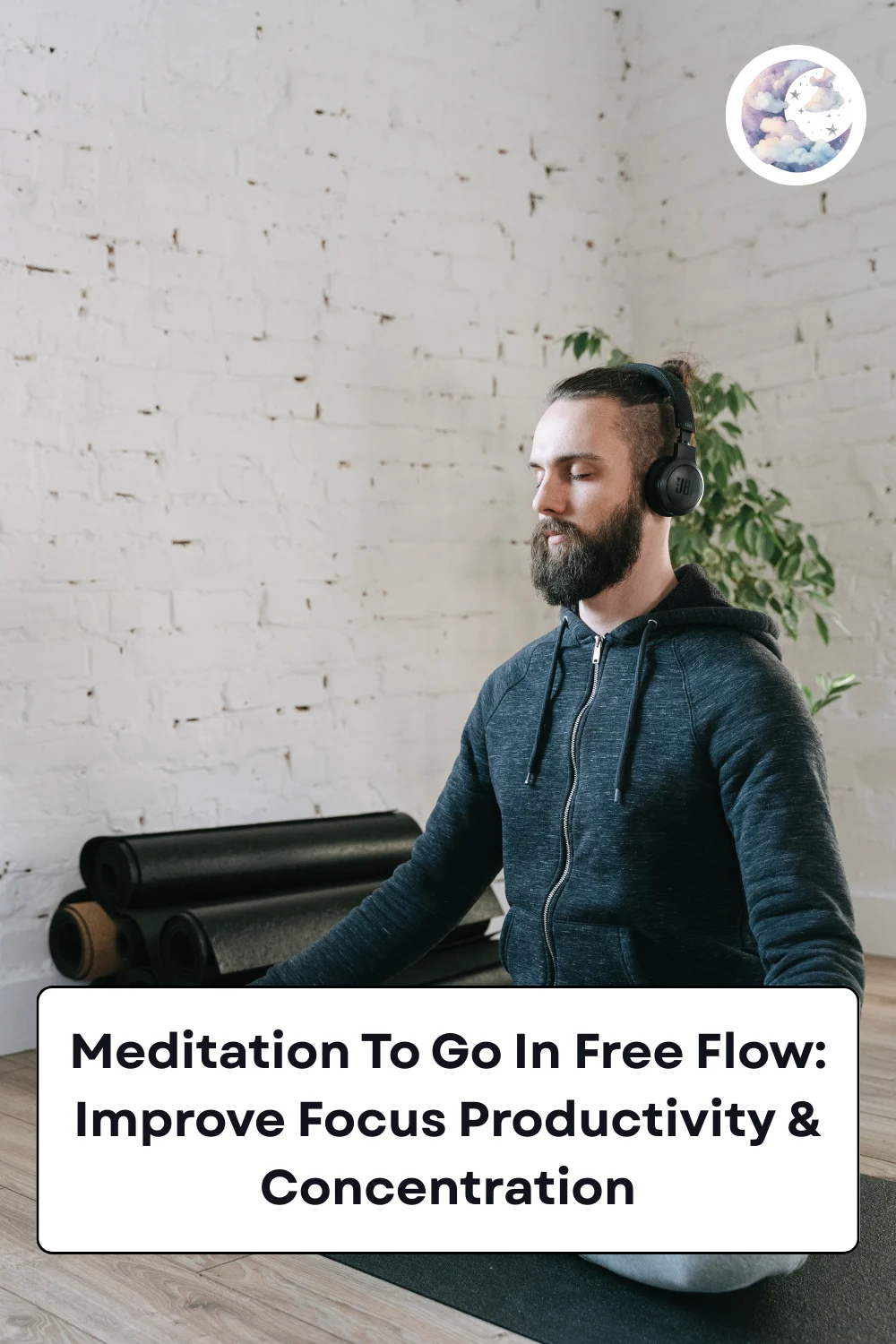
Meditation to go in free flow is becoming a powerful method for improving focus, productivity, and concentration in daily life. In a world filled with constant notifications and mental pressure, people are searching for ways to work with clarity and calm. Free flow meditation helps the mind enter a state where attention feels natural and effort becomes lighter.
This practice connects meditation with the flow state, which is known for deep focus and high performance. Instead of forcing discipline, free flow meditation creates the right mental space for the brain to stay present.
This approach is now widely used by professionals, students, and creative workers who want better results without mental exhaustion.
Key takeaways
- Free flow meditation helps the brain enter a state of deep focus and calm attention
- Research discussions report productivity increases of up to 500 percent during flow states
- Learning speed improves by nearly 200 to 490 percent when the mind is fully engaged
- Around 79 percent of workers struggle to focus for one hour without interruption
- Short meditation sessions before work can reduce stress and improve concentration

Understanding Free Flow Meditation
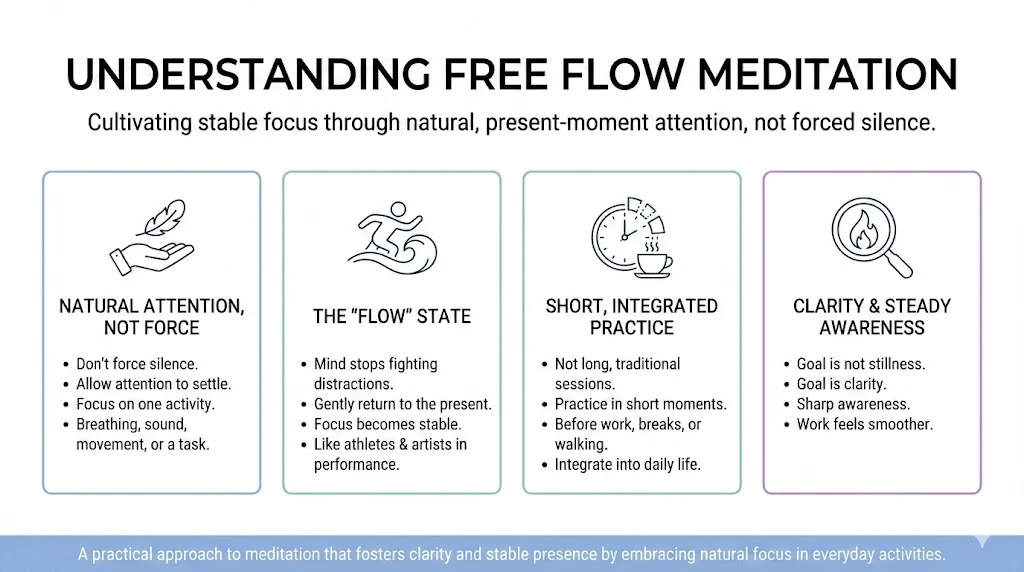
Free flow meditation is not about forcing silence in the mind. It is about allowing attention to settle naturally on one activity. This may be breathing, sound, movement, or a task. When the mind stops fighting distractions and gently returns to the present moment, focus becomes stable.
This state is often described as being fully absorbed in what you are doing. Thoughts slow down. Awareness becomes sharp. Work feels smoother. This is the same condition that athletes and artists experience when performance feels effortless.
Unlike traditional long meditation sessions, free flow meditation can be practiced in short moments. It can happen before work, during breaks, or even while walking. The goal is not stillness but clarity and steady awareness.
The Science Behind Flow & Concentration
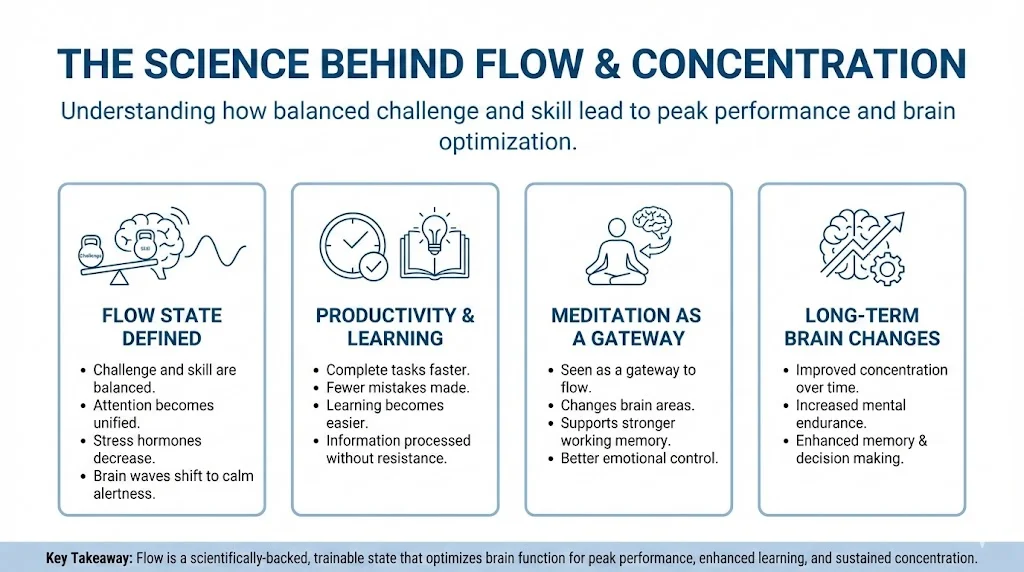
Flow theory explains that the brain works best when challenge and skill are balanced. In this state, attention becomes unified. Stress hormones decrease and brain waves shift toward patterns linked with calm alertness.
Recent discussions in productivity research highlight that people in flow can complete tasks faster and with fewer mistakes. Learning becomes easier because the brain processes information without internal resistance. This explains why meditation is now seen as a gateway to flow.
Studies also show that meditation changes brain areas related to memory and decision making. These changes support stronger working memory and better emotional control. Over time, this leads to improved concentration and mental endurance.

Why Modern Life Blocks Focus?
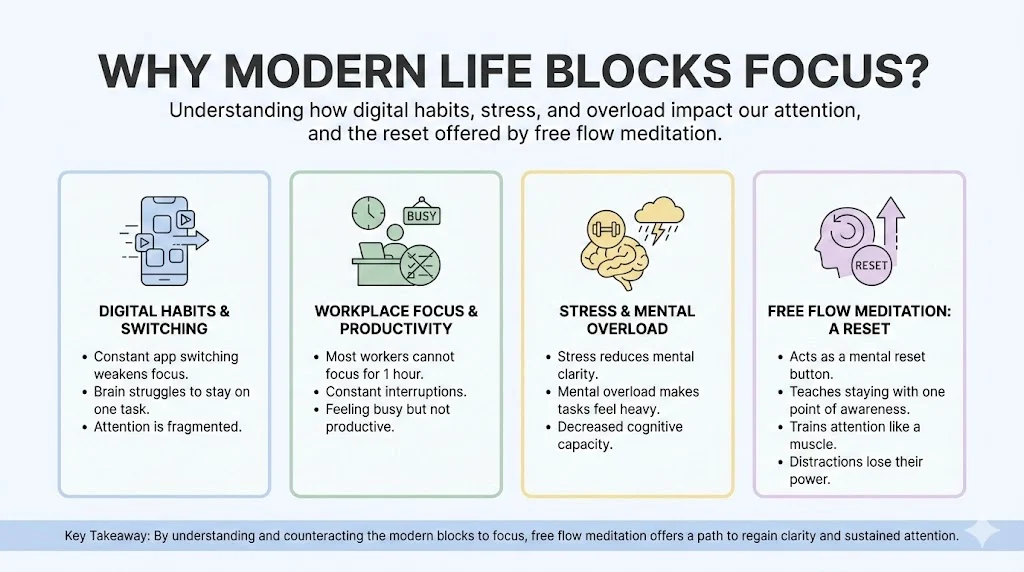
Digital habits have changed the way attention works. Constant switching between apps weakens the brain’s ability to stay on one task. Many people feel busy but not productive.
Reports from workplace surveys show that most workers cannot stay focused for even one hour without interruption. Stress and mental overload reduce clarity. This makes simple tasks feel heavy.
Free flow meditation acts as a reset button. It teaches the mind to stay with one point of awareness. This trains attention like a muscle. With practice, distractions lose their power.
How Free Flow Meditation Improves Productivity?
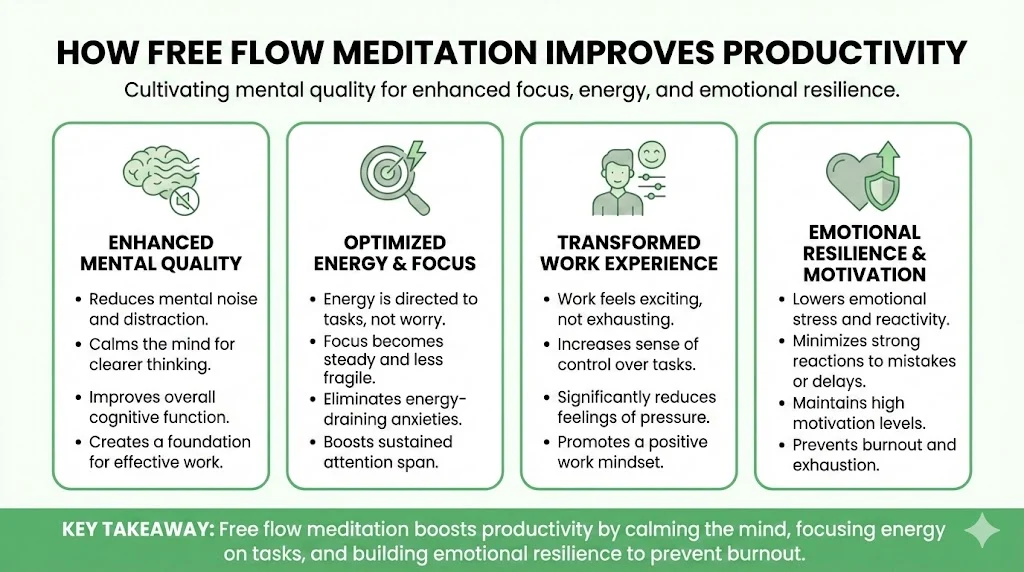
Productivity is not only about time management. It is about mental quality. Free flow meditation improves productivity by reducing mental noise. When the mind is calm, energy is used only for the task and not for worry.
People who practice this method often describe work as exciting instead of exhausting. They report feeling more control and less pressure. Focus becomes steady instead of fragile.
This state also lowers emotional stress. A calm mind does not react strongly to mistakes or delays. This keeps motivation high and prevents burnout.
Five Meditation Practices To Enter Free Flow
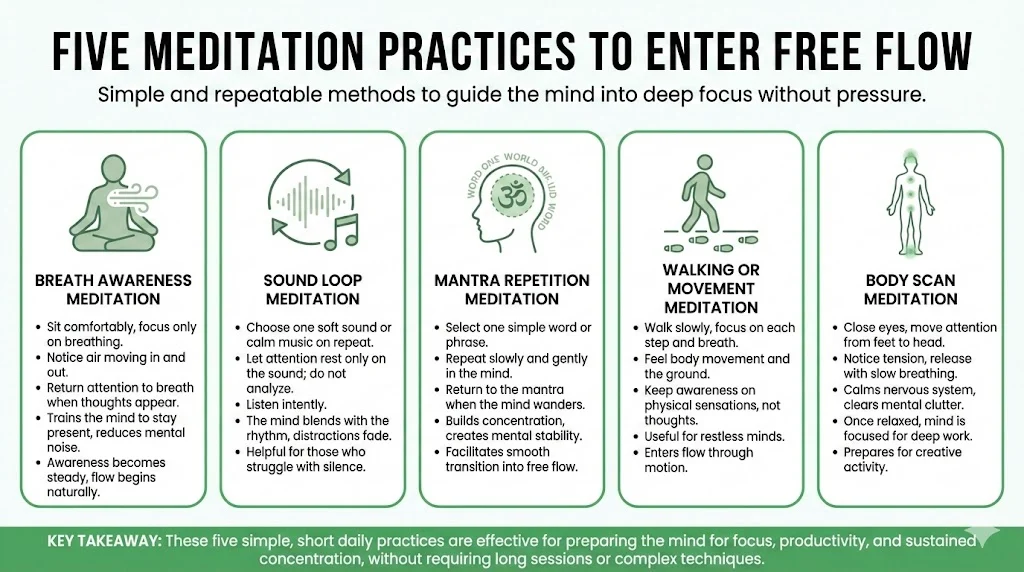
Free flow meditation works best when the practice is simple and repeatable. These five methods are widely used because they guide the mind into deep focus without pressure.
- Breath awareness meditation
Sit in a comfortable position and focus only on your breathing. Notice the air moving in and out of the body. When thoughts appear, return attention to the breath. This repetition trains the mind to stay present and reduces mental noise. After a few minutes, awareness becomes steady and flow begins naturally. - Sound loop meditation
Choose one soft sound or a single piece of calm music and play it on repeat. Let your attention rest only on the sound. Do not analyze it. Just listen. Over time, the mind blends with the rhythm and distractions fade. This method is helpful for people who struggle with silence. - Mantra repetition meditation
Select one simple word or phrase and repeat it slowly in the mind. Keep the rhythm gentle and steady. Each time the mind wanders, return to the mantra. This builds concentration and creates mental stability. Many people experience a smooth transition into free flow after a few minutes of repetition. - Walking or movement meditation
Walk slowly and focus on each step and breath. Feel the movement of the body and the ground under your feet. Keep awareness on physical sensation instead of thoughts. This practice is useful for restless minds and helps enter flow through motion rather than stillness. - Body scan meditation
Close your eyes and move attention through the body from feet to head. Notice tension and release it with slow breathing. This calms the nervous system and clears mental clutter. Once the body relaxes, the mind becomes focused and ready for deep work or creative activity.
These five meditation practices show that free flow does not require long sessions or complex techniques. Short daily use of any one method can prepare the mind for focus, productivity, and sustained concentration.
The Role Of Repetition In Building Concentration
Repetition is a core element of free flow meditation. The brain learns focus by returning to the same point again and again. This can be breath, a mantra, or body sensation.
Many traditions use repetition to build inner stability. The same idea applies here without religious meaning. Repetition strengthens attention pathways and weakens distraction habits.
This is why even short daily practice can improve focus. Five to ten minutes of repeated awareness can change how the mind responds to tasks.
Moving Meditation & Active Flow
Free flow does not only happen in silence. Physical movement can also create deep focus. Stretching, slow exercise, or controlled holds combined with breathing bring the mind into the body.
This method is useful for people who feel restless during sitting meditation. Movement releases tension and keeps awareness anchored in physical sensation.
Many users describe this as a state of control and balance. Breath becomes steady. Thoughts reduce. Energy feels organized. This shows that meditation does not need to look still to be effective.
Using Meditation Before Deep Work
Short meditation before starting work can change the quality of attention. It prepares the brain for sustained effort.
A few minutes of breathing or sound focus clears emotional stress. This creates mental space for thinking and creativity. Tasks feel simpler because attention is unified.
Some people also meditate during breaks. This prevents fatigue from building up. It allows the mind to reset and return with clarity.
Emotional Regulation & Stress Reduction
Focus and productivity are deeply connected to emotion. Anxiety and frustration disturb attention. Free flow meditation reduces emotional reactions by creating distance from thoughts.
When awareness becomes steady, feelings are observed instead of obeyed. This leads to calmer decision making and better problem solving.
Lower stress also improves sleep and recovery. A rested mind concentrates better the next day. This creates a positive cycle of focus and energy.
Building A Sustainable Meditation Habit
Consistency is more important than duration. Small daily sessions shape long term results. The mind learns through repetition and patience.
Choosing the same time each day helps build routine. Morning meditation prepares attention for the day. Evening practice releases tension and mental noise.
Guided practices can support beginners. A calm voice reminding attention back to the present keeps the mind from drifting too far.
Progress may feel slow at first. Restlessness is common. This is part of training attention. Over time, moments of flow appear more often and last longer.
Free Flow Meditation & Mental Health Trends
Recent mental health discussions describe flow as a productivity tool. It is used to create silence and mindful moments before demanding work.
People admire methods that feel simple and practical. Short breathing sessions, looped sounds, and walking meditation are now popular. These methods fit into busy schedules without effort.
This shows a shift from long traditional meditation to flexible forms that support real life tasks. Free flow meditation stands at the center of this change.
Long Term Benefits For Focus & Performance
With practice, attention becomes stable. Tasks require less effort. Memory improves because the brain is not overloaded with distractions.
Creative thinking also increases. A calm mind allows ideas to arise naturally. This supports writing, planning, and problem solving.
Physical health benefits appear as well. Reduced stress protects the nervous system and supports resilience. Energy feels more balanced throughout the day.
Conclusion On Meditation For Free Flow
Meditation to go in free flow offers a simple path to better focus, productivity, and concentration. It does not demand perfection or long hours of practice. It only requires gentle attention and repetition.
By calming the mind and reducing distraction, this method turns work into a state of ease and clarity. Science and real life experiences show that free flow meditation can transform stress into strength and effort into flow.
In a distracted world, this practice provides a practical way to regain control of attention and improve daily performance in a healthy and sustainable manner.
Tags: meditation, focus improvement, productivity habits, concentration techniques, flow state, mindfulness practice