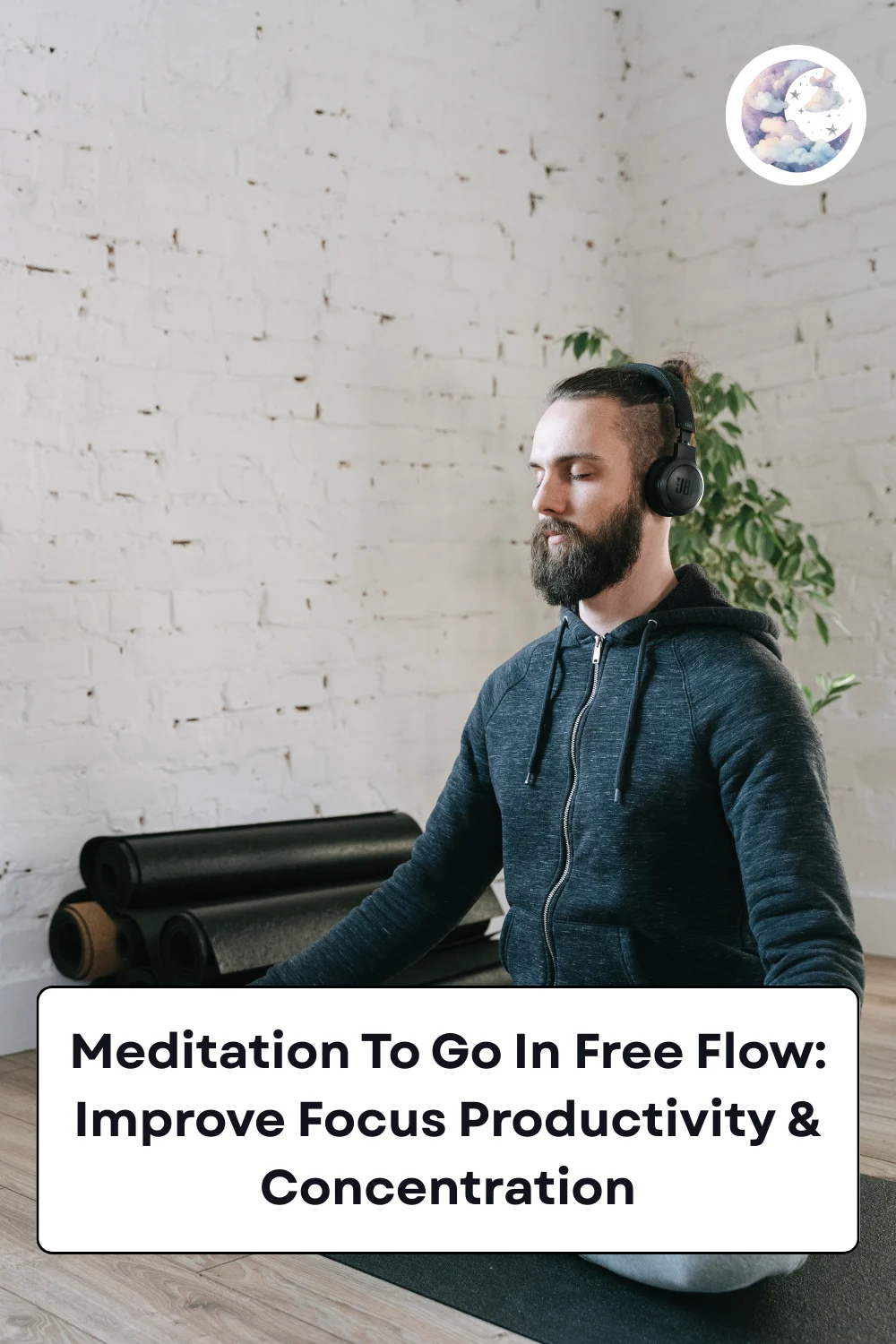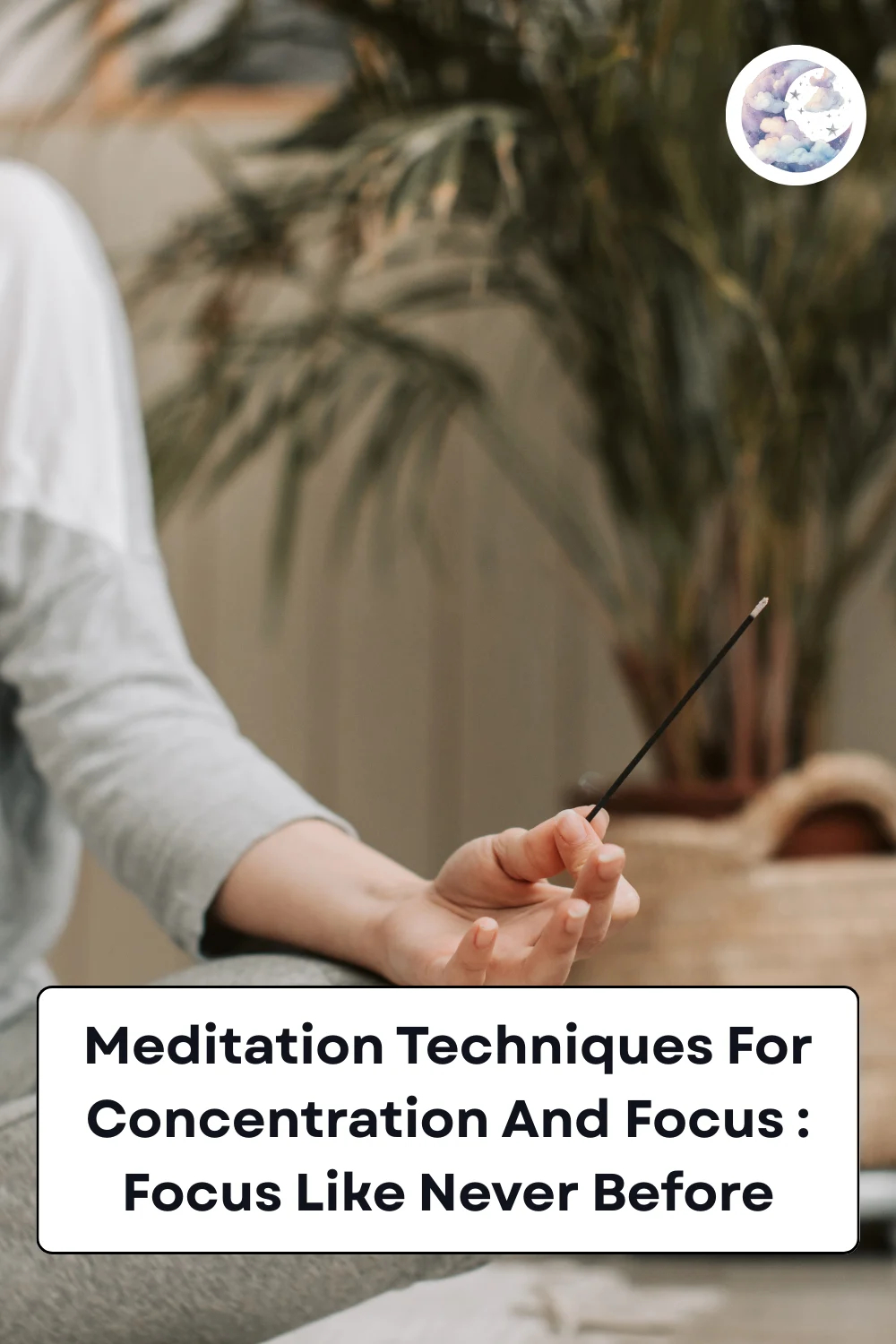
Meditation is practiced across cultures and traditions. It is known for supporting mental clarity, emotional balance, and inner awareness. In modern wellness spaces, meditation is often explained in simple frameworks so beginners can understand it easily and choose a practice that fits their daily life.
There is no single global rule that defines only four types of meditation. Different schools describe many styles. Still, many teachers and health platforms group meditation into four broad categories. These four types cover most techniques used today and make learning easier for new practitioners.
Key Takeaways
- Meditation is commonly grouped into four broad types for simplicity
- Each type works on attention, emotions, or mental stillness
- People now combine different styles instead of following only one
- Public opinion supports flexible and personal meditation choices
- Daily practice of 15 to 20 minutes is widely encouraged

Understanding the Four Main Types of Meditation
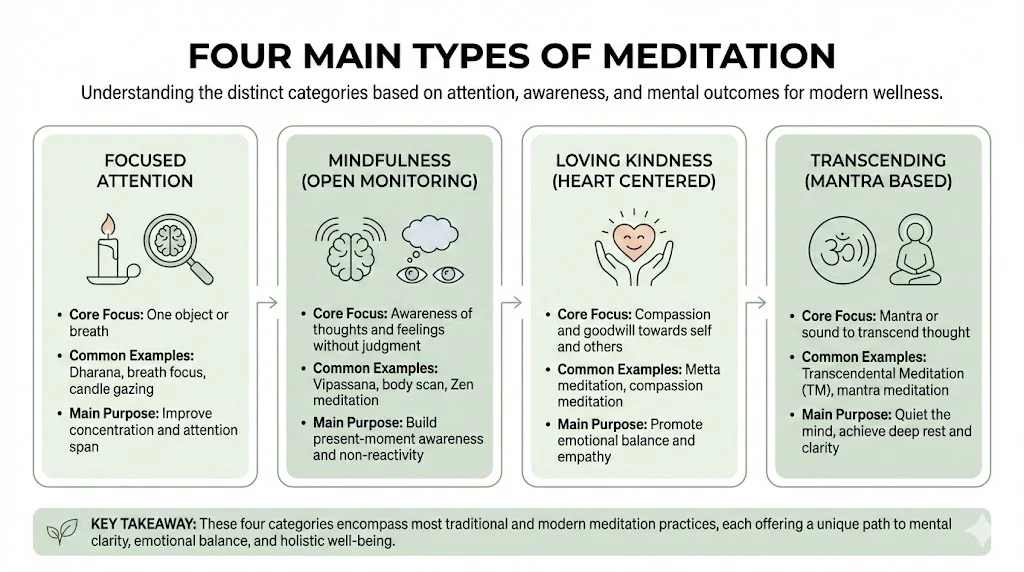
Many modern sources explain meditation through four main categories. These groups are based on how attention is used and what result the practice creates in the mind and body. The four types are Focused Attention, Mindfulness or Open Monitoring, Loving Kindness or Heart Centered, and Transcending or Mantra based meditation.
These four types include most traditional practices such as vipassana, mantra meditation, and compassion meditation. They also match how wellness apps and research studies explain meditation today.
Below is a simple table that explains the four types clearly.
| Type of Meditation | Core Focus | Common Examples | Main Purpose |
|---|---|---|---|
| Focused Attention | One object or breath | Dharana, breath focus, candle gazing | Improve concentration |
| Mindfulness | Awareness of thoughts and feelings | Vipassana, body scan | Build present awareness |
| Loving Kindness | Compassion and goodwill | Metta meditation | Emotional balance |
| Transcending | Mantra or sound | Transcendental meditation | Quiet the mind |
Focused Attention Or Concentration Meditation
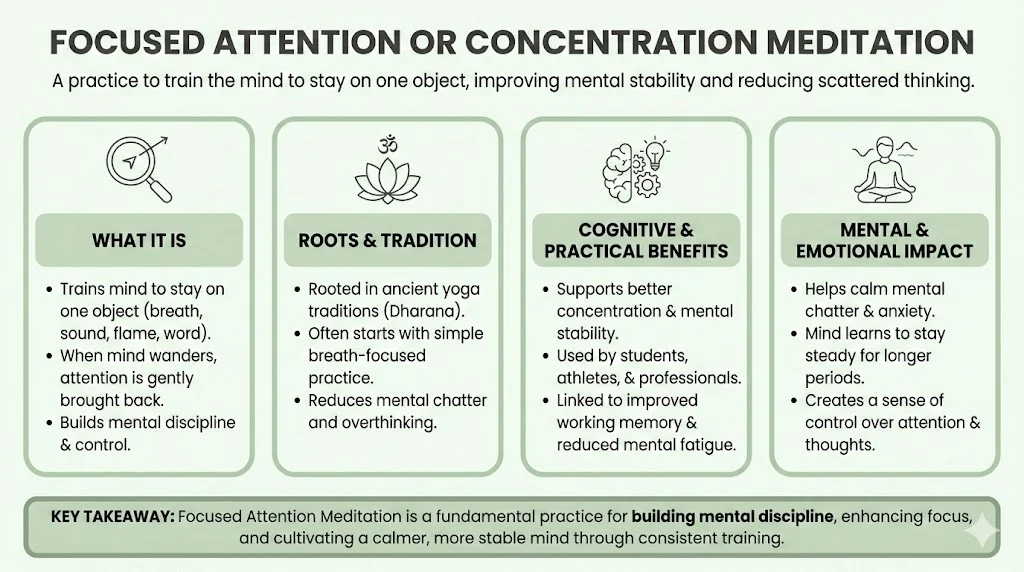
Focused attention meditation trains the mind to stay on one object. This object can be the breath, a sound, a candle flame, or a repeated word. When the mind wanders, attention is gently brought back to the object.
This method is rooted in ancient yoga traditions and is often called Dharana. It builds mental discipline and reduces scattered thinking. Many beginners start with breath focused meditation because it is simple and practical.
This type of meditation supports better concentration and mental stability. It is often used by students, athletes, and professionals who want stronger focus in daily tasks. Scientific research links focused attention meditation with improved working memory and reduced mental fatigue.
It also helps calm mental chatter. Over time, the mind learns to stay steady for longer periods. This creates a sense of control over attention and thoughts.
Mindfulness Or Open Monitoring Meditation
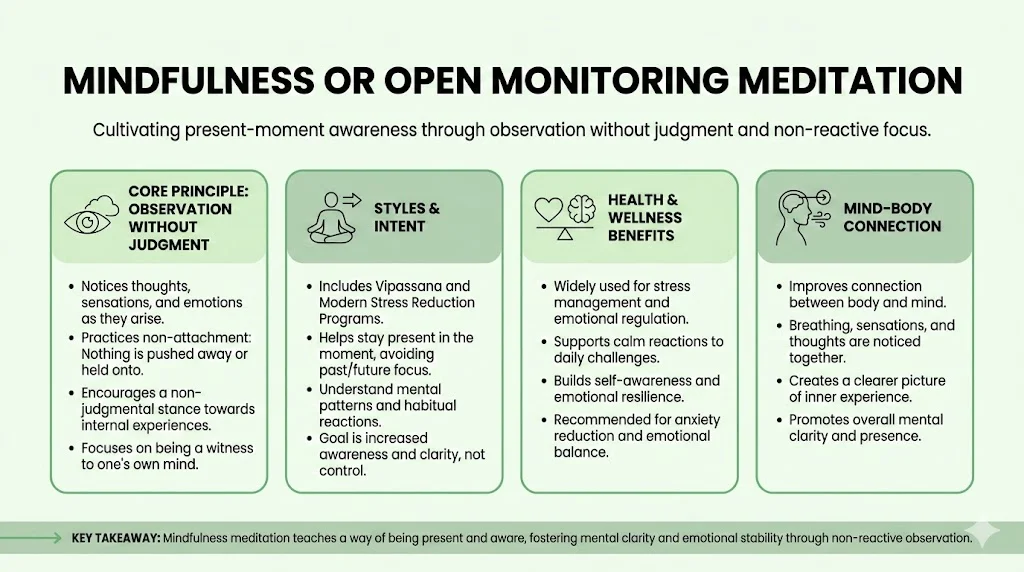
Mindfulness meditation teaches observation without judgment. Instead of focusing on one thing, the practitioner notices thoughts, sensations, and emotions as they arise. Nothing is pushed away and nothing is held onto.
This style includes vipassana and modern stress reduction programs. It helps people stay present in the moment and understand their mental patterns. The goal is awareness, not control.
Mindfulness meditation is widely used for stress management and emotional regulation. It supports calm reactions to daily challenges and builds self awareness. Many health professionals recommend it for anxiety and emotional balance.
The practice also improves connection between body and mind. Breathing, sensations, and thoughts are noticed together. This creates a clearer picture of inner experience and promotes mental clarity.
Loving Kindness Or Heart Centered Meditation
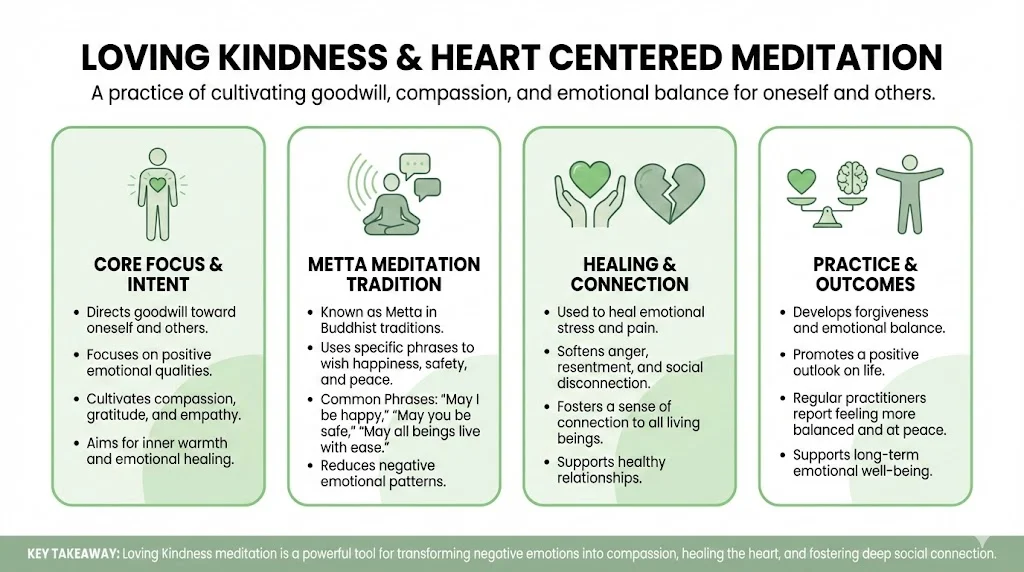
Loving kindness meditation focuses on emotional qualities. It directs goodwill toward oneself and others. Common phrases include wishes for happiness, safety, and peace.
This practice is known as Metta meditation in Buddhist traditions. It develops compassion and reduces negative emotional patterns. It is often used to heal emotional stress and social disconnection.
Heart centered meditation works on gratitude, forgiveness, and empathy. It helps soften anger and emotional pain. Over time, practitioners report feeling more connected to others and more balanced within themselves.
This style is often chosen by people seeking emotional healing and inner warmth. It supports healthy relationships and positive outlook on life.
Transcending Or Mantra Based Meditation
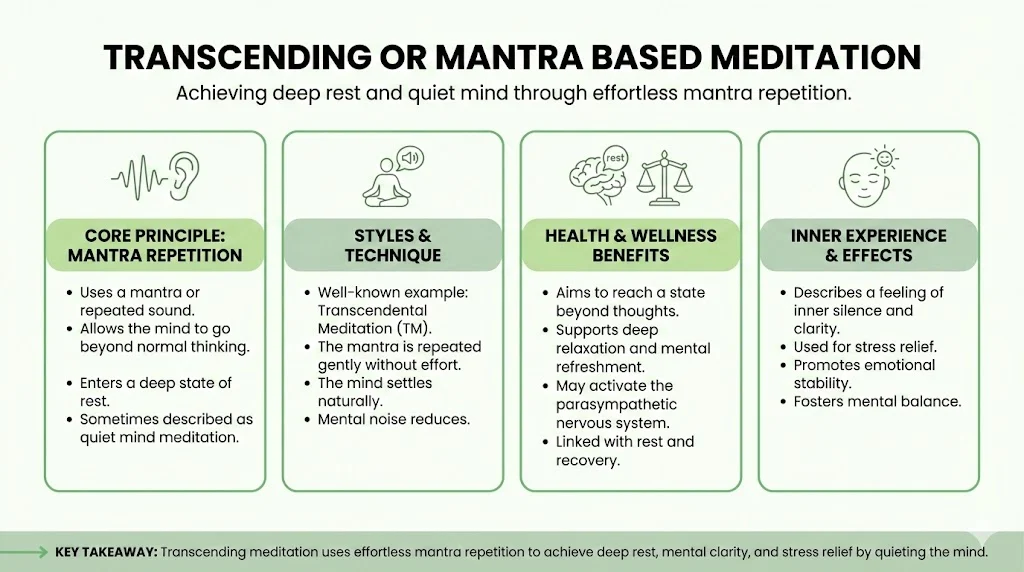
Transcending meditation uses a mantra or repeated sound. The repetition allows the mind to go beyond normal thinking and enter a deep state of rest. It is sometimes described as quiet mind meditation.
Transcendental meditation is a well known example. The mantra is repeated gently without effort. The mind settles naturally and mental noise reduces.
This type of meditation aims to reach a state beyond thoughts. It supports deep relaxation and mental refreshment. Some studies show that it activates the parasympathetic nervous system which is linked with rest and recovery.
People who practice this style often describe a feeling of inner silence and clarity. It is used for stress relief and emotional stability.
Why These Four Types Are Used Today
Modern wellness platforms use this four type framework because it is simple and flexible. It allows people to understand meditation without complex philosophy. Apps like Calm and Insight Timer offer blended approaches using these four categories.
Recent trends from 2025 onward show people combining styles instead of following one rigid path. Someone may use focused attention in the morning and loving kindness at night. This flexible method helps match practice with daily needs.
Scientific research also studies meditation based on attention type and emotional impact. These four groups fit well with brain based and nervous system studies.
Public Views and Trends from Twitter Discussions
Recent public conversations show strong interest in meditation. Many users emphasize that there is no single correct method. The choice depends on personal goals such as stress relief, focus, or spiritual growth.
Common opinions shared include:
- Meditation has roots over 5000 years old in Indian traditions
- Different minds need different meditation paths
- Combining styles gives better results
- Daily practice of 15 to 20 minutes is encouraged
- Both scientific and spiritual benefits are valued
People admire meditation for its adaptability between Eastern and Western cultures. Some focus on discipline based practices aimed at higher awareness. Others prefer calm based methods for nervous system recovery.
There is also respect for ancient teachings and modern science working together. Many users describe meditation as a connection to higher self and personal clarity.
Choosing the Right Type for Yourself
The four types of meditation allow easy selection based on personal needs. Focused attention helps with distraction and concentration. Mindfulness supports emotional control and awareness. Loving kindness helps heal emotional stress. Transcending meditation supports deep rest and quietness.
People are advised to experiment with different styles until one feels natural. The goal is not perfection but consistency. Even five minutes daily can bring positive change over time.
Personal experience and comfort decide the best method. Some people enjoy silent sitting. Others prefer guided sessions or mantra repetition. There is no fixed rule.
Meditation in Daily Life
Meditation does not require special equipment. It can be practiced at home, in nature, or during quiet moments. Morning practice helps start the day with clarity. Evening practice helps release stress.
Many people combine meditation with breathing exercises and light movement. This creates balance between body and mind. Consistency matters more than duration.
Over time, meditation builds patience and emotional strength. It also improves self understanding and mental discipline.
Conclusion
There is no single universal list of four meditation types. Still, the most common modern framework includes Focused Attention, Mindfulness, Loving Kindness, and Transcending meditation. These four cover the main ways attention and awareness are trained.
Public opinion supports flexibility and personal choice. People now blend styles based on their goals and lifestyle. Meditation continues to grow as both a spiritual and scientific practice.
The value of meditation lies in regular practice and simple understanding. The four type model makes meditation accessible to beginners and useful for long term growth.
Tags: meditation types, mindfulness practice, focused attention meditation, loving kindness meditation, mantra meditation, mental wellness