Digestive discomfort such as bloating, gas, and irregular digestion has become more common due to modern eating habits and daily stress. In recent years, people have shown growing interest in improving gut health through everyday foods rather than relying only on supplements or medicines.
Online discussions in 2025 and 2026 highlight a focus on fermented foods, fiber rich plants, and simple dietary changes that support digestive balance.
Gut health is closely connected with digestion, immunity, and overall well being. A balanced gut microbiome helps the body absorb nutrients efficiently and maintain normal digestive function. Choosing the right foods may support gut comfort and reduce occasional bloating when combined with healthy lifestyle habits.
Table of Contents
Key Takeaways
- Fermented foods are widely included in gut friendly diets.
- Fiber rich foods help nourish beneficial gut bacteria when added gradually.
- Certain fruits and herbs are commonly used to support digestion.
- Individual tolerance varies, so moderation is important.
- Consistent food choices matter more than short term changes.
Why Gut Health Matters?
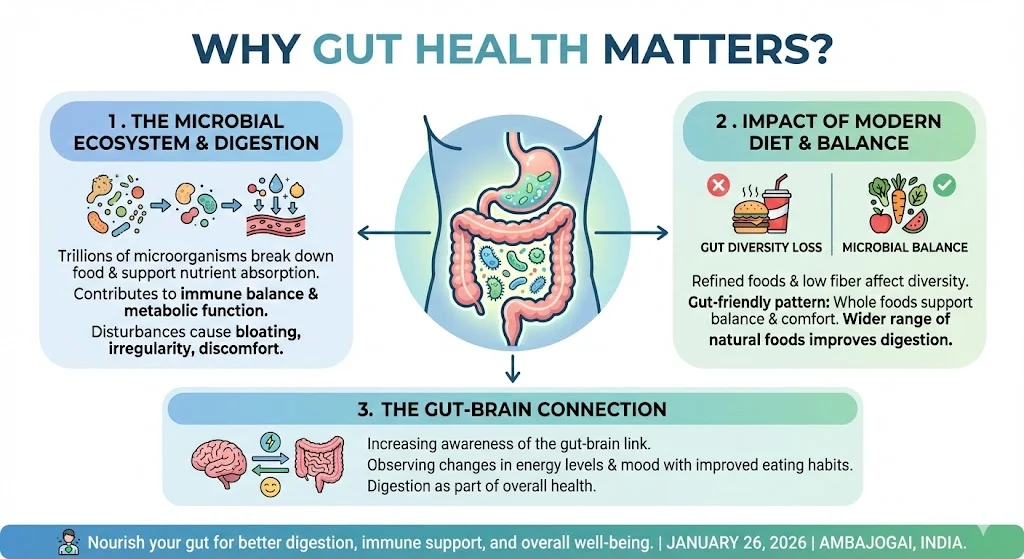
The digestive system contains trillions of microorganisms that play a role in breaking down food and supporting nutrient absorption. These microbes also contribute to immune balance and metabolic function. When this balance is disturbed, people may notice symptoms such as bloating, irregular digestion, or discomfort after meals.
Modern diets high in refined foods and low in fiber can affect gut diversity. A gut friendly eating pattern focuses on whole foods that support microbial balance and digestive comfort. Many people report improved digestion when they include a wider range of natural foods.
Recent attention has also focused on the gut and brain connection. Some individuals observe changes in energy levels and mood when they improve their eating habits. This has increased awareness of digestion as part of overall health.

Probiotics & Prebiotics In Everyday Foods
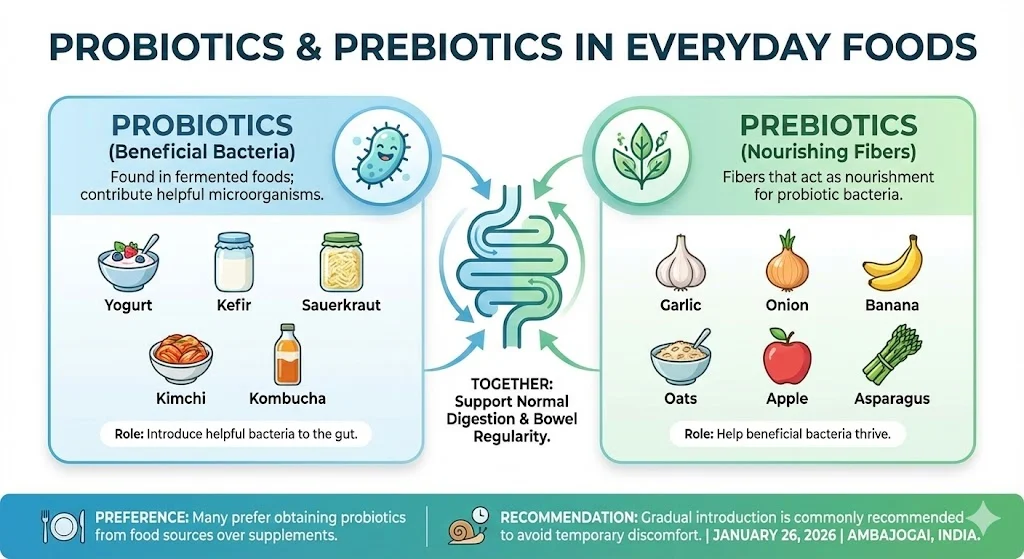
Probiotics are beneficial bacteria found in fermented foods. Prebiotics are fibers that act as nourishment for these bacteria. Both play a role in maintaining a balanced digestive system.
Probiotic foods contribute helpful microorganisms, while prebiotic foods help these microbes thrive. Together, they support normal digestion and bowel regularity. Many people prefer obtaining probiotics from food sources rather than supplements.
Gradual introduction is commonly recommended, as sudden changes may cause temporary digestive discomfort.
Best Foods For Gut Health & Bloating Support
The following foods are often included in diets that aim to support digestion and reduce occasional bloating. They are valued for their fiber content, fermentation process, or natural plant compounds.
1) Fermented Foods
Fermented foods are widely discussed for their potential role in gut balance. These foods contain live cultures that may support digestive diversity.
Common examples include sauerkraut, kimchi, kefir, yogurt with live cultures, miso, and fermented pickles. Many people include small portions daily as part of balanced meals.
Greek yogurt and kefir are popular for routine use. Fermented cabbage such as sauerkraut is often chosen because it is simple and widely available.
2) Garlic and Onions
Garlic and onions are considered natural prebiotic foods. They provide fibers that beneficial gut bacteria can use as fuel. They are commonly included in meals for flavor and digestive support.
Spring onions and leeks offer similar properties and are often used in cooking to support overall dietary variety.
3) Fiber Rich Vegetables and Whole Grains
Fiber supports normal bowel movement and contributes to gut microbial balance. Vegetables such as asparagus, broccoli sprouts, spinach, and kale are frequently recommended for their fiber and mineral content.
Whole grains like oats and brown rice are also included in gut friendly diets. Many people increase fiber slowly to avoid temporary bloating during adjustment.
4) Berries
Berries such as blueberries, raspberries, and blackberries provide fiber and natural plant compounds called polyphenols. These foods are often described as gentle on digestion and suitable for regular consumption.
They are also lower in certain fruit sugars compared to other fruits, making them easier for some people to tolerate.
5) Ginger, Fennel, Mint, and Cumin
These herbs and spices are traditionally used to support digestion. Ginger is commonly used in teas and meals for digestive comfort. Fennel and mint are often included after meals to ease gas sensation.
Cumin is known for supporting digestive enzyme activity and is widely used in cooking.
6) Bananas & Watermelon
Bananas contain potassium and prebiotic fiber that may support gut bacteria. They are easy to digest and commonly included in gut friendly diets.
Watermelon provides hydration and is often chosen during warm seasons to support fluid balance and digestion.
7) Legumes, Nuts & Seeds
Legumes, nuts, and seeds offer fiber and plant protein. They help increase dietary variety and support microbial diversity.
Some individuals experience bloating with these foods if eaten in large amounts. Proper soaking and cooking may improve tolerance.
Public data shared online highlights chia seeds as a popular option:
| Health Factor | Observed Value |
|---|---|
| Soluble fiber (2 tbsp chia) | Up to 11 grams |
| Blood pressure change | 3 to 7 mmHg variation |
| Later calorie intake | About 25 percent reduction |
These values are often discussed in relation to satiety and digestion.
8) Coconut Oil & Activated Charcoal
Coconut oil is sometimes included in gut focused diets due to its fat profile and culinary use.
Activated charcoal is occasionally mentioned for short term gas discomfort. It is not intended for daily use and should be used cautiously.
Common Gut Friendly Foods
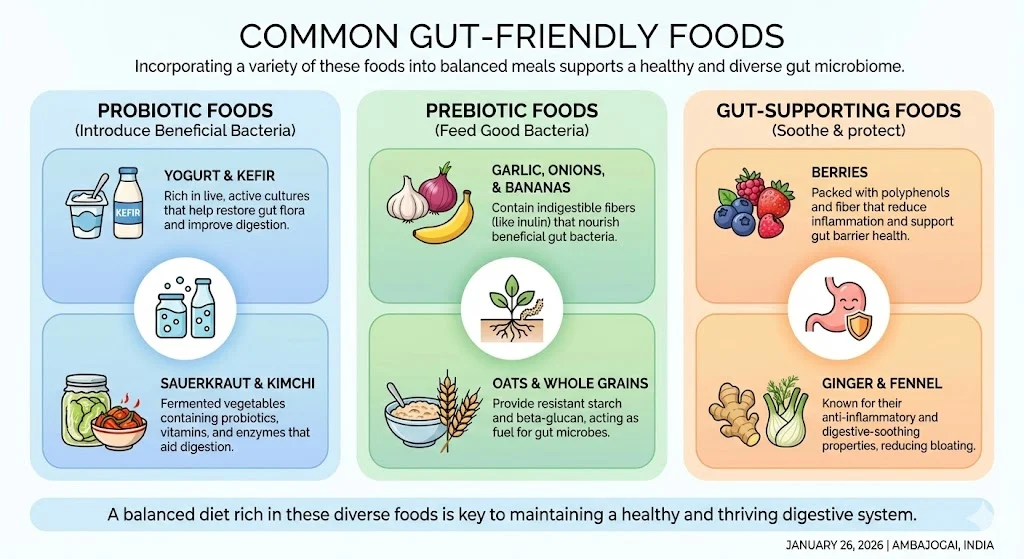
- Sauerkraut and kimchi
- Yogurt and kefir
- Garlic and onions
- Berries
- Ginger and fennel
- Bananas
- Oats and whole grains
These foods are often combined in balanced meals rather than consumed alone.
Foods That May Contribute to Bloating
Some foods can cause discomfort in sensitive individuals. Carbonated drinks, fried foods, artificial sweeteners, and excess sugar are frequently associated with bloating.
Certain vegetables and legumes may also cause gas when eaten in large portions. Individual response varies, so personal observation is important.
How to Add Gut Friendly Foods Safely
Small portions are usually recommended when introducing fermented foods or high fiber items. Drinking enough water supports digestion and fiber movement.
Eating slowly and avoiding heavy meals late at night may also help reduce bloating. Light walking after meals is a habit many people find helpful.
Consistency over time is more important than sudden changes.
Long Term Benefits of a Balanced Gut Diet
A diet that supports digestion is associated with:
- Improved bowel regularity
- Reduced digestive discomfort
- Better nutrient absorption
- Support for immune balance
- Overall sense of well being
Results depend on individual lifestyle, diet, and tolerance.
Final Thoughts
Foods that support gut health and bloating relief include fermented items, fiber rich plants, berries, and digestive herbs. Public discussions show strong interest in simple and natural food based approaches rather than quick solutions.
There is no single food that works for everyone. The goal is to build balanced eating habits that support digestion over time. A varied diet, moderation, and consistency remain the foundation of gut friendly nutrition.
Gut health is not about guaranteed results. It is about making informed food choices that may support digestive comfort and long term wellness when combined with healthy routines.