Yoga has become one of the most practiced wellness methods in the world. In recent years, interest has grown because people want both physical fitness and mental calm in one routine. Modern yoga styles now range from slow and relaxing sessions to intense strength based practices.
Although yoga includes many forms, most health and wellness sources group them into seven main types that are commonly practiced today. Each type serves a different purpose. Some focus on flexibility and breath control. Others focus on strength, movement, or deep relaxation. Understanding these styles helps people choose a practice that matches their body and lifestyle.
Table of Contents
Key Takeaways
- Yoga includes different styles for strength, relaxation, and mental balance.
- There is no single best type of yoga for everyone.
- Beginners usually start with gentle and structured styles.
- Active styles suit those who want fitness and endurance.
- Slow styles support stress relief and recovery.
What Are the 7 Types of Yoga?
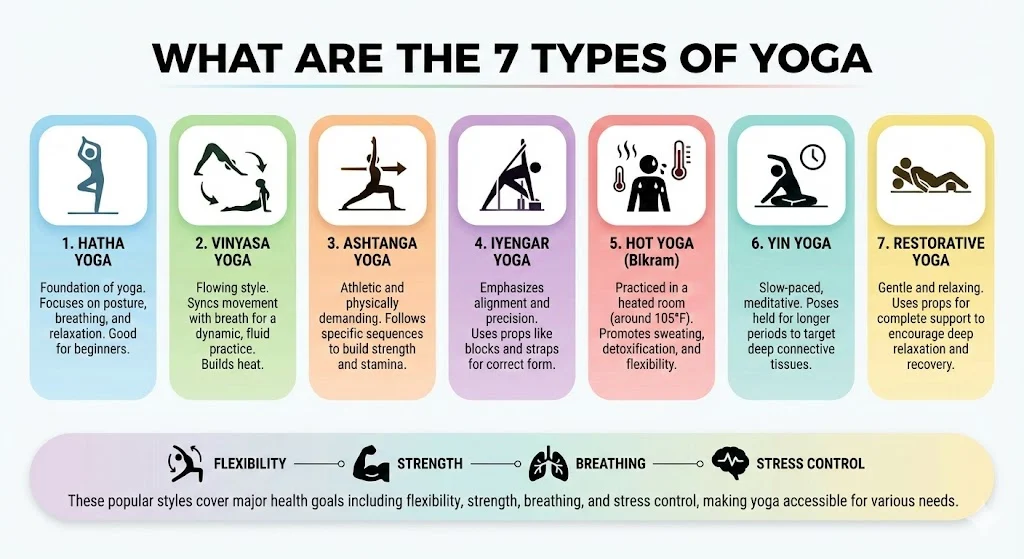
The seven most widely practiced yoga styles today are:
- Hatha Yoga
- Vinyasa Yoga
- Ashtanga Yoga
- Iyengar Yoga
- Hot Yoga or Bikram Yoga
- Yin Yoga
- Restorative Yoga
These styles are popular because they cover all major health goals such as flexibility, strength, breathing, and stress control.
Hatha Yoga
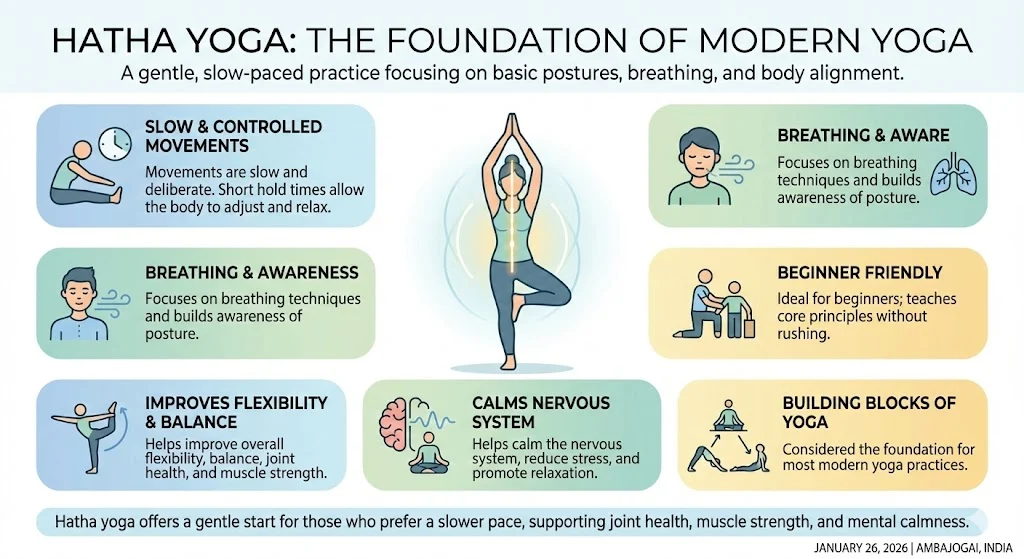
Hatha yoga is considered the foundation of most modern yoga practices. It focuses on basic postures, breathing techniques, and body alignment. Movements are slow and controlled. Each pose is held for a short time so the body can adjust and relax.
This style helps improve flexibility and balance. It also builds awareness of breathing and posture. Hatha yoga is often recommended for beginners because it teaches the core principles of yoga without rushing.
Hatha yoga supports joint health and muscle strength. It also helps calm the nervous system. People who want a gentle start to yoga or who prefer a slower pace often choose this style.
Vinyasa Yoga
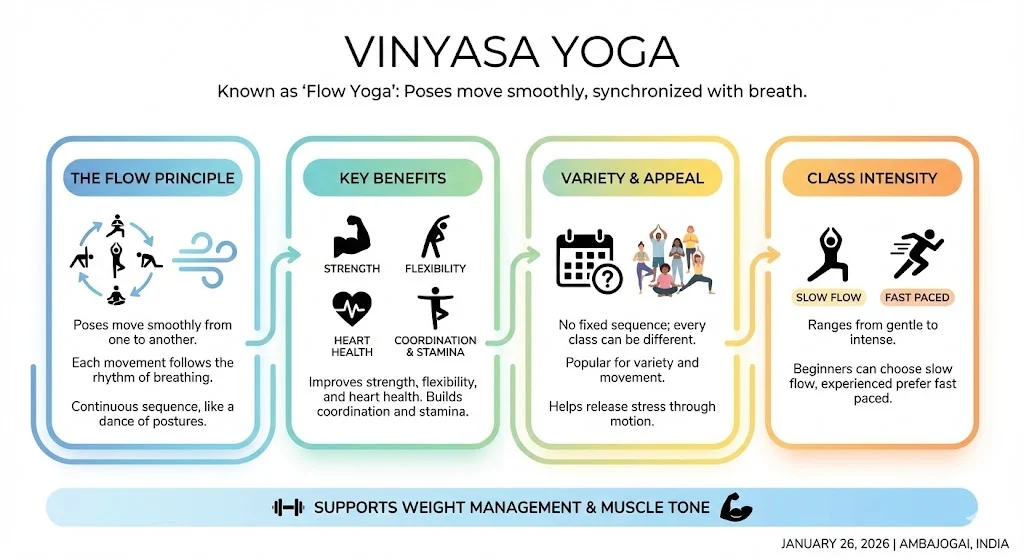
Vinyasa yoga is known as flow yoga because poses move smoothly from one to another. Each movement follows the rhythm of breathing. This creates a continuous sequence that feels like a dance of postures.
This style improves strength, flexibility, and heart health. It also builds coordination and stamina. Because there is no fixed sequence, every class can be different.
Vinyasa yoga is popular among people who enjoy movement and variety. It helps release stress through motion and breath. It also supports weight management and muscle tone.
Classes can range from gentle to intense. Beginners can choose slow flow sessions while experienced practitioners may prefer fast paced flows.
Ashtanga Yoga
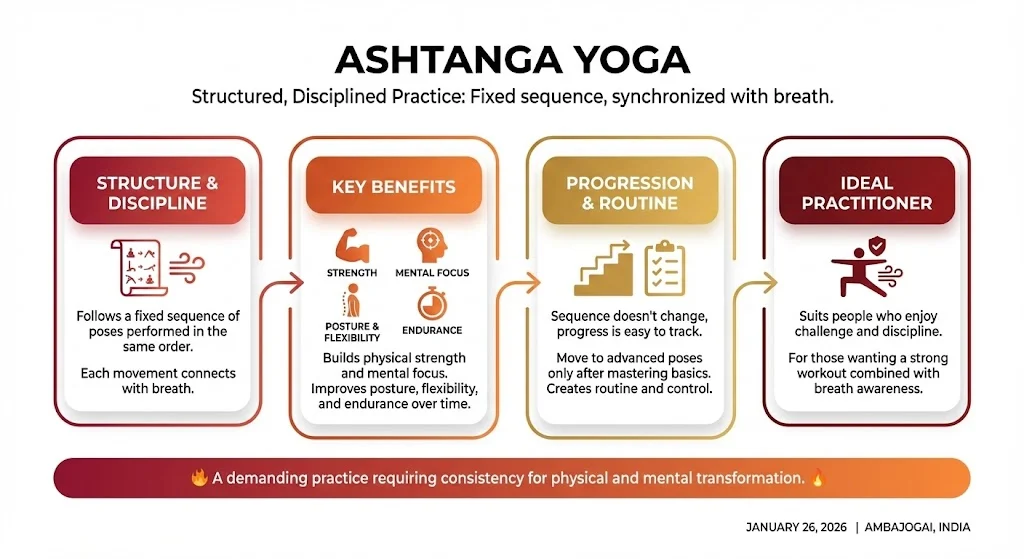
Ashtanga yoga is a structured and disciplined practice. It follows a fixed sequence of poses that must be performed in the same order every time. Each pose connects with breath and movement.
This style builds physical strength and mental focus. It is demanding and requires consistency. Ashtanga improves posture, flexibility, and endurance over time.
Because the sequence does not change, progress is easy to track. Students move to advanced poses only after mastering basic ones. This creates a sense of routine and control.
Ashtanga yoga suits people who enjoy challenge and discipline. It is often chosen by those who want a strong workout combined with breath awareness.
Iyengar Yoga
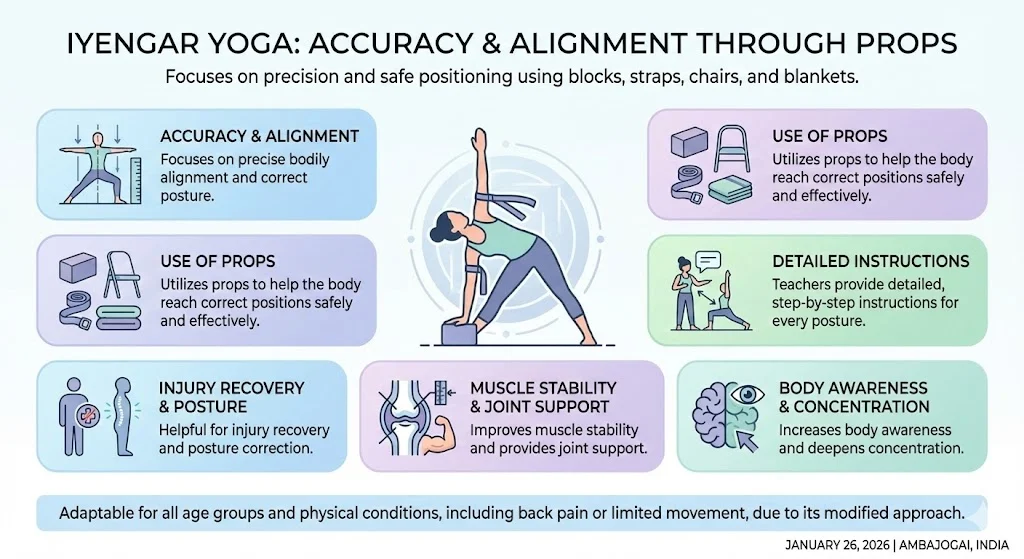
Iyengar yoga focuses on accuracy and alignment. It uses props such as blocks, straps, chairs, and blankets to help the body reach correct positions safely.
Each pose is held longer than in flow styles. This allows the body to adjust and strengthen slowly. Teachers give detailed instructions for every posture.
This style is helpful for injury recovery and posture correction. It improves muscle stability and joint support. Iyengar yoga also increases body awareness and concentration.
Because it can be adapted for different physical conditions, it is suitable for all age groups. People with back pain or limited movement often benefit from this practice.
Hot Yoga and Bikram Yoga
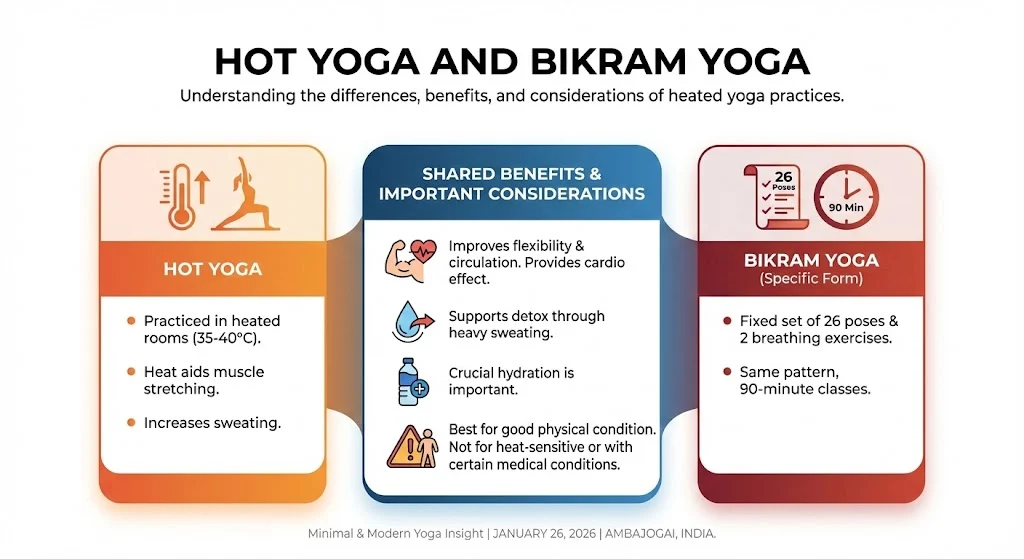
Hot yoga is practiced in heated rooms. Temperatures usually range between 35 and 40 degrees Celsius. The heat helps muscles stretch more easily and increases sweating.
Bikram yoga is a specific form of hot yoga with a fixed set of 26 poses and two breathing exercises. Every class follows the same pattern and lasts about 90 minutes.
These styles improve flexibility and circulation. They also support detox through heavy sweating. Hot yoga increases heart rate and provides a cardio effect.
Because of the heat, hydration is important. This type of yoga is best for people in good physical condition. It is not recommended for those sensitive to heat or with certain medical conditions.
Yin Yoga
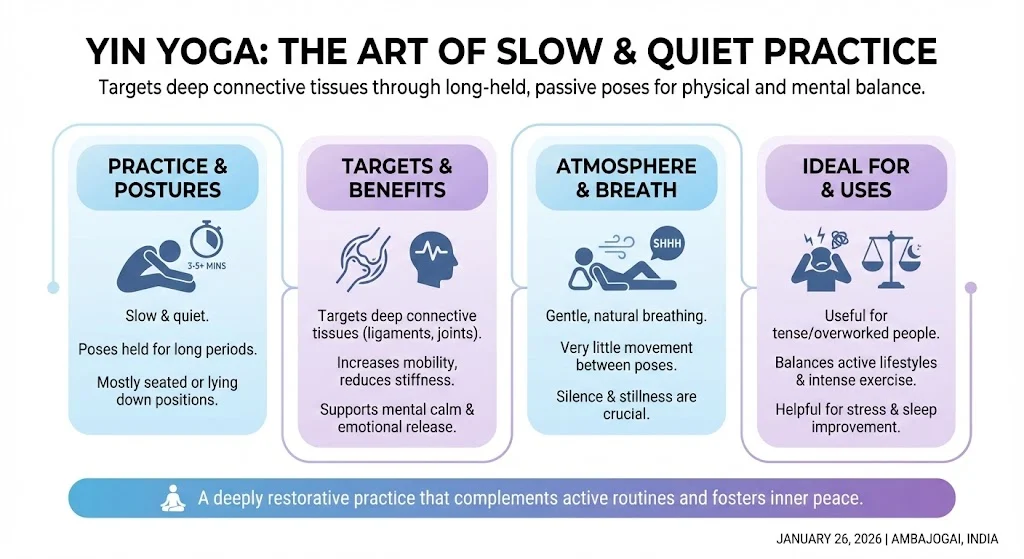
Yin yoga is slow and quiet. Poses are held for long periods, usually three to five minutes or more. Most positions are done seated or lying down.
This style targets deep connective tissues such as ligaments and joints. It helps increase mobility and reduce stiffness. Yin yoga also supports mental calm and emotional release.
Breathing is gentle and natural. There is very little movement between poses. Silence and stillness are important parts of the practice.
Yin yoga is useful for people who feel tense or overworked. It balances active lifestyles and intense exercise routines. It is also helpful for stress and sleep improvement.
Restorative Yoga
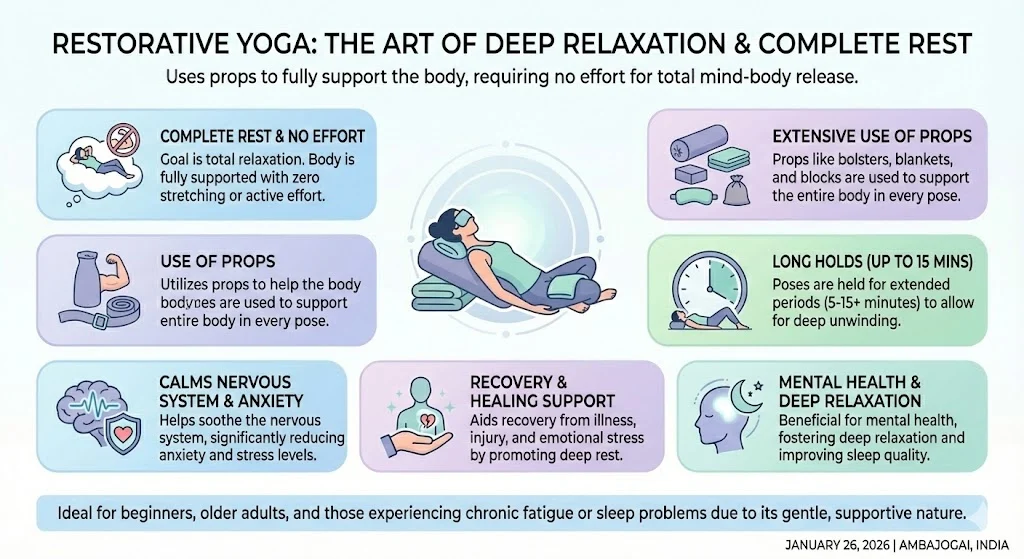
Restorative yoga is the most relaxing form of yoga. It uses props to fully support the body in each posture. There is no stretching or effort involved.
Each pose is held for long periods, sometimes up to fifteen minutes. The goal is complete rest of body and mind.
This style helps calm the nervous system and reduce anxiety. It supports recovery from illness, injury, and emotional stress. Restorative yoga is often used for mental health and deep relaxation.
It is suitable for beginners and older adults. It is also helpful for people with chronic fatigue or sleep problems.
Why Different Yoga Types Exist
Yoga developed over thousands of years. Originally it focused on meditation and breath control. Over time, physical postures became part of practice to support health and discipline.
Modern lifestyles created demand for different yoga styles. Some people want exercise. Others want relaxation. Some seek spiritual growth. This led to the creation of various approaches.
Each yoga type serves a specific need. Together, they allow yoga to adapt to different bodies and goals.
Choosing the Right Yoga Type
Choosing a yoga style depends on personal needs.
- People who want calm and stress relief can try Hatha, Yin, or Restorative yoga.
- Those who want fitness and movement can choose Vinyasa or Ashtanga yoga.
- People recovering from injury may benefit from Iyengar yoga.
- Those who enjoy intense sessions may prefer Hot yoga or Bikram yoga.
Trying more than one style helps identify what feels best. Many practitioners mix different types during the week for balance.
Yoga and Mental Health
All yoga styles support mental well being. Breath control helps reduce anxiety. Movement releases physical tension. Stillness improves focus.
Slow yoga styles support emotional healing. Active styles improve confidence and energy. Together they help regulate mood and stress levels.
Recent trends show increased interest in yoga for mental health and sleep support. Yin and Restorative yoga are growing because of their calming effect.
Final Thoughts
The seven types of yoga offer different paths to health and balance. There is no single correct choice. Each style supports the body and mind in its own way.
Yoga continues to evolve with modern needs. Some people practice for fitness. Others practice for peace of mind. Many combine both.
Understanding these seven types makes it easier to begin and maintain a yoga routine. The best yoga practice is the one that feels safe, enjoyable, and sustainable over time.
Tags: yoga types, wellness lifestyle, mental health yoga, beginner yoga, fitness and flexibility, stress relief