Poor posture has become a common problem in daily life. Long hours of sitting, phone use, desk work, and screen time slowly change the natural position of the spine. Many beginners start to notice rounded shoulders, forward head posture, lower back discomfort, and general stiffness in the body. These changes often happen slowly, so people do not realize the impact until pain or discomfort becomes regular.
Yoga offers a gentle and structured way to correct these issues. For beginners, yoga for good posture is not about flexibility or complex poses. It is about learning alignment, building strength in support muscles, improving body awareness, and creating daily habits that help the spine stay balanced. With consistent practice, even short sessions can improve posture, comfort, and confidence.
Key Takeaways
- Yoga helps correct posture by strengthening weak muscles and relaxing tight areas
- Beginner poses focus on alignment, spinal support, and body awareness
- Short daily routines are more effective than long irregular sessions
- Posture improvement comes from consistency, not intensity
- Yoga supports both physical posture and mental calm
Why Beginners Struggle With Posture?
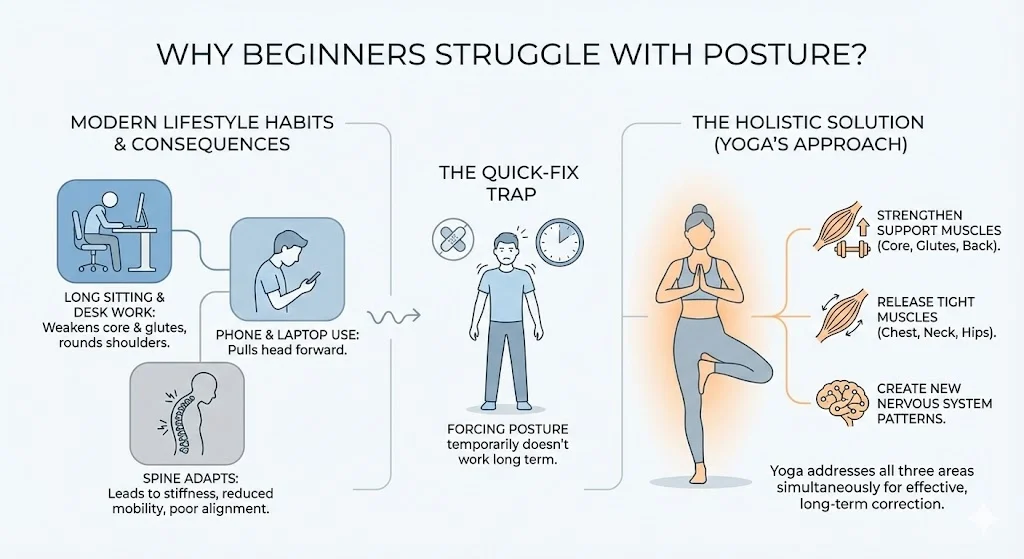
Modern lifestyle habits slowly train the body into unhealthy positions. Sitting for long hours weakens the core and glutes. Phone and laptop use pulls the head forward. Desk work rounds the shoulders. Over time, the spine adapts to these patterns. This leads to stiffness, reduced mobility, and poor natural alignment.
Beginners often try to correct posture by forcing the shoulders back or standing straight for a few minutes. This does not work long term. The muscles that support posture need strength. The tight muscles need release. The nervous system needs new movement patterns. Yoga works on all three areas at the same time. This is why it is effective for posture correction.
How Yoga Supports Better Posture?
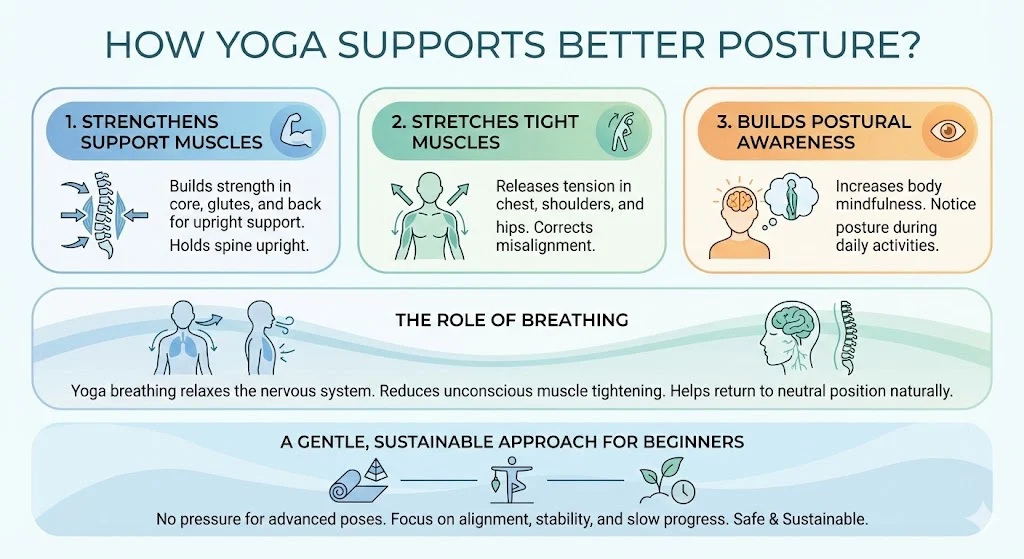
Yoga improves posture by creating balance in the body. It strengthens the muscles that hold the spine upright. It stretches muscles that pull the body out of alignment. It also builds awareness, so people start noticing their posture during daily activities.
Breathing plays an important role. Shallow breathing increases tension in the neck and shoulders. Yoga breathing relaxes the nervous system and reduces unconscious muscle tightening. This helps the body return to a neutral position naturally instead of forced correction.
For beginners, this gentle approach makes yoga safe and sustainable. There is no pressure to perform advanced poses. The focus stays on alignment, stability, and slow progress.
Beginner Yoga Poses That Improve Posture
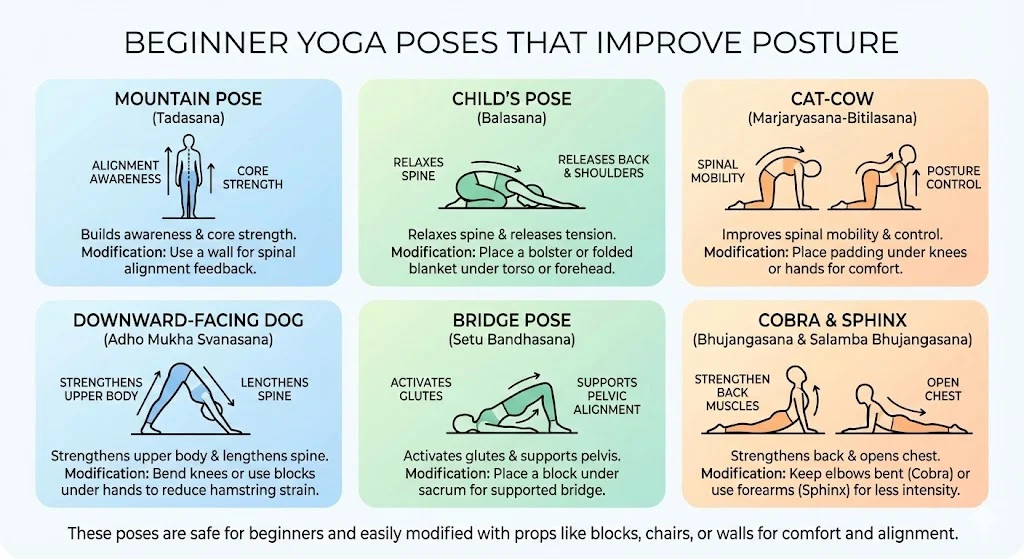
The following poses are widely recommended for posture improvement. They are safe for beginners and easy to modify with props such as blocks, chairs, or walls.
- Mountain Pose helps build alignment awareness and core strength.
- Child’s Pose relaxes the spine and releases tension in the back and shoulders.
- Cat-Cow improves spinal mobility and posture control.
- Downward-Facing Dog strengthens the upper body and lengthens the spine.
- Bridge Pose activates the glutes and supports pelvic alignment.
- Cobra and Sphinx strengthen the back muscles and open the chest.
Mountain Pose
Mountain Pose is the foundation of good posture. It teaches the body how correct alignment should feel while standing still. In this pose, the spine stacks naturally, the shoulders relax down and back, and the core muscles gently engage. Regular practice improves body awareness, so beginners start noticing when they slouch during daily activities like standing, walking, or waiting.
These poses work together to support posture correction. They do not require flexibility. They train the body to move and hold itself correctly.
Child’s Pose
Child’s Pose allows the spine to rest and reset. It gently stretches the lower back, shoulders, and neck, which are common tension areas caused by long sitting hours. This pose also helps calm the nervous system, which reduces stress-related tightening that often worsens posture. For beginners, it provides immediate relief and supports spinal decompression.
Cat-Cow Pose
Cat-Cow Pose improves spinal mobility by moving the spine through gentle flexion and extension. Many posture problems come from a stiff spine caused by prolonged sitting. This movement restores flexibility, improves blood flow, and helps maintain the natural curves of the spine. Coordinating breath with movement also improves posture awareness throughout the day.
Downward-Facing Dog
Downward-Facing Dog supports posture by lengthening the spine while strengthening the shoulders, arms, and upper back. Tight shoulders and weak upper-back muscles often cause slouching. This pose addresses both by opening the chest and building upper-body strength. It also stretches the back of the legs, which supports better pelvic alignment.
Bridge Pose
Bridge Pose activates key posture-supporting muscles, including the glutes, lower back, and core. Weak glutes and hips can tilt the pelvis, leading to poor spinal alignment. This pose strengthens those areas while opening the chest and hip flexors, which often tighten from sitting. A stronger posterior chain makes upright posture easier and more comfortable.
Cobra and Sphinx Pose
Cobra and Sphinx Pose strengthen the muscles along the spine and open the chest and shoulders. These poses help counter rounded shoulders and forward head posture caused by screen use. Sphinx is gentler and ideal for beginners, while Cobra offers slightly deeper spinal strengthening. Both support spinal extension without excessive strain when practiced with control.
Posture-Focused Yoga Trends (2025–2026)
Yoga for posture has evolved in recent years. Beginners now have more access to structured and simple posture programs. These trends show how yoga is becoming more supportive and accessible for new learners.
Posture-focused yoga trends
- AI-guided yoga apps that give alignment feedback using phone cameras
- Smart mats that track posture and body position
- Slow-flow Hatha styles focused on spinal health
- Chair yoga for seniors and beginners with mobility limits
- Short 10 to 15 minute posture routines for daily practice
- Functional mobility yoga that supports joints and spine
- Restorative yoga sessions focused on spinal decompression
- Beginner posture programs for desk workers and remote workers
These trends show a shift toward practical yoga. The focus is no longer advanced poses. The focus is daily movement, posture correction, and body support.
Short Daily Routines for Beginners
Beginners often feel overwhelmed by long routines. Short sessions are more effective for posture correction. A simple 10 to 15 minute routine can create real results if practiced daily.
A basic posture routine may include:
- Gentle spinal movements
- Chest opening poses
- Core activation poses
- Back strengthening poses
- Relaxation posture
Short sessions fit into busy schedules. They reduce fatigue and improve consistency. This builds habit formation, which is more important than workout intensity.
Role of Consistency in Posture Correction
Posture improvement does not happen in one week. The body needs time to adapt. Muscles strengthen slowly. Movement patterns change gradually. Beginners who practice daily notice steady improvement in comfort, alignment, and body balance.
Many people report that after consistent practice, good posture feels natural. The body no longer needs conscious correction. This happens because the support muscles become active and balanced.
Yoga creates this change without stress on the joints or spine. This makes it safe for long-term posture improvement.
Mental Benefits of Posture Yoga
Posture is not only physical. Stress affects posture. Anxiety tightens the shoulders and neck. Mental fatigue causes slouching. Yoga helps relax the nervous system and reduce tension patterns.
Breathing exercises calm the body. Restorative poses relax the spine. Mindful movement improves body awareness. This mental reset helps posture correction happen naturally instead of forcefully.
People often describe posture yoga as calming and grounding. It improves both physical alignment and mental clarity.
Beginner Safety Guidelines
Beginners should follow simple safety rules:
- Move slowly
- Avoid forcing stretches
- Use props for support
- Focus on alignment
- Stop if pain appears
- Keep breathing steady
Yoga for posture should feel supportive, not stressful. Discomfort is normal. Pain is not. Safe practice builds confidence and long-term progress.
Integrating Yoga Into Daily Life
Yoga works best when combined with daily habits. Simple lifestyle changes improve posture results:
- Regular movement breaks
- Proper sitting posture
- Screen height alignment
- Balanced sleeping positions
- Daily stretching
Yoga becomes more effective when daily posture habits improve. Together, they create long-term spinal health.
Why Yoga Is Ideal for Beginners
Yoga does not require equipment. It does not need gym access. It works at home. It fits all ages. It adapts to all body types. It allows personal pace. This makes it ideal for beginners.
People with limited mobility can modify poses. Seniors can use chair yoga. Office workers can do desk routines. Everyone can start at their own level.
This accessibility is one of the main reasons yoga remains popular for posture improvement.
Long-Term Benefits of Posture Yoga
Regular posture-focused yoga improves:
- Spinal alignment
- Core strength
- Muscle balance
- Joint mobility
- Circulation
- Breathing quality
- Stress control
- Body confidence
These benefits extend beyond posture. They improve overall quality of life.
Conclusion
Yoga for good posture for beginners is a simple and effective approach to spinal health. It builds strength, improves alignment, releases tension, and creates awareness. It does not require complex poses or intense routines. It requires consistency and mindful movement.
Short daily sessions are enough to see real changes. With regular practice, posture improves naturally. Comfort increases. Confidence improves. The body feels balanced again. Yoga becomes not just a workout but a daily support system for long-term posture health.
Tags: yoga for beginners, posture correction, spine health, beginner yoga, posture improvement, daily yoga