Gut health has moved from a niche wellness idea to a serious health priority. In 2025 and 2026, the gut is no longer seen as only a digestive system. It is now linked with immunity, mental clarity, metabolism, and long term health. A gut health diet focuses on how food supports the bacteria living inside the body.
The discussion around gut health mainly revolves around two terms. Prebiotics and probiotics. These words sound similar, but they play very different roles. Understanding how they work together helps build a diet that supports digestion and overall balance instead of relying on random supplements.
Table of Contents
Key Takeaways
- Prebiotics feed existing good bacteria in the gut
- Probiotics add live beneficial bacteria to the system
- A balanced gut health diet focuses on real foods, not pills
- Fiber intake is essential for long term gut diversity
- Fermented foods work better than many supplements
A gut health diet is not about quick fixes. It is about daily habits that support the microbiome over time. The focus has shifted toward food first strategies that feel sustainable and practical for normal life.
Understanding The Gut Microbiome
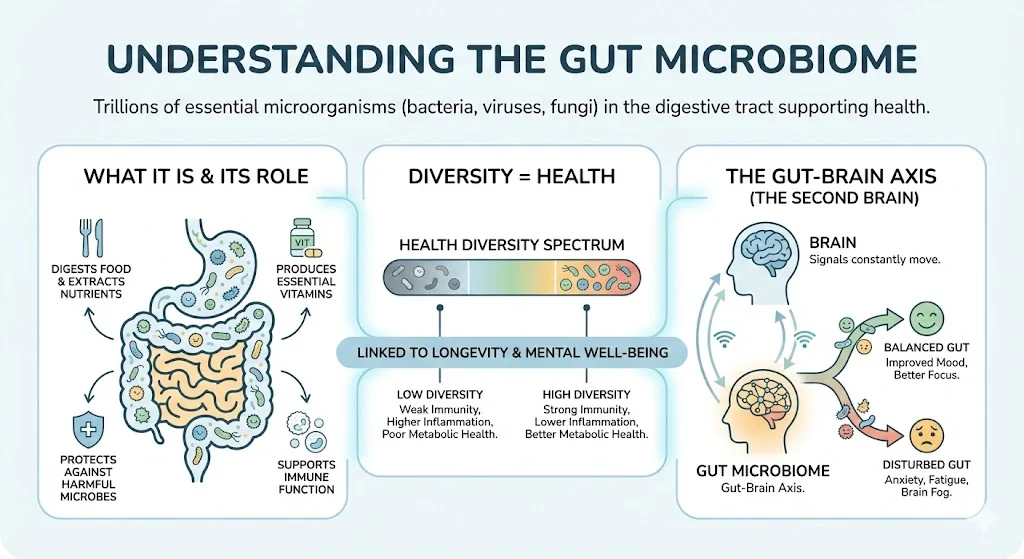
The gut microbiome refers to trillions of microorganisms living in the digestive tract. These include bacteria, viruses, and fungi. Many of them are essential for survival. They help digest food, produce vitamins, protect against harmful microbes, and support immune function.
Research over the last decade shows that a diverse gut microbiome is linked with better overall health. People with more bacterial diversity tend to have stronger immunity, lower inflammation, and better metabolic health. This explains why gut health is now connected with longevity and mental well being.
The gut is also called the second brain. This idea comes from the gut brain axis. Signals constantly move between the gut and the brain. When gut bacteria are balanced, mood and focus often improve. When the gut is disturbed, anxiety, fatigue, and brain fog can appear.

What Are Probiotics?
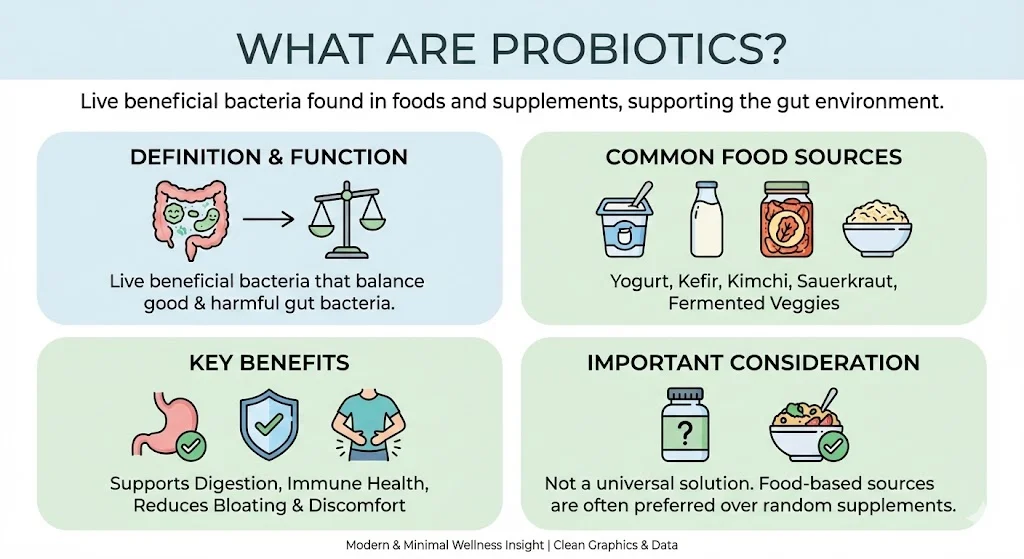
Probiotics are live beneficial bacteria. They are found in certain foods and supplements. When consumed, they add helpful bacteria to the gut environment.
Common probiotic foods include yogurt with live cultures, kefir, kimchi, sauerkraut, and other fermented vegetables. These foods naturally contain bacteria that survive fermentation and support digestion.
Probiotics help maintain the balance between good and harmful bacteria. They can reduce digestive discomfort, support immune responses, and help restore balance after illness or antibiotic use. Some strains are also linked with reduced bloating and improved stool regularity.
However, probiotics are not universal solutions. Different strains perform different functions. Taking random probiotic supplements without a specific reason often shows limited benefits. This is why food based sources are preferred.
What Are Prebiotics?
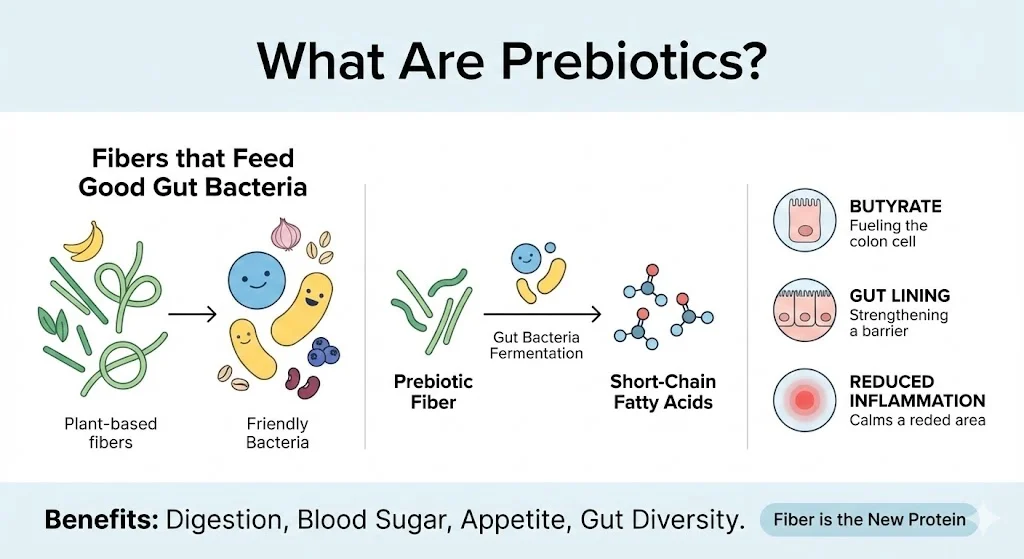
Prebiotics are not bacteria. They are fibers that feed beneficial bacteria already living in the gut. Without prebiotics, good bacteria struggle to survive and multiply.
Prebiotic fibers are found in fruits, vegetables, legumes, and whole grains. Foods like bananas, onions, garlic, leeks, oats, beans, berries, and asparagus naturally contain prebiotics.
When gut bacteria ferment prebiotic fiber, they produce short chain fatty acids. One of the most important is butyrate. Butyrate fuels colon cells, strengthens the gut lining, and helps reduce inflammation. Without enough prebiotic fiber, butyrate production drops.
This is why fiber is now called the new protein. It supports digestion, blood sugar balance, appetite control, and gut diversity. A gut health diet without fiber cannot work long term.
Prebiotics vs Probiotics Explained Simply
Probiotics add bacteria. Prebiotics feed bacteria. Both are important, but they do different jobs.
Probiotics can help increase beneficial bacteria temporarily. Prebiotics create an environment where good bacteria thrive naturally. Many experts now believe prebiotics have a stronger long term impact because they support native bacteria instead of introducing new strains.
This explains why many people see better results by focusing on food instead of supplements. A diet rich in prebiotic fiber supports existing bacteria and improves overall balance.
Why They Work Better Together
Prebiotics and probiotics work best when combined. Probiotics need fuel to survive. Prebiotics provide that fuel.
When fermented foods are eaten along with fiber rich foods, beneficial bacteria are more likely to survive and function properly. This combination improves digestion, nutrient absorption, and gut barrier strength.
Foods that contain both are called synbiotics. Examples include kefir, sauerkraut, and certain cheeses. These foods naturally support bacterial balance without artificial formulations.
Diet That Improves Gut Health
A gut health diet works best when it is simple, consistent, and based on whole foods. The goal is to increase bacterial diversity and support digestion without stressing the system. Below is a practical diet framework that supports gut balance over time.
High Fiber Whole Foods
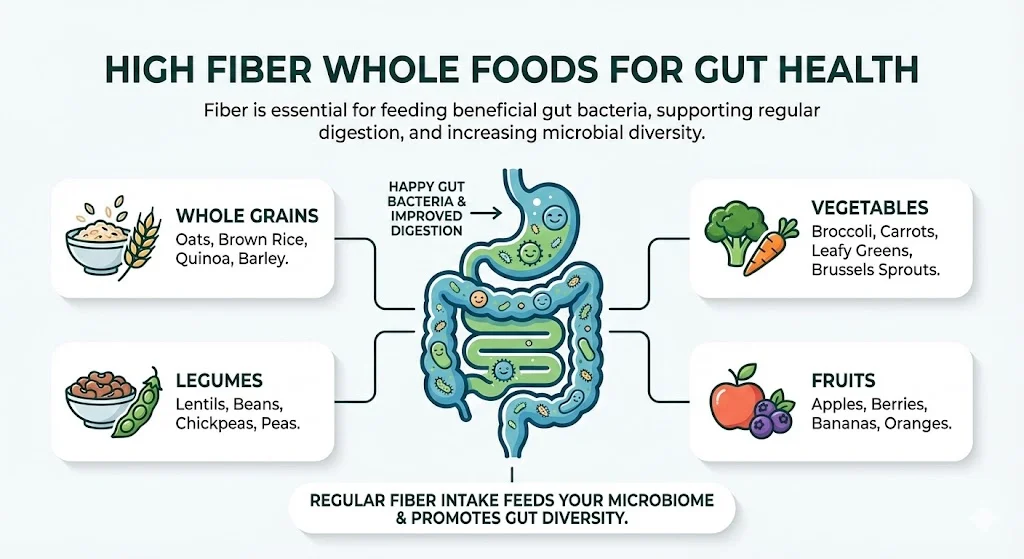
Fiber is essential for feeding beneficial gut bacteria. A diet rich in fiber supports regular digestion and increases microbial diversity.
Foods to include:
- Whole grains like oats and brown rice
- Legumes such as lentils, beans, and chickpeas
- Vegetables including broccoli, carrots, and leafy greens
- Fruits like apples, berries, and bananas
Regular fiber intake supports short chain fatty acid production, especially butyrate, which strengthens the gut lining.
Fermented Foods for Natural Probiotics
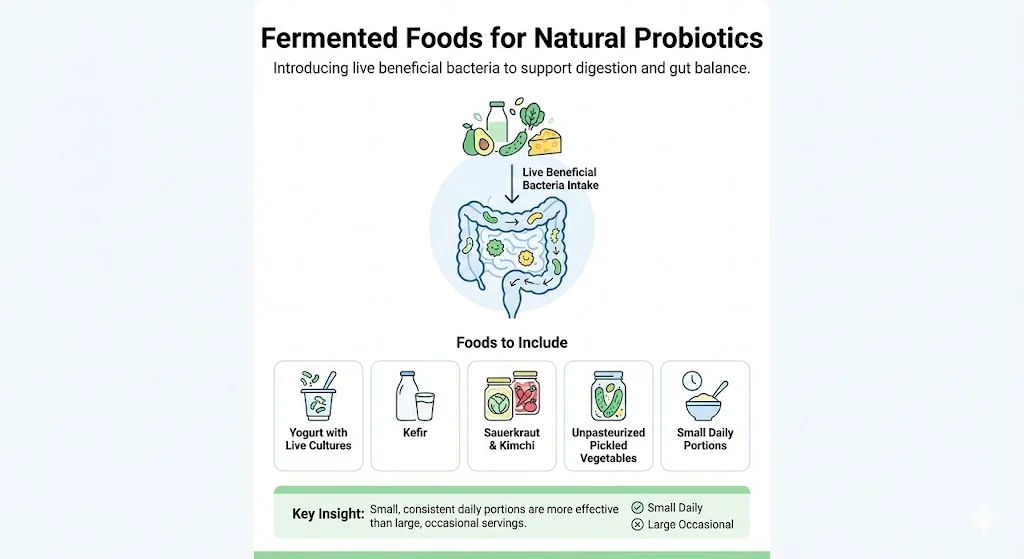
Fermented foods introduce live beneficial bacteria into the gut. These foods support digestion and help maintain bacterial balance.
Foods to include:
- Yogurt with live cultures
- Kefir
- Sauerkraut and kimchi
- Unpasteurized pickled vegetables
Small daily portions work better than large occasional servings.
Lean Protein Based Diet
Protein supports tissue repair and immune health. Lean sources are easier on digestion and reduce inflammation linked to gut imbalance.
Foods to include:
- Eggs
- Fish
- Chicken
- Plant based proteins like tofu and lentils
Avoid excessive fried and processed meats, as they can disrupt gut bacteria.
Low Sugar and Low Processed Food Diet
High sugar and ultra processed foods feed harmful bacteria and reduce gut diversity. Limiting these foods supports long term gut balance.
Foods to limit:
- Sugary snacks and drinks
- Packaged baked goods
- Artificial sweeteners
- Highly processed ready meals
Reducing these foods allows beneficial bacteria to thrive.
Hydration Focused Diet
Water supports digestion and nutrient absorption. Proper hydration is linked with greater gut bacterial diversity.
Daily habit:
- Drink water consistently through the day
- Limit alcohol intake
- Avoid excessive sugary beverages
Hydration also helps prevent constipation and bloating.
Gut Health Trends 2025 to 2026
Public discussions and data show gut health has become a mainstream focus. People now link digestion with mood, immunity, aging, and metabolic health.
Below is a summary of recent gut health trends based on public conversations and data.
| Trend | Key Insight |
|---|---|
| Gut health priority | 59 percent of global consumers see it as crucial |
| Market growth | Digestive health market growing at around 8 percent annually |
| Healthy aging | 73 percent prioritize gut health for longevity |
| Fiber focus | Fiber called the new protein |
| Functional foods | Foods combining protein and probiotics dominate |
| Personalization | Microbiome testing and targeted strains rising |
People are moving away from hype driven supplements. There is growing skepticism around generic probiotics that lack strain clarity or survival ability. The preference is shifting toward whole foods and evidence based choices.
Food First Approach Gains Trust
Many people now prefer chewing food properly, reducing snacking, and improving meal quality instead of taking pills. Fermented foods like kimchi and sauerkraut receive consistent praise for natural benefits.
Traditional foods such as natto and homemade ferments are admired for supporting gut diversity without marketing claims. There is also concern around emulsifiers and additives found in ultra processed foods due to their impact on gut bacteria.
Food first strategies feel safer, more sustainable, and easier to maintain long term.
Best Foods for a Gut Health Diet
A gut health diet focuses on diversity and consistency. Eating a wide range of plant foods feeds different bacteria strains.
Whole grains support fiber intake and promote short chain fatty acid production. Leafy greens provide fiber and plant compounds that fuel beneficial bacteria. Fruits with lower fructose levels such as berries and citrus are easier on digestion.
Lean proteins support gut health by reducing inflammation. Excess fat and processed meat can negatively impact gut balance. Healthy fats in moderation support digestion without triggering discomfort.
Fermented foods introduce live bacteria naturally. These foods work best when unpasteurized and consumed regularly in small amounts.
Do Probiotic Supplements Work
Probiotic supplements can help in specific situations. They may support recovery after antibiotics or help certain digestive conditions. However, many supplements contain strains that do not survive stomach acid or lack proper dosing.
Not all probiotics are the same. Quality, strain selection, and storage matter. Many products also lack prebiotics, which limits effectiveness.
Healthy individuals often benefit more from feeding existing bacteria rather than adding new ones. This explains the caution around unnecessary supplementation.
Personalization and the Future of Gut Health
Personalized nutrition is gaining attention. Microbiome testing allows people to see which bacteria dominate their gut. This helps tailor diet and supplement choices.
Next generation probiotics focus on specific strains linked with butyrate production and inflammation reduction. Synbiotics and postbiotics are also emerging.
Despite innovation, the core principle remains unchanged. A diverse, fiber rich diet supports the gut better than isolated interventions.
Final Thoughts On Gut Health Diet
A gut health diet is not complex. It relies on consistency, variety, and real food choices. Prebiotics feed beneficial bacteria. Probiotics introduce them. Together they support digestion, immunity, and mental clarity.
The growing focus on gut health reflects a deeper understanding of how food shapes long term health. Sustainable habits outperform shortcuts. Feeding the gut daily through simple food choices delivers lasting results.
Tags: gut health, prebiotics, probiotics, gut microbiome, digestive health, fiber diet