
Brain health is no longer viewed as an age-related concern alone. Issues like mental fatigue, memory lapses, and reduced focus are now common across age groups. This has pushed nutrition into the spotlight as a controllable factor that directly affects how the brain functions over time.
Recent research and public discussions show a clear shift toward plant-powered diets for brain protection. These eating patterns focus on whole plant foods that support circulation, reduce inflammation, and nourish brain cells. When followed correctly, plant-based diets are linked to better mental clarity and lower risk of long-term cognitive decline.
Table of Contents

Key Takeaways
- Healthful plant-based diets are linked to lower risk of dementia and cognitive decline
- Whole plant foods reduce inflammation and oxidative stress in the brain
- Diet quality matters more than the label plant-based
- Poorly planned diets can lead to nutrient gaps
- Simple food changes can support long-term brain health
Why Brain Health Is Closely Linked to Diet
The brain consumes a large share of the body’s energy. It depends on steady blood flow, oxygen, and nutrients to perform daily tasks like memory recall, focus, and emotional balance. Diet plays a role in all these processes.
Plant-powered diets support brain health by improving vascular function. Better blood flow ensures the brain receives enough oxygen and nutrients. At the same time, plant foods supply antioxidants and fiber that help manage inflammation, which is a known contributor to neurodegenerative conditions.

What Research in 2025 Shows About Plant-Based Diets and the Brain
New studies published in 2025 highlight the importance of diet quality rather than diet labels. Research comparing healthful plant-based diets with unhealthful versions shows clear differences in outcomes.
A large systematic review found that people with high adherence to healthful plant-based patterns had lower odds of cognitive impairment. The reduction was meaningful when diets focused on whole foods like vegetables, fruits, legumes, nuts, and whole grains. Diets heavy in refined carbohydrates and processed plant foods showed weaker or negative results.
Long-term studies involving older adults with heart disease, diabetes, or stroke history found even stronger benefits. In high-risk groups, strict adherence to whole food plant-based diets was linked to up to a 61 percent reduction in dementia risk. These outcomes are tied to lower inflammation, improved gut health, and stronger blood vessel function.
Five Diets to Eat for Better Brain Health
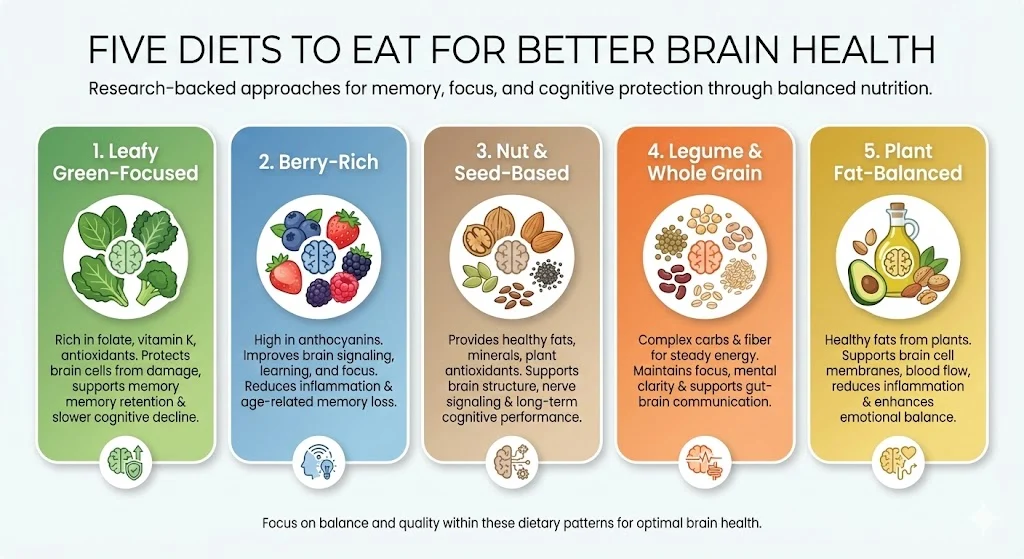
Eating for brain health does not require extreme changes. Research shows that certain diet styles consistently support memory, focus, and long-term cognitive protection when followed with balance and quality.
1. Leafy Green–Focused Diet
A diet centered on leafy green vegetables supports brain aging and memory retention. Foods like spinach, kale, broccoli, and fenugreek are rich in folate, vitamin K, and antioxidants.
Daily intake of greens is linked to slower cognitive decline. These vegetables help protect brain cells from oxidative damage and support neurotransmitter activity.
2. Berry-Rich Diet
A berry-focused diet emphasizes fruits like blueberries, strawberries, blackberries, and raspberries. These foods are high in anthocyanins, which support memory and learning.
Regular berry consumption is associated with better brain signaling and reduced inflammation. This diet is often linked to improved focus and protection against age-related memory loss.
3. Nut and Seed–Based Diet
This diet includes walnuts, almonds, pumpkin seeds, flax seeds, chia seeds, and sunflower seeds. Nuts and seeds provide healthy fats, minerals, and plant antioxidants.
They support brain structure, nerve signaling, and long-term cognitive performance. Walnuts and flax seeds are especially valued for plant-based omega-3 support.
4. Legume and Whole Grain Diet
A diet rich in lentils, chickpeas, beans, oats, brown rice, and millets supports steady brain energy. These foods provide complex carbohydrates and fiber.
Stable blood sugar levels help maintain focus and mental clarity. Fiber also supports gut health, which plays a role in mood and brain communication.
5. Plant Fat–Balanced Diet
This diet focuses on healthy plant fats from olive oil, avocados, nuts, and seeds. These fats support brain cell membranes and blood flow.
Healthy fats help reduce inflammation and support long-term cognitive resilience. When consumed in moderation, they contribute to better memory and emotional balance.
The Role of Inflammation and Oxidative Stress
Chronic inflammation damages brain cells over time. Oxidative stress accelerates aging in neural tissue. Plant foods contain natural compounds that target both issues directly.
Leafy greens, berries, beans, and seeds supply polyphenols and flavonoids that protect neurons from damage. These compounds neutralize free radicals and reduce inflammatory markers. Lower inflammation helps preserve memory, learning ability, and emotional regulation as people age.
Gut-Brain Connection and Plant-Based Eating
The gut and brain communicate constantly through the nervous system and immune signals. Fiber-rich diets support beneficial gut bacteria that produce compounds linked to better mood and cognitive function.
Whole plant foods feed these microbes and improve gut balance. This strengthens the gut-brain axis and may explain why many people report better mental clarity and stable mood after shifting toward plant-heavy diets.
Popular Brain-Focused Plant Diet Patterns
Several plant-forward dietary patterns are gaining attention due to consistent cognitive benefits.
The MIND diet combines elements of Mediterranean and DASH diets with a strong focus on plant foods. Leafy greens, berries, nuts, and whole grains form the foundation. New data shows reduced Alzheimer’s risk even when people adopt the diet later in life.
Green Mediterranean diets add items like green tea and specific plant proteins. These patterns are linked to slower brain aging and better cognitive scores in long-term studies.
Insights From Public Discussions and Real Experiences
Public sentiment on plant-powered brain health is largely positive, especially among health-focused individuals. Many report improved focus, reduced mental fog, and better mood stability after increasing plant foods.
Some users share experiences of better memory and mental energy when combining plant-based diets with targeted supplementation like creatine or algal omega-3s. Others emphasize that whole foods work better than relying on supplements alone.
However, skepticism also exists. Some individuals report worsened mental health when following poorly planned vegan diets. Common concerns include deficiencies in vitamin B12, omega-3 fatty acids, iron, zinc, and choline. These cases highlight the importance of planning and balance.
Quality Matters More Than Being Plant-Based
Not all plant-based diets support brain health. Diets high in refined grains, sugars, and ultra-processed foods may increase inflammation and negate benefits.
Healthful plant-based eating focuses on minimally processed foods. This includes vegetables, fruits, legumes, nuts, seeds, and whole grains. Limiting packaged snacks and refined products is key to protecting cognitive function.
Nutrients That Need Attention
Certain nutrients require special focus in plant-powered diets.
Vitamin B12 is essential for nerve function and must be supplemented. Omega-3 fatty acids support brain structure and can be obtained from algae-based sources. Iron, zinc, iodine, and choline should be monitored through food choices and supplementation when needed.
Proper planning ensures that plant-based diets support brain health rather than compromise it.
Practical Steps to Support Brain Health With Plants
Small changes can make a measurable difference over time. Adding leafy greens to daily meals, including berries several times a week, and replacing refined grains with whole grains improves nutrient intake without drastic changes.
Emphasizing variety helps cover nutritional needs and supports gut health. Consistency matters more than perfection when building habits that protect brain function.
Final Thoughts on Plant-Powered Brain Health
Plant-powered diets offer strong potential for supporting long-term brain health when built around whole foods. Research continues to show protective effects against cognitive decline, especially in individuals at higher risk.
The key lies in diet quality, not strict labels. Thoughtful food choices, attention to essential nutrients, and a focus on minimally processed plants create a foundation for mental clarity and cognitive resilience over time.
Tags: plant-based diet, brain health, cognitive health, dementia prevention, nutrition science, mental clarity