Sleep problems are becoming common across all age groups. Stress, screen exposure, long work hours, and constant mental activity make it harder for the mind to slow down at night.
Meditation techniques for better sleep are now widely discussed as a natural and reliable way to improve rest without relying on supplements or medication. Recent public discussions and wellness trends show growing trust in meditation as a daily sleep support tool.
Meditation before bed works by calming mental noise and relaxing the nervous system. Instead of forcing sleep, these techniques create the right internal conditions for the body to fall asleep on its own. Many people report faster sleep onset, deeper rest, and improved mood after adopting short and consistent meditation routines.
Table of Contents
Key Takeaways
- Meditation helps calm racing thoughts and reduce bedtime stress
- Short practices of 5 to 10 minutes can improve sleep quality
- Breath focused and body based techniques are most effective at night
- Cognitive shuffling and guided meditation are trending sleep tools
- Consistency matters more than session length
Why Meditation Helps Improve Sleep Quality?
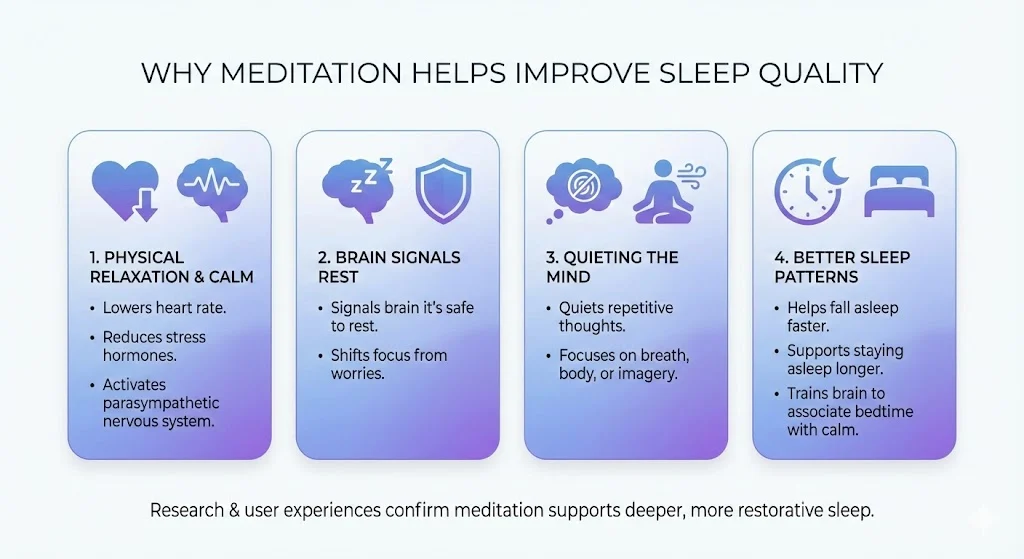
Meditation influences the same systems involved in natural sleep onset. It lowers heart rate, reduces stress hormones, and activates the parasympathetic nervous system.
These changes signal to the brain that it is safe to rest. Research and user experiences show that meditation supports both falling asleep faster and staying asleep longer.
Many people struggling with insomnia report that meditation helps quiet repetitive thoughts. Instead of mentally reviewing the day or worrying about tomorrow, the focus shifts to breath, body sensations, or gentle mental imagery. Over time, this trains the brain to associate bedtime with calm rather than alertness.
Cognitive Shuffling For Faster Sleep
Cognitive shuffling is one of the most talked about meditation techniques for better sleep in recent years. The idea is simple. You gently think of random and unrelated words or objects. Examples include apple, ladder, ocean, window, cloud. These thoughts should have no emotional meaning or story.
This technique works because it interrupts overthinking. The brain becomes slightly occupied but not stimulated. Many people report falling asleep within 10 to 15 minutes using cognitive shuffling. It is especially useful for those who struggle with racing thoughts or anxiety at bedtime.
To practice cognitive shuffling, lie comfortably in bed and close your eyes. Begin naming random objects in your mind. Keep the pace slow and relaxed. If you drift off, that is the goal. There is no need to complete a session.
Breath Focused Meditation & The 4 7 8 Method
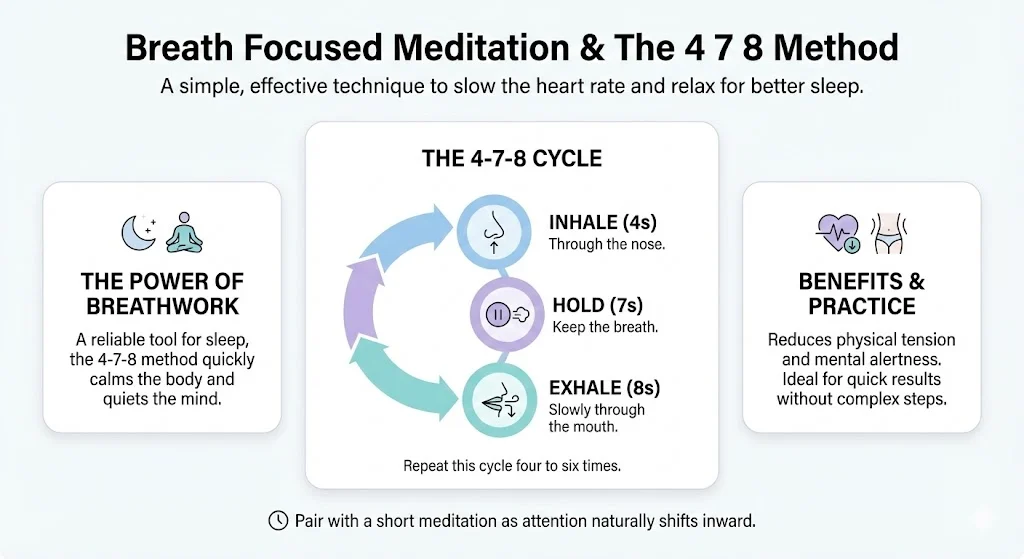
Breathwork is one of the most reliable meditation tools for sleep. Among the many techniques, the 4 7 8 breathing method is widely recommended in recent public discussions. This pattern helps slow the heart rate and relax the body quickly.
The method is straightforward. Inhale through the nose for 4 seconds. Hold the breath for 7 seconds. Exhale slowly through the mouth for 8 seconds. Repeat this cycle four to six times.
Many people pair breathwork with a short meditation session. As the breathing rhythm settles, attention naturally shifts inward. This reduces physical tension and mental alertness. Breath focused meditation is ideal for people who want quick results without complex steps.
Other Meditation Types That Help Improve Sleep
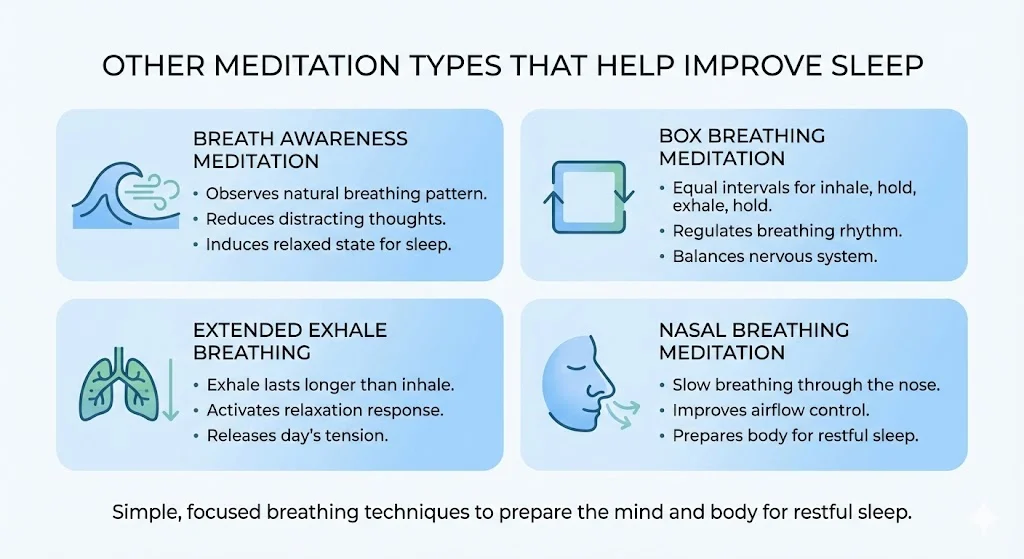
Breath Awareness Meditation
This practice involves observing natural breathing without changing its rhythm. By focusing only on the movement of the breath, distracting thoughts gradually reduce and the mind enters a relaxed state that supports sleep.
Box Breathing Meditation
Breathing is done in equal time intervals for inhaling, holding, exhaling, and holding again. This steady pattern helps regulate breathing and brings balance to the nervous system before bedtime.
Extended Exhale Breathing
In this method, the exhale lasts longer than the inhale. This activates relaxation responses in the body and helps release built up tension from the day, making it useful for stress related sleep problems.
Nasal Breathing Meditation
Slow breathing through the nose improves airflow control and encourages deeper relaxation. It supports a calm breathing rhythm that prepares the body and mind for restful sleep.
Body Scan Meditation For Nighttime Relaxation
Body scan meditation helps release physical tension stored during the day. Stress often accumulates in the neck, shoulders, jaw, and lower back. When these areas remain tight, sleep quality suffers.
During a body scan, attention moves slowly through the body from head to toe or toe to head. Each area is observed without judgment. The goal is awareness, not control. When tension is noticed, it is gently released through relaxed breathing.
This technique is especially effective when practiced in bed. Many people fall asleep before completing the full scan. Over time, body scan meditation improves the connection between physical relaxation and sleep readiness.
Guided Sleep Meditation & App Based Practices
Guided sleep meditation has gained strong popularity due to accessibility and ease of use. Many people prefer listening to a calm voice rather than guiding themselves mentally. Guided sessions often include breath cues, body relaxation, and soothing imagery.
Recent trends highlight the rise of offline and personalized meditation tools. Users appreciate features like sleep stories, ambient soundscapes, and short bedtime routines. These guided sessions reduce decision fatigue and make nightly meditation easier to maintain.
The key benefit of guided meditation is structure. For beginners, it removes uncertainty and helps build a consistent habit. Even experienced meditators use guided sessions during high stress periods.
Short & Consistent Meditation Practices
One major shift in sleep meditation trends is the focus on short sessions. Instead of long practices, many people now use 5 to 10 minute meditations before bed. Consistency matters more than duration.
Daily short sessions have been linked to improved heart rate variability, lower resting heart rate, and better stress resilience. These changes support long term sleep health. Short practices also fit easily into busy schedules.
A simple nightly routine might include five minutes of breath focus or a brief body scan. Over time, the body begins to recognize these practices as a signal to prepare for sleep.
Sleepiness Meditation & Awareness of Fatigue
Sleepiness meditation is a newer approach gaining attention. Instead of trying to relax, the focus is on noticing any natural signs of tiredness in the body. These signs may include heavy eyelids, slower breathing, or warmth in the limbs.
By paying attention to these sensations, sleepiness becomes more noticeable and easier to follow. This method reduces the effort often associated with falling asleep. Many people find it helpful after stressful days when relaxation feels difficult.
Sleepiness meditation works best in a quiet and dark environment. It pairs well with breath awareness or cognitive shuffling.
Combining Meditation With Pre Bed Rituals

Meditation techniques for better sleep work best when combined with supportive habits. Hybrid approaches are increasingly recommended in wellness discussions. These include reducing screen exposure, keeping the bedroom cool and dark, and maintaining a regular sleep schedule.
Simple rituals such as a warm shower, light stretching, or gratitude journaling can enhance meditation effects. These activities signal closure to the day and support mental transition into rest mode.
The goal is not perfection but consistency. Even small changes paired with meditation can produce noticeable improvements in sleep quality.
Benefits Beyond Better Sleep
Better sleep is only one benefit of meditation. Regular practice supports emotional regulation, improved focus, and reduced anxiety. Many people also report better mood stability and improved stress response during the day.
Meditation offers a side effect free alternative to sleep aids. This is one reason public admiration for meditation continues to grow. People value its simplicity and adaptability to different lifestyles.
Possible Risks & Considerations
Meditation is generally safe for most people. However, individuals with a history of severe anxiety or trauma may experience discomfort during silent practices. In such cases, guided meditation or shorter sessions are recommended.
If meditation brings up intense emotions or distress, professional guidance may be helpful. Adjusting the technique or session length often resolves these issues.
Final Thoughts On Meditation Techniques For Better Sleep
Meditation techniques for better sleep are now part of mainstream wellness routines. Public experiences and expert insights suggest that even short and simple practices can create meaningful improvements. Breath focused meditation, cognitive shuffling, body scans, and guided sessions are especially effective at night.
The key is regular practice without pressure. Sleep cannot be forced, but it can be invited. Meditation creates the mental and physical conditions that allow rest to happen naturally. Over time, these techniques support not just better sleep but overall well being.
Tags: meditation for sleep, better sleep habits, mindfulness meditation, sleep techniques, insomnia relief, night meditation