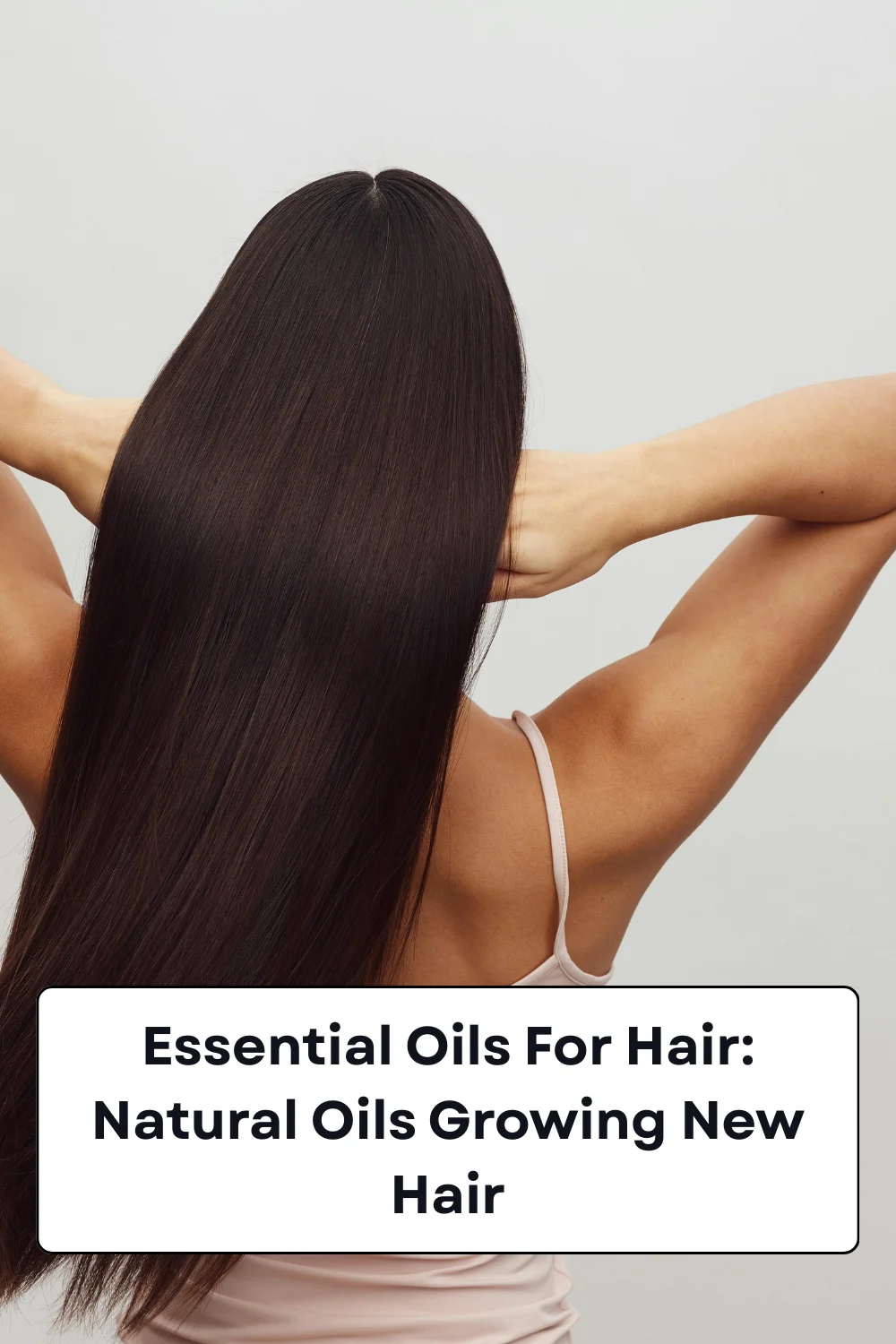
Natural hair care has become a serious focus in 2026. People now look for clean solutions that support scalp health and long term hair growth. Essential oils have moved from a beauty trend to a daily hair routine for many users.
They are now used for thinning hair, dry scalp, dandruff and slow growth. Twitter and search data also show that rosemary oil is leading this movement.
Hair oils saw strong growth in 2025 and the demand is still high in 2026. People want waterless products and organic blends that do not strip the scalp. Essential oils fit this demand because they work on the root level.
They help balance oil production. They also support blood flow to the scalp. This creates better conditions for new hair to grow.
Table of Contents

Key takeaways
- Rosemary oil is the most used essential oil for hair growth in 2026
- Castor oil and peppermint are widely used for thickness and stimulation
- Essential oils must always be diluted with a carrier oil
- DIY scalp massage blends are the top hair care trend
- Consistent use leads to less hair fall and stronger roots
How Essential Oils Help Hair & Scalp
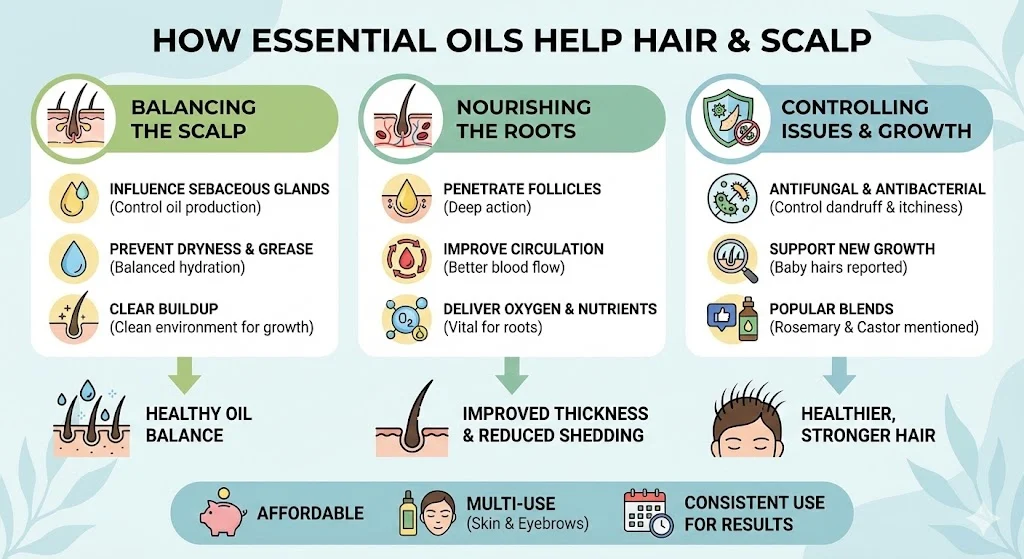
Essential oils work by supporting the scalp environment. Hair growth depends on clean follicles and healthy oil balance. When the scalp is dry or blocked with buildup then hair becomes weak. Essential oils influence the sebaceous glands. These glands control oil production. When they are balanced hair stays hydrated without becoming greasy.
These oils also penetrate into the hair follicle. This improves circulation. Better blood flow means more oxygen and nutrients reach the roots. Over time this can improve thickness and reduce shedding. Many oils also have antifungal and antibacterial properties. This helps control dandruff and itchiness.
People on social media often report baby hairs and reduced hair fall after months of use. Rosemary and castor oil blends are mentioned the most. Users like that these oils are affordable and multi use. They are also used on skin and eyebrows.
Carrier Oils & Safe Use
Essential oils are very strong. They should never be applied directly to the scalp. They must be mixed with a carrier oil. Carrier oils dilute the essential oil and also add moisture. The most common carrier oils are coconut oil, jojoba oil, olive oil and almond oil.
Coconut oil works best for dry and coarse hair. It needs to be warmed before use. Jojoba oil is close to natural scalp oil so it works for all hair types. Olive oil is heavy but good for deep treatments.
A simple mixing rule is 25 drops of essential oil in 50 ml of carrier oil. This keeps the blend safe for regular use.
Essential Oils By Hair Type
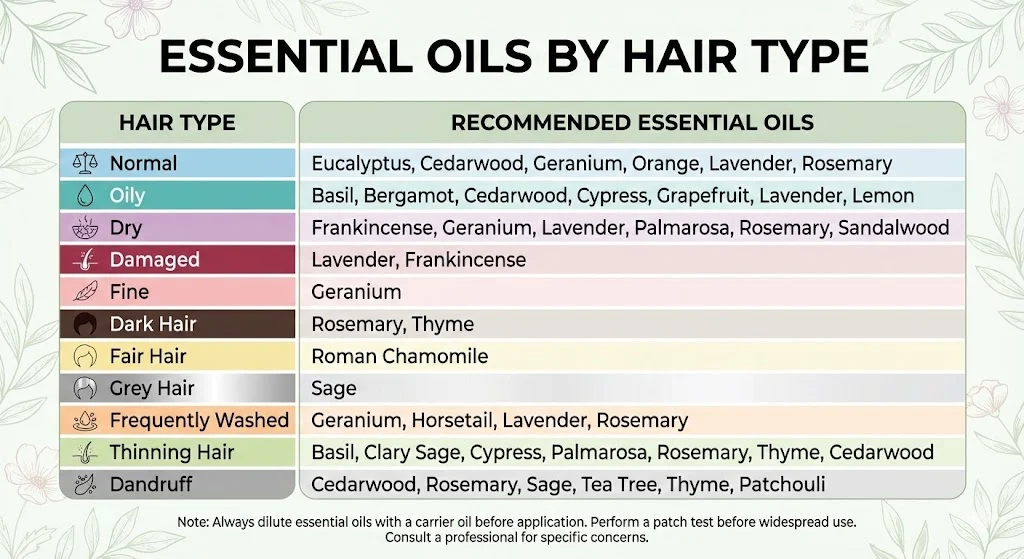
This table shows which essential oils are used for different hair needs. These are based on both traditional use and modern trends.
| Hair Type | Essential Oils |
|---|---|
| Normal | Eucalyptus, Cedarwood, Geranium, Orange, Lavender, Rosemary |
| Oily | Basil, Bergamot, Cedarwood, Cypress, Grapefruit, Lavender, Lemon |
| Dry | Frankincense, Geranium, Lavender, Palmarosa, Rosemary, Sandalwood |
| Damaged | Lavender, Frankincense |
| Fine | Geranium |
| Dark Hair | Rosemary, Thyme |
| Fair Hair | Roman Chamomile |
| Grey Hair | Sage |
| Frequently Washed | Geranium, Horsetail, Lavender, Rosemary |
| Thinning Hair | Basil, Clary Sage, Cypress, Palmarosa, Rosemary, Thyme, Cedarwood |
| Dandruff | Cedarwood, Rosemary, Sage, Tea Tree, Thyme, Patchouli |
Rosemary Oil For Hair Growth
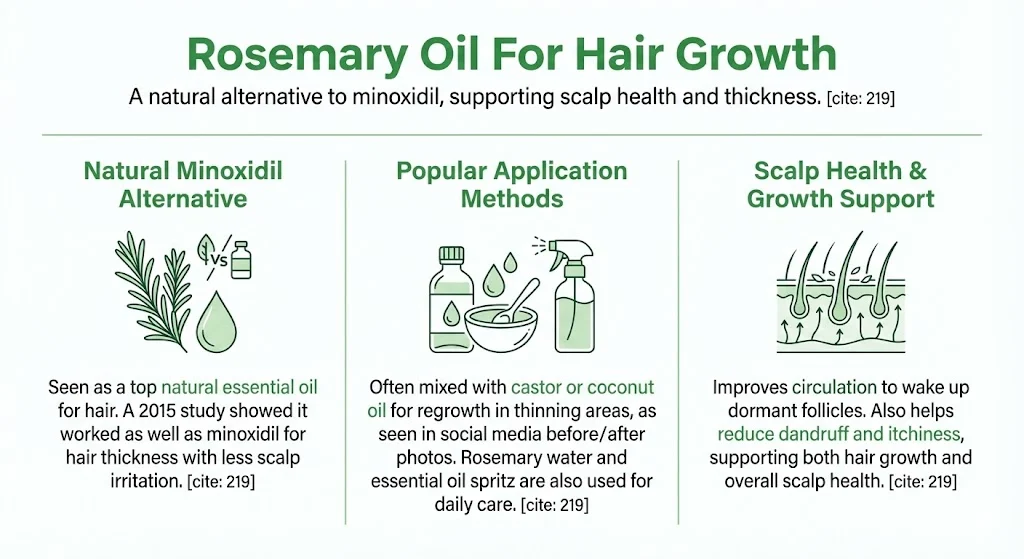
Rosemary oil is now seen as the top essential oil for hair. Many people call it a natural alternative to minoxidil. A 2015 study showed rosemary oil worked as well as minoxidil for hair thickness with less scalp irritation.
On Twitter many users share before and after photos. They often mix rosemary with castor oil or coconut oil. This helps with regrowth in thinning areas. Some people also use rosemary water and essential oil spritz for daily care.
Rosemary oil improves circulation in the scalp. This wakes up dormant hair follicles. It also helps reduce dandruff and itchiness. Because of this it supports both hair growth and scalp health.
Peppermint Oil For Scalp Stimulation
Peppermint oil creates a cooling feeling on the skin. This comes from menthol. That sensation means blood flow is increasing. A 2014 animal study showed peppermint oil increased hair follicles and hair growth.
People like peppermint because it makes the scalp feel fresh. It also helps remove buildup. When used in a diluted blend it supports thicker and stronger hair.
Some users report tingling when using peppermint oil. This is normal but it should never burn. If irritation happens the blend should be diluted more.
Castor Oil & Essential Oil Blends
Castor oil is not an essential oil but it is widely used with them. It is thick and rich in fatty acids. It seals moisture and supports root strength. Many people use castor oil with rosemary for regrowth. Others use it for eyebrows and lashes.
Search trends in 2026 show castor oil hair routines growing fast. Jamaican black castor oil and chebe are also popular. These are often blended with essential oils to improve results.
Lavender Oil For Soothing And Balance
Lavender oil is known for its calming scent. It also has antifungal and anti inflammatory properties. This helps reduce scalp irritation. Some studies used lavender in blends for alopecia with positive results.
Lavender supports a healthy scalp environment. When the scalp is calm hair grows better. It is also useful for people with sensitive skin.
Cedarwood Oil For Oil Balance
Cedarwood oil helps balance oil producing glands. This makes it useful for oily scalp and thinning hair. It also has antibacterial properties. Some studies show cedarwood in blends helped reduce hair loss in people with alopecia.
It is often mixed with rosemary and clary sage for growth blends.
Tea Tree Oil For Dandruff
Tea tree oil is well known for fighting fungus and bacteria. This makes it useful for dandruff and itchy scalp. It helps clear blocked follicles. A small study showed a mix with tea tree oil improved hair growth when used with other treatments.
Tea tree oil must be diluted well. It can cause irritation if used too strong.
Lemongrass & Sage Oils
Lemongrass oil is used for dandruff control. A 2024 review showed a 10 percent lemongrass tonic helped manage flakes. Sage oil is studied for its ability to push hair cells into a growth phase. More human studies are needed but early results are positive.
What people are using in 2026
Twitter and search data show clear trends. These blends and routines are shared the most.
| Trend | What People Use |
|---|---|
| Hair regrowth | Rosemary oil with castor oil |
| Scalp care | Peppermint and tea tree blends |
| Dandruff | Lemongrass and cedarwood |
| DIY oils | Rosemary, garlic, onion in olive oil |
| Luxury blends | Essential oil infused castor oils |
People report less shedding and more baby hairs after months of use. Many also enjoy the self care ritual of scalp massage.
Risks & Safety
Essential oils are powerful. They can cause irritation if not diluted. Symptoms of irritation include burning, redness and itching. Always test a small patch before using a new blend.
Allergic reactions are rare but serious. Swelling of the face or trouble breathing needs medical help.
Children should not use essential oils without medical advice. Some oils like peppermint should not be used near the face of young children.
Final Thoughts On Essential Oils For Hair
Essential oils for hair remain one of the strongest natural beauty trends in 2026. Rosemary leads the market. Castor and peppermint support thickness and stimulation. DIY blends and scalp massages are now part of daily routines.
These oils do not work overnight. Consistent use over months gives the best results. When combined with good diet and gentle hair care they help improve growth and shine. For medical hair loss a doctor should still be consulted.
Tags: essential oils for hair, rosemary oil hair growth, castor oil hair, natural hair care, scalp health, hair growth remedies