Emotional triggers are getting more attention in wellness and personal growth spaces. Many people today are beginning to see emotional triggers not as flaws, but as awareness signals.
These signals help us notice unhealed wounds, unmet needs, and hidden stress patterns. This shift reflects a rising focus on emotional fitness across 2025 and 2026, where people are training the mind the same way they train the body.
In this blog post i am going to discuss about signals that points to emotional triggers & Why Awareness Matters in todays modern life as well as discuss what real online users are saying about this topic so that you can learn from them.
Key Takeaways On Emotional Triggers As Awareness Signals
- Emotional triggers highlight needs, patterns, and past wounds
- Awareness helps prevent reactive behavior
- People are now viewing triggers as guidance, not weakness
- Emotional fitness is becoming a core life skill
- Awareness improves relationships and self regulation
The new perspective treats triggers like inner alarm bells. They alert the mind when something does not feel safe or balanced. These signals guide people toward healing, clarity, and self control. The growing discussion on social media, coaching platforms, and mental health communities shows how important this shift has become for daily life.

Emotional Triggers as Awareness Tools
An emotional trigger is a reaction that feels stronger than the situation itself. A comment, event, memory, or tone of voice can activate it. Instead of seeing this reaction as failure, many people now treat it as insight. The trigger shows where unresolved emotions sit in the mind and body. It also reveals old conditioning that may not support current growth.
Public opinion online is largely positive toward this mindset. Many users describe triggers as internal signals pointing to parts of life that need understanding and compassion. This awareness allows calmer responses and reduces the need to defend or attack. It also supports emotional intelligence and maturity.
This approach removes shame from emotional reactions. Instead, people learn to see the reaction as a message. The nervous system is simply reminding them of a past experience or unmet need. This opens the door to self reflection instead of harsh self judgment.
Rising Trend of Emotional Fitness
Emotional fitness is the practice of training emotional awareness on a regular basis. People are treating it much like a gym workout, but for the mind. Triggers now play a major role in this idea. By tracking emotional reactions, people gain insight into habits, fears, and values. This supports resilience and reduces impulsive behavior.
Across workplaces, schools, therapy sessions, coaching programs, wellness platforms, and even finance communities, emotional awareness is becoming a key skill. Journaling, breathwork, mindfulness, and reflection tools help people recognize reactions early. This prevents emotional hijacking and supports better decisions.
Why People Admire This Perspective
People express strong appreciation for this shift. Many describe it as empowering. Instead of staying stuck in victim mode, they can now take ownership of reactions and choices. The focus moves from blame to awareness.
Another popular theme is healing. Triggers reveal where compassion and support are needed. This supports therapy, self inquiry, and growth work. Triggers become messengers rather than enemies.
Practical benefits also matter. In high pressure fields like trading, leadership, or parenting, emotional awareness helps reduce mistakes. Recognizing fear or insecurity prevents repeating the same emotional patterns. This improves clarity and responsibility.
A compassionate reframe is also admired. Instead of labeling triggers as weakness, people now see them as protective signals. The body is saying that something feels familiar to past hurt. This creates space for care instead of judgment.
Emotional Triggers in Daily Life
Triggers can appear in many moments. They may surface during holidays, work conflicts, social interactions, financial decisions, or relationships. When people bring awareness to these reactions, they strengthen self regulation. This shift supports healthier communication and prevents emotional overreactions.
Men’s mental health spaces also highlight this theme. Awareness helps people build emotional honesty without feeling weak. This supports authenticity and purpose.
Across wellness communities, emotional triggers are being described as catalysts for transformation. They help uncover childhood conditioning, stress loops, and inner belief patterns. With awareness, individuals can choose wiser responses instead of repeating old cycles.
Emotional Triggers and Growth
Awareness of emotional triggers grows emotional intelligence. When a reaction appears, people can pause and observe. The pause becomes a moment of power. This is where choices change.
Self awareness also improves relationships. Instead of projecting pain onto others, people recognize what is happening within themselves. This reduces blame and supports understanding.
Recognizing triggers also supports conscious leadership and personal development. Leaders who understand their reactions can guide others more clearly. They can respond with stability instead of reactivity.
Common Signals That Point To Emotional Triggers
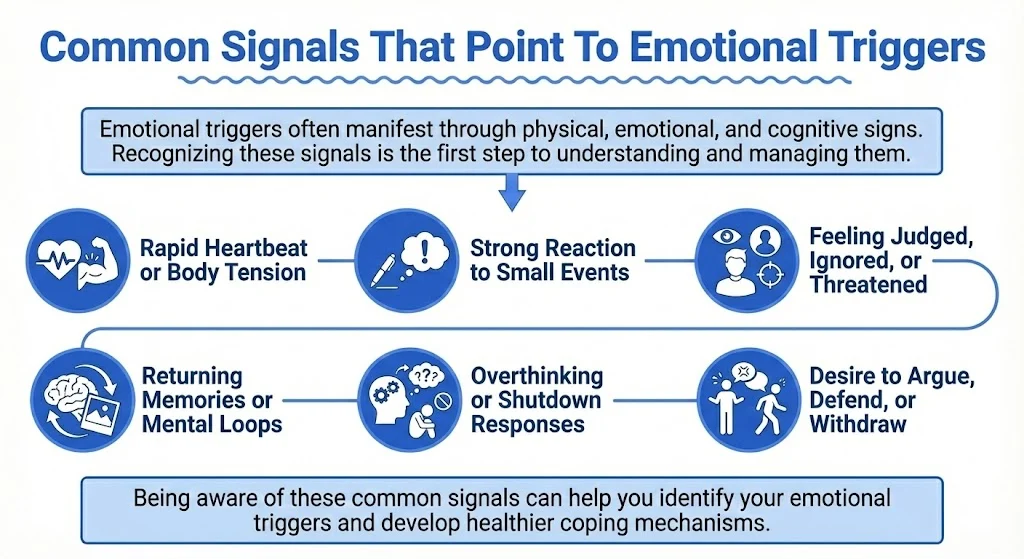
- Rapid heartbeat or tension in the body
- Strong emotional reaction to small events
- Feeling judged, ignored, or threatened
- Returning memories or mental loops
- Overthinking or shutdown responses
- Desire to argue, defend, or withdraw
These signals do not mean weakness. They simply reveal where attention is needed.
Emotional Triggers in Modern Trends
Search interest and online discussion now link emotional triggers to several key areas, including trauma awareness, mindful behavior, mental health, eating awareness, and emotional intelligence. Technology tools are even emerging to track emotional patterns, especially in trading and decision-based fields.
Workplaces now include emotional resilience training. Schools explore emotional awareness programs. Therapy and coaching practices also highlight trigger awareness as part of long-term growth.
This movement reflects a larger lifestyle change toward holistic wellness. People want balanced minds along with healthy bodies. Emotional awareness plays a central role in this shift.
Modern life includes constant digital noise, fast change, and social pressure. Emotional triggers often rise quickly in such environments. Awareness helps people stay grounded. It allows thoughtful responses rather than automatic reactions.
Emotional triggers also connect to biology. The nervous system stores memories. When a similar event appears, the body reacts to protect itself. Awareness helps separate past fear from present reality.
This simple awareness becomes a powerful life skill. Anyone can begin by pausing and noticing reactions. No special tools are required. This is why the idea has spread so widely.
A Path Toward Inner Strength
Viewing emotional triggers as awareness signals creates room for growth instead of guilt. People learn to observe, reflect, and respond with care. Over time, this builds stability, empathy, and resilience.
Emotional triggers then become guides rather than obstacles. They point toward healing, clarity, and deeper self knowledge. As emotional fitness continues to grow as a global priority, this mindset is likely to remain central to personal development in 2026 and beyond.
Tags: emotional awareness, self awareness, emotional triggers, emotional intelligence, mental health, emotional fitness