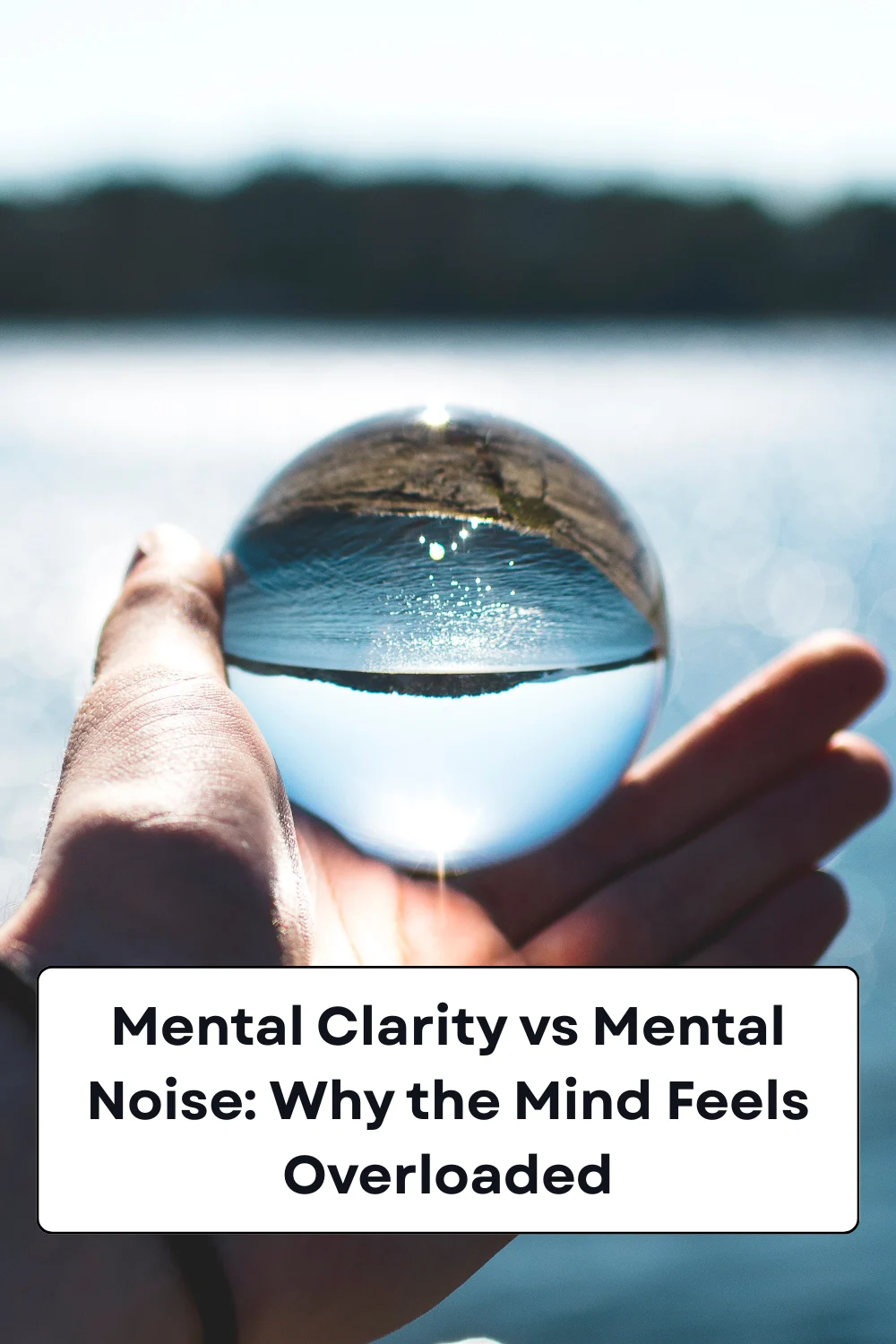
Mental clarity vs mental noise is not just a battle inside your head anymore. It is a real struggle millions of people face every single day in late 2025. Your brain feels foggy most of the time and scattered thoughts run wild like traffic during rush hour.
People everywhere are reporting the same thing. Their minds feel overloaded and the mental noise is drowning out any chance of focus. This happens because of too many digital inputs coming at you from all directions.
Notifications keep pinging all day long. Social media scrolling never seems to stop. Real world stressors like money problems and health worries keep piling up on top of everything else.
You are not alone in this fight between mental clarity vs mental noise. Everyone is feeling it these days. The constant information flood is not making anyone smarter or more productive.
It is just leaving people exhausted and unable to think clearly. Your brain was not designed to handle this much input without breaks. But the good news is that you can do something about it starting today.
Key Takeaways
- Mental overload happens when your brain reaches full capacity but keeps taking in more information
- Digital minimalism and reducing screen time can create immediate mental space
- Morning sunlight exposure and simple movement boost natural clarity without any cost
- Meditation and breathwork for just 5 to 15 minutes daily can quiet racing thoughts
- Journaling helps close mental loops and frees up cognitive bandwidth
- Brain fog often comes from inflammation which you can reduce through diet changes
- Physical needs like sleep and nutrition directly impact your mental clarity
- Setting clear boundaries on notifications and news consumption protects your peace
- Breaking big tasks into smaller parts makes overwhelming projects manageable
Understanding Mental Clarity vs Mental Noise
The conversation around mental clarity vs mental noise has exploded in recent months. Online communities show people feeling off in ways they struggle to explain. Driving feels more aggressive lately. Reactions happen faster without thinking.
Simple decisions take forever to make. Many connect this to years of built up stress and constant crisis mode living. The holidays made everything worse for lots of folks who already felt stretched too thin.
Mental noise shows up as racing thoughts that never slow down. You cannot decide on anything because too many options exist. Your emotions react strongly to small things. The feeling of being behind never goes away no matter how much you do.
One person described their brain as mush unable to separate important signals from useless noise. This leads to complete paralysis when trying to work or make choices.
Brain overload is not the same as regular stress. Stress hits you from specific things like a deadline or an argument. Mental overload is more like a traffic jam inside your head. Your thoughts get cloudy and motivation takes a vacation without telling you. Forgetting things becomes normal. You zone out during conversations. Small annoyances make you snap at people. Your patience disappears completely.
What People Are Doing About Mental Noise
Communities online are sharing what actually works for them. Digital minimalism tops the list of helpful strategies. People turn off all notifications on their phones. They limit screen time with actual timers. The feeds get curated carefully to cut out garbage information. Users who did this report sharper decisions and deeper understanding of topics. They feel like they finally have control back.
Morning routines make a huge difference for many. Walking outside right after waking up gets praised constantly. The natural sunlight helps regulate sleep cycles. Movement boosts testosterone and mood naturally. This costs nothing and transforms how the whole day feels. People who start mornings this way describe instant clarity that lasts for hours.
Meditation and breathwork come up again and again. Just 5 to 15 minutes daily helps people shift from reactive overthinking to calm presence. Techniques like Buteyko breathing get mentioned specifically. The goal is observing thoughts without getting attached to them. This simple practice reduces mental noise better than complex solutions for most people.
Intermittent fasting cleared brain fog for many users. Reduced inflammation from eating windows makes thinking sharper. People who quit drinking alcohol report similar benefits. The hangovers disappear and focus improves dramatically. Both approaches require discipline but deliver results fast.
Supplements enter the picture too. Creatine at 10 to 20 grams helps cognitive rescue according to some reports. Magnesium glycinate supports better sleep quality. Ashwagandha reduces stress hormones. These biohacks give quick wins against persistent fog when combined with lifestyle changes.

Closing Mental Loops Through Writing
Journaling gets massive praise for reducing overwhelm. Writing down all your tasks and thoughts creates instant relief. The simple act of getting things out of your head frees up mental space. People report feeling like they suddenly have more time available. The perceived overwhelm drops significantly once everything lives on paper instead of cycling in your mind.
Physical rituals help too. Cold showers or ice baths create trance like states of clarity. Warrior style movements or chanting practices get mentioned. These ancient techniques still work in our modern chaotic world. The key is consistency not perfection.
The Shift Away from Brain Rot
Something changed in 2025 after the brain rot epidemic of 2024. That year saw nonsensical online humor dominate from endless doom scrolling. People got tired of feeling mentally polluted by low quality content. A backlash started toward intentional consumption. Turning off the noise became a power move instead of missing out.
Proactive wellness trends are rising fast. Functional ingredients in foods get attention. AI tools promise mental support but people demand safeguards. Workplaces start offering better benefits focusing on family support. Manager training programs teach mental health awareness. This represents a cultural shift toward valuing employee wellbeing.
Holistic longevity thinking combines physical and mental fitness together. Social connections matter more than ever before. Shared meals bring people together in meaningful ways. Environmental curation focuses on positive exposome creation. All these trends point to recognizing mental clarity as essential for productivity relationships and life satisfaction.
Information overload awareness is finally becoming mainstream. Multitasking gets called out as harmful. Unprioritized inputs create cognitive load that damages performance. Filter failure leads to mental exhaustion quickly. People actively exclude low value sources now. They protect their attention like a precious resource that cannot be wasted.
Building Your Mental Clarity Practice
Reclaiming agency sits at the heart of fighting mental noise. Stop chasing constant stimulation. Choose deliberate quiet and depth instead. People who make this shift report feeling regulated even when chaos surrounds them. The fundamentals work better than complex hacks most of the time.
Sunlight exposure early in the day beats expensive supplements. Reducing caffeine intake helps more than adding nootropics. Basic breathwork creates calm faster than meditation apps. These simple actions require no money and deliver consistent results for most people.
The mental clarity vs mental noise battle defines our modern existence. Excess data floods in constantly. Unprocessed stress accumulates daily. But clarity remains possible when you take intentional steps. Your peace of mind needs protection and maintenance just like your physical health. Small daily actions compound over time into major improvements.
Taking the First Step Today
Start small if mental overload has you stuck. Pick one thing from this article to try tomorrow morning. Maybe walk outside for 10 minutes. Maybe turn off all app notifications. Maybe write down everything on your mind before bed. Any single step breaks the cycle of mental noise and creates space for clarity to return.
Your brain deserves rest and simplicity in this complicated world. The choice to prioritize mental clarity over constant noise is yours to make. What will you choose starting today.
Tags: mental clarity, mental noise, brain fog, cognitive overload, digital minimalism, mental health, stress management